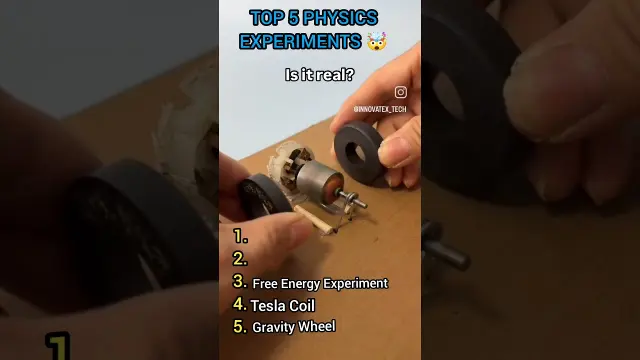
 Five Physics Experiments That Look Like Magic
#Physics Experiments
2 ideas
Five Physics Experiments That Look Like Magic
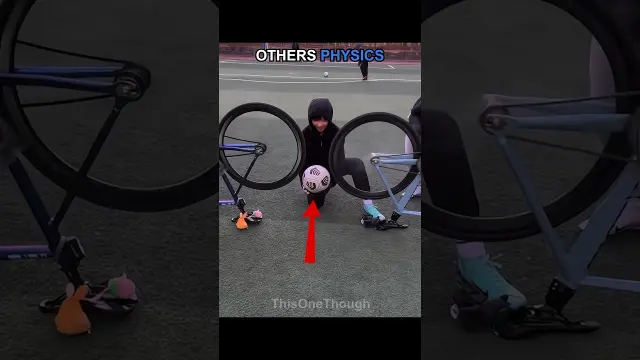 Physics Moments That Look Fake: Lift, Spin and Inertia
Get new #Physics Experiments ideas by email
Every Thursday: the week's best ideas, with the newest from #Physics Experiments.
Related tags
Physics Experiments: A Beginner's Guide to Hands-On Science
Physics is the study of how matter moves, how forces act, how energy changes form and how light, sound and electricity behave. An experiment is simply a question asked of the world in a way the world can answer. You change one thing, you keep everything else as steady as you can, and you watch what happens. That habit, more than any equipment, is what makes an experiment an experiment.
Where the practice comes from
People have always learned about the physical world by handling it: rolling stones down slopes, watching water find its level, noting which objects float. Over centuries this curiosity was tightened into a method, where a clear prediction is made and then tested against measurement rather than memory. What survives is not authority but repeatability. If you set up the same conditions and get the same result, you have learned something real about how things work, whatever you expected beforehand.
The main kinds
Read more
Experiments tend to fall into a few familiar shapes, and you can try all of them with ordinary things.
- Measurement experiments: timing a swing, weighing, comparing lengths. The goal is a number and an honest sense of how accurate it is.
- Cause-and-effect experiments: changing one variable, such as the length of a pendulum or the height of a ramp, and seeing how the result responds.
- Observation experiments: watching a prism split light, a lens form an image, or a shadow move across a wall. Nothing is manipulated; you simply describe carefully.
- Construction experiments: building a simple circuit, a paper bridge, a Cartesian diver or a small motor, then seeing which parts matter and which do not.
- Thought experiments: imagining an idealised situation, such as a frictionless surface, to clarify a principle before testing anything.
Starting out
Begin with something small enough to finish in one sitting and simple enough that you can explain the setup to another person. Write down what you expect before you start. That prediction is the most useful thing you own, because being wrong is the moment you actually learn. Keep a plain notebook: what you did, what you saw, what surprised you. Photographs are helpful, but a written record of your own reasoning is what makes the work yours.
Practical tips
Choose one variable and resist changing several at once. Repeat each measurement and take an average rather than trusting a single reading. Notice sources of error honestly, such as a shaky table, an uneven floor or slow reaction time, and say so. Use everyday safety care: electricity comes from batteries only, never the wall outlet, and anything thrown or dropped is aimed away from people and windows. Keep your apparatus modest and your curiosity large. The point is not a polished result but a clearer picture of how the world behaves, gained by looking closely and checking your own beliefs against what actually happens.
#Physics Experiments: frequently asked questions
How do I begin doing physics experiments at home?
Pick something you can set up and finish in a single sitting, and simple enough that you could explain it out loud to someone else. Before you touch anything, write down what you think will happen — that prediction is what turns fiddling with objects into an actual test. Then run it, watch closely, and note where reality disagreed with you.
What equipment do I need to get started?
Less than you'd expect. Everyday objects — ramps, string, water, lenses, torches, batteries, paper — cover most of what's worth trying, and the habits of careful observation matter far more than the kit. A plain notebook and pencil are the only things you genuinely shouldn't skip, since the written record of your own reasoning is what makes the work yours.
Which kind of experiment should I choose?
It depends on the question you're curious about. If you want a value, time or weigh or compare something; if you want to know whether one thing causes another, change a single variable and watch how the result responds; if you'd rather just look, set up an observation like a prism or a lens and describe it carefully. Building something — a simple circuit or a paper bridge — suits people who learn by making, and imagining an idealised situation first helps clarify what you're even asking.
How do I keep my results trustworthy?
Change only one thing at a time and hold everything else as steady as you can, because changing several things at once tells you nothing about which one mattered. Take each reading more than once and average them rather than trusting a single number. Be honest about what could have skewed the result — a wobbling table, an uneven floor, your own slow reactions — and write those down alongside the findings.
What are the most common mistakes beginners make?
The usual one is altering several conditions at once and then guessing which change was responsible. Another is recording only what you expected to see, or treating one measurement as the truth rather than repeating it. Skipping the safety basics is a mistake too: keep electricity to batteries and never the wall socket, and aim anything thrown or dropped away from people and windows.
Can I do experiments that look like tricks or illusions?
Yes, and they're a good place to start because the surprise makes you want to explain it. Lifts, spins and inertia effects often look staged precisely because your intuition about how objects behave is slightly wrong, which is exactly what an experiment is for. Watch carefully, predict first, then work out which principle is producing the effect.
Videos come from YouTube and posts from Instagram; titles and summaries are our own. All rights belong to their creators.