 Emergence: The Hidden Rule of Reality Explained
#Physics
14 ideas
Emergence: The Hidden Rule of Reality Explained
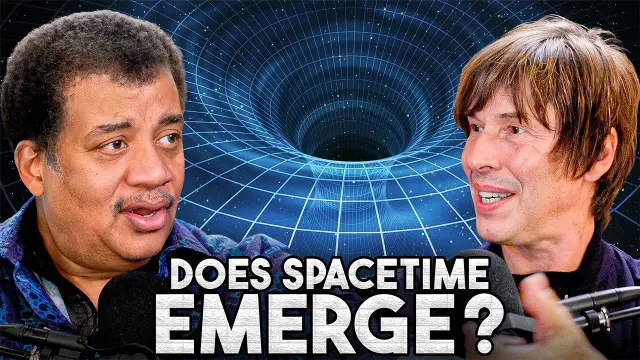 Is Spacetime Fundamental, or is it Emergent? With Brian Cox
 Professor Brian Cox On His 'Emergence' World Tour
 Exploring Finite Numbers So Large They Push Human Limits
 Computational Complexity and Explanations in Physics
 A Complexity-Theoretic Lens on Magic in Quantum States
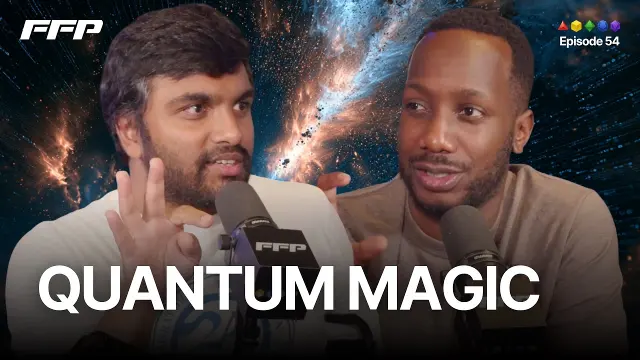 How Quantum Computing Actually Works from First Principles
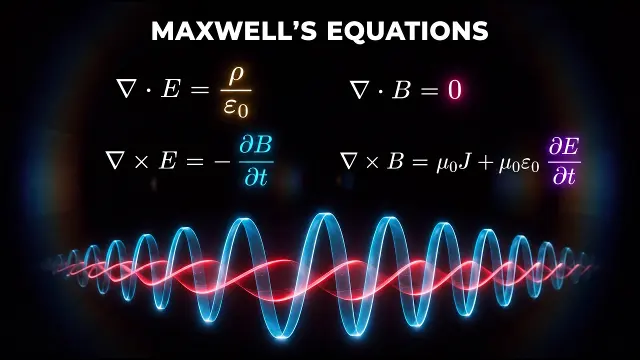 An Intuitive Journey Through Maxwell's Equations
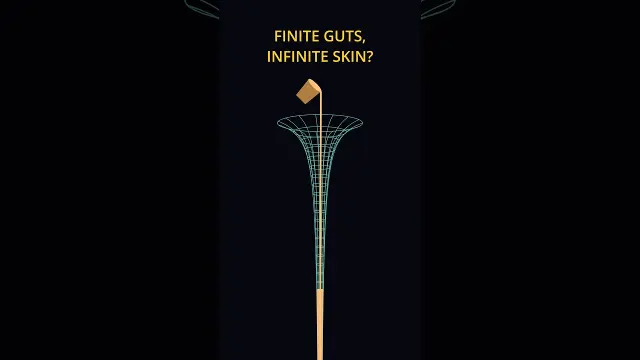 The painter's paradox and why physics changes the result
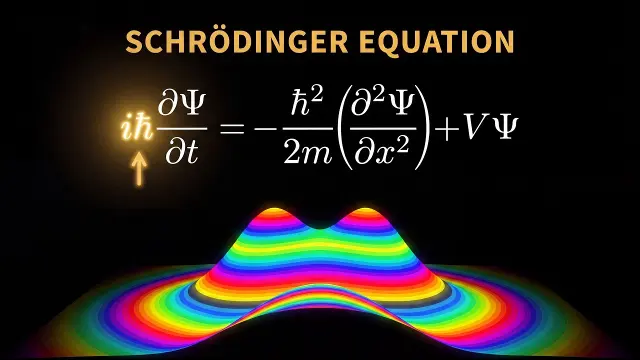 Understanding The Physics Of Schrödinger's Equation
 The Story Behind the Navier-Stokes Math Problem
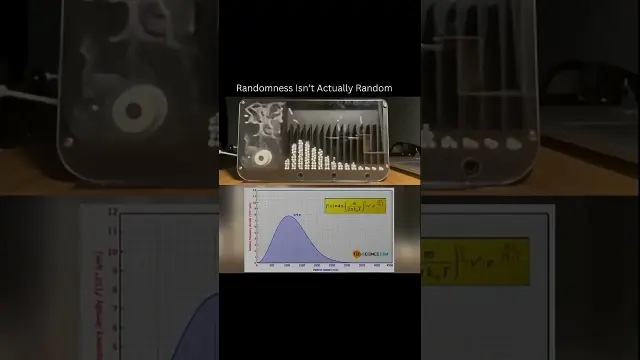 How Randomness Creates Order Through Normal Distribution Experiments
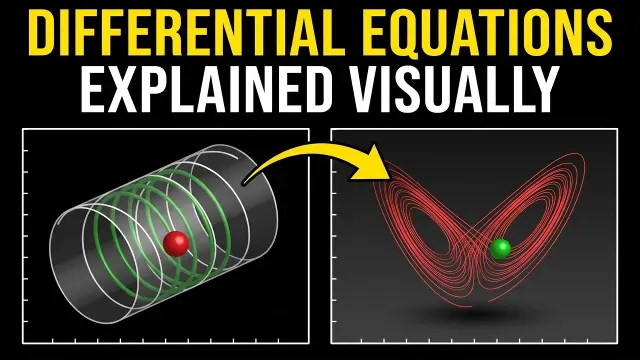 Building Intuition For Differential Equations
 Did AI Solve One of Math's Hardest Problems?
Get new #Physics ideas by email
Every Thursday: the week's best ideas, with the newest from #Physics.
Related tags
Physics: A Guide to the Laws of Nature
What physics is
Physics is the study of matter, energy, motion, and the forces that act between things. It asks simple questions with very deep answers: why objects fall, how light travels, what heat is, and how the universe holds together. At its core, physics tries to describe nature with ideas that are precise enough to predict what will happen next.
The subject reaches from everyday life to the largest and smallest scales. It helps explain why a ball slows down, how sound moves through air, why magnets attract or repel, and how stars shine. Physics also provides the language behind many other sciences and much of modern technology.
Where it comes from
Read more
People have always tried to make sense of the world, but physics grew into a distinct discipline when observation, experiment, and mathematics began to work together. Instead of relying only on philosophy or guesswork, physicists learned to test ideas carefully and compare them with what actually happens.
That habit is still central today. A physics idea is useful when it can describe reality clearly, and it becomes stronger when it can be tested again and again. This is why physics often looks like a mix of intuition, measurement, and careful reasoning.
Main branches and kinds
Physics is usually divided into several broad areas:
- Classical mechanics: motion, forces, gravity, and energy
- Thermodynamics: heat, temperature, work, and the behavior of systems
- Electromagnetism: electricity, magnetism, light, and related fields
- Waves and optics: sound, light, reflection, refraction, and interference
- Quantum physics: the behavior of matter and energy at very small scales
- Relativity: space, time, motion, and gravity at high speeds or strong gravity
- Fluid dynamics: the motion of liquids and gases
- Statistical physics: how large numbers of particles create everyday properties
These areas often overlap. A real-world problem may draw from more than one branch at once.
What beginners should know
If you are starting out, physics is less about memorizing facts and more about learning how to think. The same basic ideas appear again and again: force, mass, energy, momentum, fields, and conservation laws. Once you understand these, many topics become easier to recognize.
It also helps to become comfortable with units and equations. In physics, the symbols matter, but so does the meaning behind them. Try to ask what a formula says in plain language before focusing on the calculation.
Practical tips for learning physics
- Begin with everyday examples, like rolling objects, falling objects, or boiling water
- Draw diagrams often; many physics problems become clearer when visualized
- Pay attention to idealizations, such as frictionless surfaces or point masses
- Check the units in every step; they can reveal mistakes quickly
- Learn to separate what is known, what is asked, and what assumptions are being made
Physics can feel abstract at first, but it becomes more natural when you connect it to real experiences. Once you start noticing patterns in motion, light, sound, and energy, the subject begins to feel like a map of the world rather than a collection of separate formulas.
Videos come from YouTube and posts from Instagram; titles and summaries are our own. All rights belong to their creators.