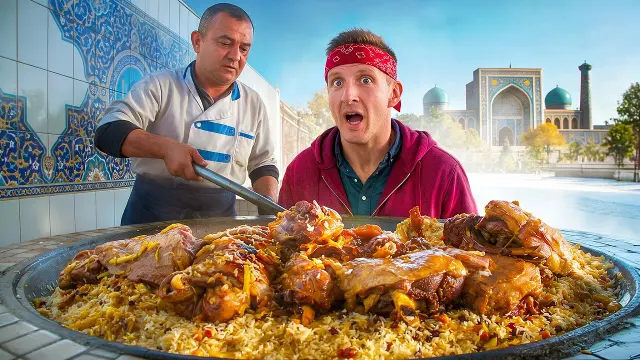
 Sampling Traditional Street Food in Uzbekistan
#Plov
2 ideas
Sampling Traditional Street Food in Uzbekistan
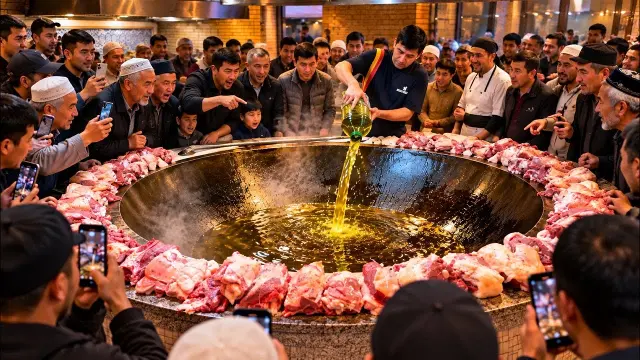 Cooking Massive Portions of Traditional Pilaf
Get new #Plov ideas by email
Every Thursday: the week's best ideas, with the newest from #Plov.
Related tags
Plov: The Central Asian Rice Dish Explained
Plov is the name most English speakers meet first, but the dish travels under many names: osh in Uzbekistan, pilaf in much of the wider region, pilav in Turkey. At its heart it is a one-pot rice dish, built on meat, onions and vegetables cooked down into a rich base, with rice folded in and finished by steaming rather than stirring.
Where it comes from
Plov belongs to the cooking of Central Asia and the wider region touched by the old trade routes running between China, Persia and the Mediterranean. Each place along the way made the dish its own, following whatever grew locally, and cooks carried the technique with them. In Uzbekistan it is more than food: it is the centre of celebrations, prepared in large quantities in a heavy cauldron called a kazan and served to crowds at weddings and gatherings.
The parts of the dish
Read more
The structure is consistent even when the details change. In the Uzbek style, meat is browned in hot oil, then onions and a generous quantity of carrots are added — the carrots are usually cut into thin strips, not grated. This mixture, with water and spices, becomes the zirvak, the liquid base that the rice will absorb. Cumin is the defining spice, often with coriander and a whole head of garlic tucked into the rice.
Rice goes in on top, spread level, with water so that it cooks partly by boiling and partly by steaming under a lid. When the grains are just tender and the liquid has gone, the pot is left to rest before the rice is turned out onto a plate, meat and carrots on top.
Styles worth knowing
Uzbek plov alone varies by city and family, and there are versions with lamb, beef, chicken, quail or no meat at all, and versions built with dried fruit for a sweeter, festive dish. Azerbaijani plov is a different approach: rice is cooked and steamed separately, often coloured with saffron, and served with a stew or a crisp crust of rice at the bottom of the pot. Afghan and Iranian rice dishes use similar principles of parboiling and steaming.
What beginners should know
Choose a rice that can take it — firm, long-grain varieties that hold their shape are safer than quick-cooking or sticky rice, and rinsing the grains first removes surface starch. Use a heavy pot with a tight lid; the whole method depends on steady, even heat. Do not stir the rice once it is in: disturbing the grains is what turns plov gluey. Keep the layers — meat and carrots below, rice above — and let the pot sit off the heat for a while at the end so the steam settles.
Start with a small batch before cooking for a crowd. Plov rewards attention to quantity and heat far more than it rewards a long list of spices.
#Plov: frequently asked questions
What exactly is plov?
Plov is a one-pot rice dish in which meat, onions and vegetables are cooked down into a rich base before rice is folded in and finished by steaming under a lid rather than by stirring. It is known by different names across the region it comes from — osh, pilaf, pilav — but the layered method stays recognisable. Think of it as rice that absorbs a savoury base instead of being served beside one.
How should a beginner start cooking plov?
Begin with a small batch rather than a huge pot, because the dish depends far more on steady heat and correct quantities than on a long spice list. Brown the meat in a heavy pot, build the onion and carrot base, then spread rice on top and let it steam undisturbed. Letting the pot rest off the heat at the end helps the grains settle before you turn it out.
Which kind of rice works best for plov?
Choose a firm, long-grain rice that keeps its shape through both boiling and steaming; quick-cooking and sticky varieties collapse and turn the dish pasty. Rinse the grains first to wash off surface starch, which otherwise makes everything clump together. The same logic applies whether you are cooking a simple family version or a festive one with dried fruit.
What makes plov turn out gluey or mushy?
The usual culprits are stirring the rice after it goes into the pot, using too much water, and cooking in a thin pan that cannot hold even heat. Keep the layers intact — meat and carrots underneath, rice spread level on top — and resist the urge to mix. A heavy pot with a tight-fitting lid does most of the work for you.
How is Azerbaijani plov different from the Uzbek style?
In the Uzbek approach the rice cooks together with the meat and carrot base in one pot, while Azerbaijani plov treats the rice separately: it is steamed on its own, often tinted with saffron, and served alongside a stew or with a crisp crust from the bottom of the pot. Nearby Afghan and Iranian rice dishes follow similar parboil-and-steam principles. It is a good reminder that one technique can produce quite different meals.
Can I make plov for a party or a big family gathering?
Yes — it is a natural crowd dish, traditionally cooked in quantity in a large heavy cauldron and served to guests at celebrations. Scale up the base and the pot rather than the number of spices, and keep the heat even. A sweeter version built with dried fruit also works well when you want something festive rather than purely savoury.
Videos come from YouTube and posts from Instagram; titles and summaries are our own. All rights belong to their creators.