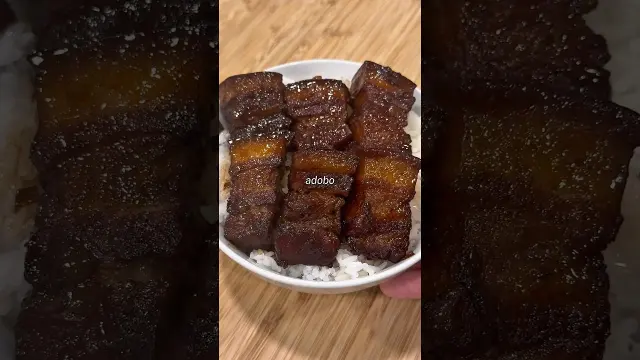
 Tender Pork Belly Adobo Simmered in Soy and Vinegar
#Pork Belly Adobo
1 ideas
Tender Pork Belly Adobo Simmered in Soy and Vinegar
Get new #Pork Belly Adobo ideas by email
Every Thursday: the week's best ideas, with the newest from #Pork Belly Adobo.
Related tags
Pork Belly Adobo: A Guide to the Filipino Classic
Adobo is one of the most recognisable dishes in Filipino cooking, and pork belly is one of its most beloved versions. At its heart, adobo is a method rather than a single recipe: meat is simmered in vinegar, soy sauce, garlic, peppercorns and bay leaf until it becomes tender and deeply flavoured. The name is often linked to the Spanish word for marinade, though the technique of preserving and flavouring food with vinegar and salt predates colonial contact in the Philippines. Over centuries it became the everyday home cooking that families across the archipelago still make today.
What makes it adobo
The defining element is vinegar, not soy sauce. Soy sauce brings saltiness and colour, but it is the vinegar that gives adobo its tang and its preserving quality. Garlic, black peppercorns and bay leaf round out the base, and many cooks add sugar, a little water, or nothing at all. The result is a glossy, dark sauce that clings to the meat, with a savoury-sour balance that sits well over plain steamed rice.
Why pork belly works so well
Read more
Pork belly carries layers of fat and lean meat, so it stays juicy through a long, slow simmer. The fat also renders into the sauce, giving it body and richness. Ask a butcher for a piece with even layers and the skin left on if you can get it, since the skin contributes gelatine and a pleasing chew. Cutting the meat into generous chunks rather than thin slices helps it hold its shape during cooking.
The basic method
Brown the pork pieces in a heavy pot, then add garlic and let it soften. Pour in vinegar, soy sauce and a splash of water, add peppercorns and bay leaves, and bring everything to a gentle simmer. Resist stirring too much at the start: letting the vinegar come to a boil undisturbed softens its raw sharpness. Cook partly covered until the pork is tender, then uncover and reduce the sauce until it thickens. Taste and adjust with a little sugar or more vinegar before serving.
Variations worth knowing
Some cooks finish the pork under a grill or in a hot pan to crisp the surface before returning it to the sauce. Others add coconut milk for a creamier, milder version, or chilli for heat. Chicken and pork are sometimes cooked together, and some households add potatoes or pineapple. There is no single correct formula, which is exactly why the dish is so widely loved.
Practical tips for beginners
Use a vinegar you would be happy to taste on its own, as its character carries through. Cook adobo a day ahead if you can: the flavours settle and improve overnight, and the dish reheats well. Keep it in the fridge in a covered container, and remember that the vinegar and salt that make adobo so flavourful are also what have traditionally helped it keep. Start with modest seasoning, then adjust at the end once the sauce has reduced and concentrated.
Videos come from YouTube and posts from Instagram; titles and summaries are our own. All rights belong to their creators.