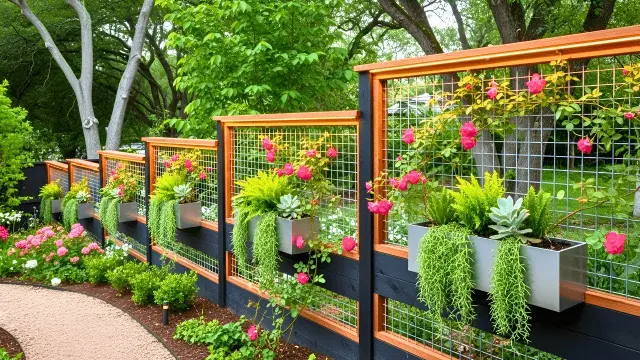
 Backyard Fence Garden Ideas For Privacy And Style
#Privacy Fence
1 ideas
Backyard Fence Garden Ideas For Privacy And Style
Get new #Privacy Fence ideas by email
Every Thursday: the week's best ideas, with the newest from #Privacy Fence.
Related tags
Privacy Fence Ideas and Basics
A privacy fence is a boundary built to shield a yard, patio, or outdoor seating area from outside view. People use it to create a more secluded space, mark property lines, reduce visual clutter, and make a garden feel calmer and more enclosed. It can also help define zones in a yard, such as a play area, vegetable patch, or terrace.
Privacy fences have been used for a long time wherever people wanted separation without building a full wall. In gardens and homes, they often balance practical needs with appearance. A well-chosen fence can blend into the landscape, support climbing plants, and frame outdoor spaces in a neat way.
Common styles
There are several classic privacy fence styles, each with a different look and level of openness.
Read more
- Solid board fences: panels or boards placed close together for maximum screening
- Picket-style fences with tighter spacing: more decorative, with partial privacy
- Horizontal slat fences: clean lines and a modern feel, with gaps adjusted for more or less coverage
- Lattice-topped fences: solid lower sections with a lighter decorative top
- Natural screening fences: bamboo, woven branches, or planted hedges used alone or with a fence
Wood is one of the most familiar materials because it feels warm and natural. Other common choices include composite, vinyl, metal combinations, and masonry elements. The best option depends on the look you want, how much maintenance you are comfortable with, and the climate where you live.
What to think about before you build
A privacy fence should do more than block views. It should suit the scale of the house and garden, allow for airflow if needed, and feel right from both sides. Think about height, spacing, and how the fence will look against plants, paths, and seating areas.
It is also wise to check local rules, boundary lines, and any height limits before starting. A fence that is too tall or placed without care can feel heavy or may cause practical problems later.
Design tips
If you want a fence to feel less rigid, soften it with planting. Shrubs, climbers, and tall grasses can break up large flat surfaces and make the boundary feel more natural. Repeating posts, matching gate details, or a consistent color can help the fence look intentional rather than purely functional.
For a smaller garden, lighter colors and slimmer profiles can keep the space from feeling closed in. In a larger yard, taller panels or layered planting may create a stronger sense of enclosure.
Maintenance and care
Different materials need different care, but most fences last longer when kept clean and checked regularly. Look for loose boards, rusted fittings, or signs of moisture damage. Wood may need occasional sealing or painting, while other materials may mainly need washing.
If you want your privacy fence to age well, choose a style that suits your climate and your willingness to maintain it. A thoughtful fence can give you comfort, structure, and a more restful outdoor space for many years.
Videos come from YouTube and posts from Instagram; titles and summaries are our own. All rights belong to their creators.