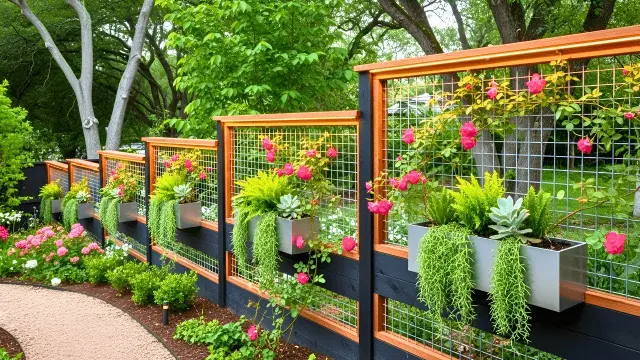
 Backyard Fence Garden Ideas For Privacy And Style
#Vertical Garden
1 ideas
Backyard Fence Garden Ideas For Privacy And Style
Get new #Vertical Garden ideas by email
Every Thursday: the week's best ideas, with the newest from #Vertical Garden.
Related tags
Vertical Gardens: Growing Upward with Style
Vertical Garden Basics
A vertical garden is a way of growing plants upward instead of across the ground. You may also hear it called a living wall, wall garden, or green wall. The idea is simple: plants are arranged on a vertical surface, such as a fence, wall, trellis, frame, or stacked planter, so you can make the most of limited space while adding softness and life to an area.
Vertical gardening has roots in many forms of traditional planting, from climbing vines trained over supports to decorative wall plantings in courtyards and gardens. Today, it is used both for practical gardening and for decoration. It can help green a small balcony, brighten a patio, screen a boundary, or turn a plain wall into a focal point.
Common Styles and Types
Read more
There are many ways to build a vertical garden, and the best choice depends on your space, light, and the plants you want to grow.
- Trellises and climbers: Good for vines, roses, beans, peas, and other plants that naturally reach upward.
- Wall planters and pocket systems: Useful for herbs, small ornamentals, succulents, and compact flowers.
- Hanging planters: Simple and flexible, especially for balconies and porches.
- Tiered shelves and stacked pots: Easy for beginners and easy to move around.
- Fence gardens: A practical choice when you want privacy, texture, and greenery at the same time.
You can create a lush, dense look or keep the design light and structured. Some vertical gardens are mainly decorative, while others are made to grow herbs, vegetables, or edible flowers.
What Beginners Should Know
A vertical garden needs the right support, because plants, soil, and water can be heavy. Make sure the structure is secure and suitable for the surface it will rest on. Drainage matters too: plants should not sit in stagnant water, and the wall or fence behind them should be protected if needed.
Light is important. Choose plants that match the amount of sun or shade your space gets. A sunny wall may suit herbs and flowering plants, while a shadier spot may be better for ferns or shade-loving foliage.
Watering can be different from a regular garden, since vertical planters often dry out faster. Check moisture regularly and water thoughtfully rather than on a fixed schedule alone. Using a good growing medium and choosing plants with similar needs will make care easier.
Practical Tips for a Successful Vertical Garden
- Start small and add more plants as you learn what works.
- Group plants with similar light and water needs together.
- Use trailing plants, compact growers, and climbers for the best visual effect.
- Leave enough space for growth so plants do not crowd one another.
- Prune regularly to keep the design tidy and healthy.
- Think about the view from inside and outside the space so the garden looks balanced from both sides.
A vertical garden can be neat and modern, full and romantic, or practical and productive. However you design it, the main aim is the same: to bring more greenery into a space by growing upward with intention.
Videos come from YouTube and posts from Instagram; titles and summaries are our own. All rights belong to their creators.