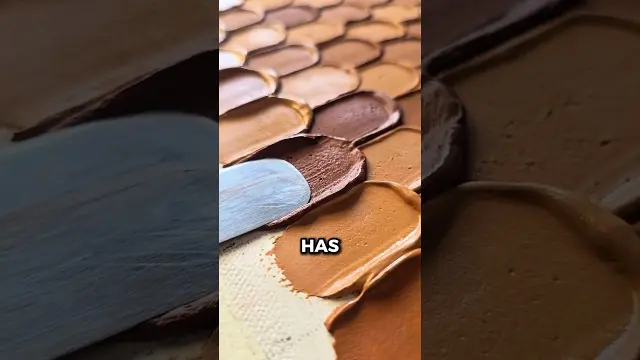
 Texture paste art made from thousands of tiny identical droplets
#Process Video
1 ideas
Texture paste art made from thousands of tiny identical droplets
Get new #Process Video ideas by email
Every Thursday: the week's best ideas, with the newest from #Process Video.
Related tags
Process Video: The Art of Showing How Something Is Made
A process video shows a thing being made. Not the finished object, not a styled shot of the result, but the whole sequence in between: the materials laid out, the first cut or mix or stroke, the awkward middle, and the moment it finally comes together. It can be a cake, a ceramic bowl, a knitted sweater, a repainted chair, a wall of texture paste shaped drop by drop. Whatever the subject, the appeal is the same — you watch the making rather than the made.
The format grew out of older traditions: craft instruction, cooking demonstrations, and time-lapse photography, all of which treat a long, patient activity as something worth observing. Video sharing made it a genre of its own, and it now sits comfortably alongside tutorials, though the two are not the same. A tutorial teaches; a process video shows. Many makers blend them, but the heart of a process video is the visual record, not the lesson.
There are several common shapes. The start-to-finish edit runs the whole build in order, compressed so the dull stretches pass quickly. The time-lapse compresses harder, so hours become minutes and the object seems to assemble itself. The real-time version does the opposite, lingering on the sounds and small movements, which is why it often overlaps with the calming, sensory pleasure people describe as satisfying. Some makers prefer the reveal — a single long shot with the finished piece appearing only at the end — and some use split screens to show two stages or two angles at once.
What nearly all good examples share is clarity. A fixed camera, usually overhead or at a slight angle, keeps the work legible. Lighting that stays consistent over hours matters more than expensive equipment. A tidy surface with only the current tools in frame stops the eye from wandering, and hands that move deliberately read better than hands that hurry. Sound is optional but never neutral: some makers keep the natural taps and scrapes, others mute and add music, and both choices change how the video feels.
Read more
If you are making your first one, choose a project you can finish in one sitting, plan the order of steps so nothing has to happen off-camera, and record more than you think you need — the beginning and the very end are where edits most often go wrong. Resist cutting so tightly that the viewer loses track of what is being done, and let at least a few moments breathe.
For viewers, process videos are a strange and pleasant mix of instruction and rest. You learn something by watching, even when nobody explains it, and you get to enjoy the suspense of an outcome you did not have to work for.
#Process Video: frequently asked questions
What exactly is a process video, and how is it different from a tutorial?
A process video follows a thing being made from first material to finished piece, keeping the making itself on screen rather than just the result. A tutorial sets out to teach a method step by step; a process video mainly records the work. Plenty of makers do both at once, but the visual record is the core of the format.
How do I choose the right style for my process video?
It depends on what you want the viewer to feel. A start-to-finish edit keeps every stage in order at a quicker pace, a time-lapse compresses hardest so the object seems to build itself, and a real-time version lingers on sounds and small movements for a slower, more satisfying watch. Reveal-style shots or split screens work well when the finished piece is the payoff.
What do I actually need to film one?
A camera held still and light that does not shift over the hours of work matter far more than costly gear. Set up overhead or at a slight angle so the hands and materials stay legible, and clear the surface so only the tools in use are in frame. Sound is optional, but decide deliberately whether to keep the natural taps and scrapes or replace them with music.
What are the most common mistakes first-time makers run into?
Cutting too tightly is the usual one, so the viewer loses track of what is being done. Recording too little footage is the other, since beginnings and endings are where edits tend to fall apart. Pick a project you can finish in one sitting, plan the order of steps so nothing has to happen off-camera, and let a few moments run long.
Does every step have to be shown for it to count as a process video?
No. The point is that the making stays visible and understandable, not that nothing is skipped. Compressing the dull stretches is normal and expected; what matters is that the viewer can follow how the object came together. A reveal that holds one long shot and shows the piece only at the end is a legitimate shape of the format too.
Why do people find these videos so relaxing to watch?
Part of the appeal is the quiet suspense of an outcome you did not have to work for, and part is that deliberate, unhurried hands read as calming. Real-time versions in particular lean into that sensory pleasure, keeping the small sounds and movements intact. You also pick something up just by watching, even when nobody explains a thing.
Videos come from YouTube and posts from Instagram; titles and summaries are our own. All rights belong to their creators.