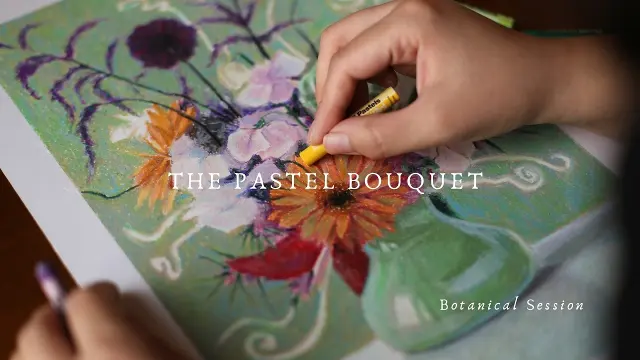
 Relaxing Botanical Oil Pastel Painting of a Flower Bouquet
#Relaxing Art
1 ideas
Relaxing Botanical Oil Pastel Painting of a Flower Bouquet
Get new #Relaxing Art ideas by email
Every Thursday: the week's best ideas, with the newest from #Relaxing Art.
Related tags
Relaxing Art: Making for the Sake of Calm
There is a particular kind of making that has nothing to do with finished results. You pick up a pencil, a brush, a lump of clay, and you let your hands move. Nobody is going to hang it on a wall. That, roughly, is what people mean by relaxing art: the practice of making things for the effect the making has on you, rather than for the object you end up with.
The idea has roots in several places at once. Artists have long described losing themselves in repetitive work, and the slow crafts — knitting, embroidery, whittling, hand-building pots — have always carried a meditative quality. Over the past century, art-making also found a place in therapeutic settings, where the act of drawing or painting was valued as a way of slowing down and putting feelings somewhere visible. Relaxing art as a hobby borrows from both: the craftsman's patience and the idea that the process matters more than the outcome.
Kinds of relaxing art
Almost any medium can be approached this way, but some lend themselves to it more easily than others.
Read more
- Drawing and doodling. Simple pencils and a blank page. Repetitive patterns, looping lines, filling a page with small shapes — the appeal is that you never have to decide what it "should" look like.
- Watercolour. Forgiving by nature. Washes bleed, colours mix on their own, and small accidents are usually the prettiest part.
- Oil pastels and soft chalk pastels. Creamy, tactile, quick to cover paper. Blending with a fingertip is satisfying in a way that is hard to explain.
- Colouring. Printed or hand-drawn outlines remove the burden of composition entirely. You are only choosing colours.
- Clay and hand-building. The physical resistance of the material absorbs a great deal of restless energy.
- Slow textile work. Knitting, crochet, embroidery and visible mending reward the same gentle repetition.
What beginners should know
The hardest part is usually the voice in your head that says you are doing it wrong. Practising relaxing art means deliberately setting that voice aside. Give yourself permission to make something ugly, and mean it.
Start small. A postcard-sized piece of paper is less intimidating than a large sheet, and it finishes quickly, which gives you a sense of progress. Keep your materials within reach so that starting costs you almost nothing — a sketchbook left open on a table gets used far more than one packed away in a drawer.
Choose repetition over invention when you feel tired. Filling a page with circles, hatching a square inch at a time, or mixing a single colour across a row of boxes asks very little of you and still draws you in.
Work in short stretches. Twenty minutes is plenty. There is no rule that says you have to finish, and stopping while you still feel like continuing makes it easier to come back.
Finally, keep the comparison out of it. This is not a skill you are building for an audience. If it helps to think of it as a kind of stretching for the mind rather than a project, that is close to the spirit of the thing.
#Relaxing Art: frequently asked questions
How do I get started with relaxing art if I have never made anything before?
Begin with something small and forgiving, like a postcard-sized sheet of paper and a pencil or a few colours, so that starting costs you almost nothing in effort or preparation. The aim is to let your hands move without deciding in advance what the result should look like. Leave your materials out where you can see them, because a sketchbook sitting open gets picked up far more often than one stored away.
What supplies do I actually need for relaxing art?
Very little: a pencil and paper are enough to begin, and you can add a medium that appeals to your hands, such as watercolour, pastels, clay or yarn. What matters more than the range of materials is keeping the ones you have within easy reach. Buy modestly at first and let your interest tell you what to add next.
Which kind of relaxing art should I choose?
Pick according to what feels pleasant in your hands rather than what looks impressive: repetitive drawing and colouring suit people who want simplicity, watercolour and pastels suit those who enjoy loose, forgiving colour, and clay or textile work absorbs restlessness through physical repetition. If you are tired or unsure, choose the option that asks the least of you, such as filling a page with small shapes or blending colours in a row of boxes. Trying a couple of mediums over a few short sessions will show you quickly which one settles you.
What are the most common mistakes beginners make?
The biggest one is treating the session as a test of skill and criticizing yourself for doing it wrong, which drains the point out of it entirely. Others are starting with an oversized sheet or an ambitious subject, working in long exhausting stretches, and comparing your output to other people's. Give yourself real permission to make something ugly and the rest tends to fall into place.
How should I look after my materials and the pieces I make?
Store pastels, clay and paints away from heat and direct sun, keep textile work clean and dry, and let anything wet dry flat before putting it away. Since the value is in the making rather than the object, there is no obligation to keep or display every piece, though many people like to date and stack them as a record of time spent. Refresh dried-out or worn supplies as needed so that starting never becomes a chore.
Do you have ideas for a relaxing art session with other people or for a occasion?
Shared colouring, simple doodling prompts or a small hand-building or pastel session work well because everyone can work at their own pace without a finished result in mind. For a gathering, set out a few forgiving materials, keep the time short, and let conversation carry the rest. A botanical pastel painting of a bouquet, for instance, gives people a loose subject to interpret freely rather than a fixed picture to copy.
Videos come from YouTube and posts from Instagram; titles and summaries are our own. All rights belong to their creators.