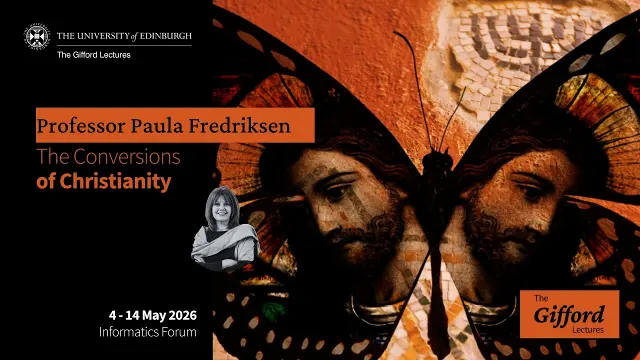
 Paula Fredriksen's Gifford Lecture: A World Full of Gods
#Religious History
2 ideas
Paula Fredriksen's Gifford Lecture: A World Full of Gods
 Bart Ehrman's Final Lecture on Biblical Studies at UNC
Get new #Religious History ideas by email
Every Thursday: the week's best ideas, with the newest from #Religious History.
Related tags
Religious History: A Guide to Faiths Across Time
Religious history is the study of how religious traditions have taken shape over time — their ideas, practices, communities, disputes and institutions. It asks how people actually lived their faith, not only what doctrine said they should believe. That makes it different from theology, which reasons from within a tradition, and from philosophy of religion, which weighs arguments about belief. The historian works from evidence: texts, buildings, art, burial sites, laws, tax records, letters and the everyday objects people left behind.
Where it comes from
The field grew out of the chronicles that religious communities kept about themselves, and out of the older habit of writing church or dynastic history with a clear moral purpose. Modern religious history is more modest in its claims. It treats sacred narratives as documents to be understood in their context rather than simply accepted or dismissed, and it tries to explain change without assuming that any one tradition's account of itself is the whole story.
What it covers
Read more
Almost every tradition has a history of this kind. You will find work on the formation of Jewish law and liturgy, on the many varieties of early Christianity, on the emergence and spread of Islam, on Hindu and Buddhist devotional movements, on Sikh, Jain and Zoroastrian communities, and on the traditional religions of Africa, the Americas, Asia and Oceania — many of which were recorded late, and sometimes only through the eyes of outsiders.
Main approaches
- Textual history: tracing how scriptures were written, copied, translated, canonised and interpreted.
- Social and lived history: studying festivals, pilgrimage, family rituals, food rules and parish life.
- Material history: reading buildings, images and artefacts as evidence of practice.
- Comparative and encounter history: looking at how traditions met, borrowed, argued and defined themselves against one another.
Recent scholarship has paid more attention to ordinary believers, to women's religious lives, and to the everyday compromises people made between official teaching and daily reality.
If you are new to it
Start with one tradition and one period rather than trying to survey everything. Read primary sources where you can, even in translation, and notice who wrote them, for whom, and what they wanted. Be suspicious of the neat story: most traditions contain far more variety than their later summaries suggest, and movements that look inevitable in hindsight were often contested at the time.
Keep in mind that religious history touches things people hold sacred. You can study a tradition honestly and still write about it with care — describing beliefs accurately, labelling your own interpretations as interpretations, and resisting the temptation to score points. The most interesting work usually comes from curiosity rather than from a verdict.
#Religious History: frequently asked questions
How should someone new to religious history get started?
Pick a single tradition and a single period rather than attempting a survey of everything at once. Read primary sources wherever you can, even in translation, and pay attention to who wrote them, who they were written for, and what the author hoped to achieve. Building depth in one small area teaches you how the evidence works far better than skimming across many.
What do I actually need in order to study religious history well?
You need evidence and patience more than any special equipment: texts, buildings, images, burial sites, laws, letters and ordinary objects all count as sources. Beyond that, a willingness to ask how people lived their faith rather than only what doctrine said they should believe is the real requirement. Curiosity matters more than arriving with a verdict.
How do I choose which approach to take — textual, social, material or comparative?
Let your question decide: if you care how a scripture was copied, translated and interpreted, work textually; if you care about festivals, pilgrimage, family rituals and food rules, work socially. Buildings, images and artefacts are read as evidence of practice, while the comparative approach looks at how traditions met, borrowed from and argued with one another. Many good projects combine two of these rather than staying inside one.
How should I handle material that people hold sacred?
Study it honestly and still write about it with care: describe beliefs accurately, mark your own interpretations as interpretations, and resist the temptation to score points. Sacred narratives are best treated as documents to be understood in their context rather than simply accepted or dismissed. Keeping that balance usually produces more interesting work than either debunking or defending.
What mistakes do beginners commonly make?
The most frequent one is trusting the neat story — later summaries of a tradition flatten out far more variety than actually existed, and movements that look inevitable in hindsight were often contested at the time. Another is reading a tradition only through the eyes of outsiders, which is a particular risk for communities whose history was recorded late. Assuming that one tradition's account of itself is the whole story leads to the same kind of error.
Can religious history be studied without choosing sides?
Yes — the field is deliberately more modest than theology, which reasons from within a tradition, or philosophy of religion, which weighs arguments about belief. The historian tries to explain change over time without assuming any single account of itself is complete. That distance is what lets you describe a tradition faithfully while still asking hard questions about it.
Videos come from YouTube and posts from Instagram; titles and summaries are our own. All rights belong to their creators.