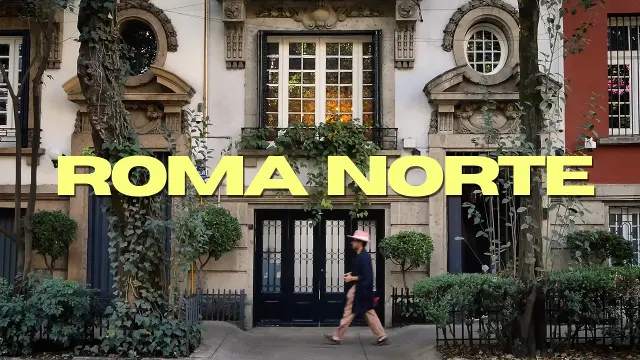
 Exploring the Trendy Neighborhood of Roma Norte in Mexico City
#Roma Norte
1 ideas
Exploring the Trendy Neighborhood of Roma Norte in Mexico City
Get new #Roma Norte ideas by email
Every Thursday: the week's best ideas, with the newest from #Roma Norte.
Related tags
Roma Norte: A Guide to Mexico City's Leafy Neighborhood
Roma Norte is the northern half of Colonia Roma, a residential district in the centre of Mexico City that has become one of the most walked, photographed and lingered-in parts of the capital. It sits between the older, denser centre and the greener, more residential neighbourhoods to the west, and it is easily explored on foot in an afternoon.
Where it comes from
Colonia Roma was laid out in the late nineteenth and early twentieth centuries on land that had been on the edge of the city, designed in the manner of a European garden suburb: a grid of streets interrupted by small plazas, planted with trees, built for families who wanted a house with a garden within reach of the centre. The neighbourhood was later divided into Roma Norte and Roma Sur, and the northern half became the busier of the two, with more shops, offices and places to eat.
What you will find
Read more
Roma Norte is a place of layers. Grand townhouses from the early decades of the twentieth century stand beside apartment blocks from the mid-century and newer buildings inserted into the gaps. Much of the charm comes from that mix, and from the fact that so many of the old houses have been turned into something else — a café, a bookshop, a gallery, a small hotel. The neighbourhood is known for its food and drink: bakeries, market stalls, taquerías that have served the same street for decades, and a newer generation of restaurants and bars. It is also a working neighbourhood, not a museum, and that is part of what makes it pleasant.
Styles and textures to look for
Architecturally, the interest lies mostly in the early twentieth century. You will see Art Nouveau facades with curved ironwork and floral tiles, Art Deco buildings with cleaner lines and geometric detail, and quieter neoclassical houses with porches and small front gardens. Look up: much of the best of it is above the shopfronts, on the upper floors and the rooflines. The plazas are worth seeking out too — small, shaded, with benches, fountains and a pace that slows you down.
If you are new to it
Start walking early in the day, when the streets are quiet and the light is soft, and pick a couple of streets to follow properly rather than trying to cover everything. Eat where the neighbourhood eats: markets, bakeries, places with a handful of tables. Weekends are livelier but busier; a weekday morning gives you the place more or less to yourself. Pavements can be uneven and traffic moves briskly, so watch your step and your surroundings. Above all, allow time to sit down. Roma Norte rewards people who stop rather than people who tick it off.
#Roma Norte: frequently asked questions
Where should I start when exploring Roma Norte?
Begin somewhere central and small rather than at a landmark: one of the little plazas with benches and a fountain makes a natural anchor, and from there you can follow a single street properly. Chasing a full circuit of the neighbourhood usually means seeing less, because the pleasure is in the details you notice when you slow down.
What kind of architecture is Roma Norte known for?
The richest layer is the early twentieth century: facades with curved ironwork and floral tiles, buildings with cleaner geometric lines, and plainer houses with porches and small front gardens. Much of the best of it sits above eye level, on upper floors and rooflines, so remember to look up above the shopfronts.
Is it better to visit Roma Norte on a weekday or at the weekend?
A weekday morning is the calmest choice, with quiet streets and soft light that make the facades easy to photograph. Weekends bring more life and more people, which suits some visitors better but makes the pavements harder to navigate.
What should I eat while I'm there?
Eat where the neighbourhood itself eats: market stalls, bakeries and small places with only a handful of tables, alongside the long-standing taquerías. Roma Norte is a working neighbourhood rather than a museum, and its everyday food culture is a big part of why it feels so lived-in.
What are the common mistakes visitors make in Roma Norte?
The usual one is trying to cover everything in a rush and never sitting down, which misses the point of the place. Others are staying at street level instead of looking at the upper floors, and forgetting that pavements can be uneven and traffic brisk, so it pays to watch your step.
How did Roma Norte end up looking the way it does?
The district was planned as a garden suburb on the edge of the city, with a street grid broken up by planted plazas and houses with gardens. It was later split in two, and the northern half grew busier, so grand townhouses now sit beside mid-century apartment blocks and newer infill, many of the old houses converted into cafés, bookshops or small hotels.
Videos come from YouTube and posts from Instagram; titles and summaries are our own. All rights belong to their creators.