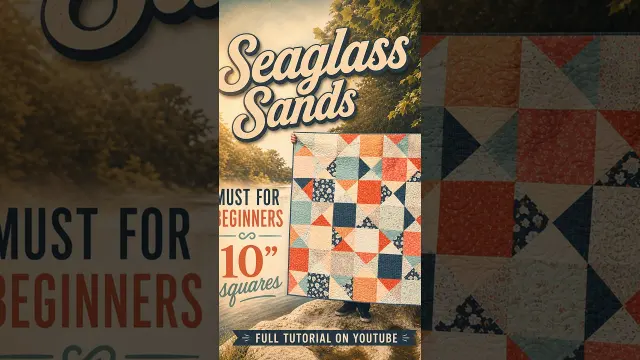
 Fast Scrappy Hourglass Quilt Pattern for Layer Cake Squares
#Scrappy Quilting
2 ideas
Fast Scrappy Hourglass Quilt Pattern for Layer Cake Squares
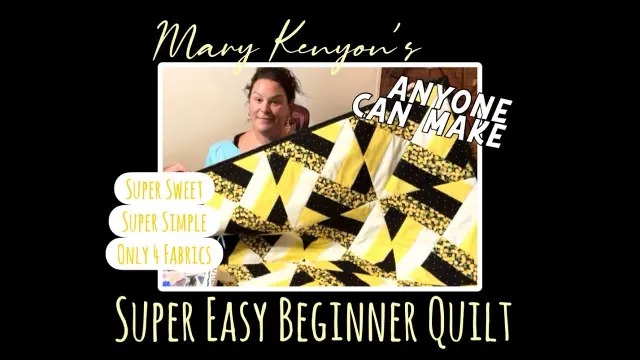 Easy and Impressive Scrappy Baby Quilt Tutorial
Get new #Scrappy Quilting ideas by email
Every Thursday: the week's best ideas, with the newest from #Scrappy Quilting.
Related tags
Scrappy Quilting: A Guide to Using Every Last Scrap
Scrappy quilting is the practice of building a quilt from many different fabrics rather than a single coordinated collection. Instead of buying yardage in matching prints, the quiltmaker works from what is already on hand: offcuts from earlier projects, worn clothing, inherited stashes, remnants too small for anything else. The result is a patchwork that looks deliberately varied, and the style is as much a philosophy about waste as it is a look.
Where it comes from
Quilts have almost always been made from scraps. Before fabric was cheap and widely available, every usable piece of cloth was saved, and patchwork grew out of plain necessity. Many traditional blocks and settings, from simple squares to more intricate repeating patterns, developed in households where the fabric supply was whatever the family could spare. What reads today as a charming aesthetic was originally thrift.
The main approaches
Read more
There are broadly two ways to work scrappily. The first is controlled scrappy: you choose a colour palette or a set of values, then let the prints vary freely within it. A quilt might use only blues and creams, or only warm tones, with dozens of different fabrics filling those roles. The second is truly random scrappy, where anything goes and the joy is in the collision of unrelated patterns.
Between those extremes sit familiar strategies. Some quilters sort scraps by size and cut them into standard shapes such as squares, strips or half-square triangles, so that odd pieces become usable units. Others start with a single background fabric and let the scraps do the talking, which keeps a busy quilt from becoming chaotic.
What beginners should know
Value matters more than colour in a scrappy quilt. If you squint at your pile and can still see light, medium and dark clearly, the quilt will hold together even when the prints clash. A common beginner frustration is a top that looks muddy, and it is nearly always a value problem rather than a fabric problem.
Scale is the other thing to watch. Very small prints can read as solid colour from a distance, while very large ones get chopped into unrecognisable fragments. Mixing both is fine, but it helps to spread the largest, boldest prints evenly rather than clustering them in one corner.
Practical tips
- Cut scraps down to a few standard sizes as you acquire them, so they are ready to use.
- Keep a scrap bin sorted by colour, and a second one for pieces too small to sort.
- Press seams as you go; scrappy tops are bulky and get harder to flatten later.
- Take a photo of your layout and check it in black and white to test the value balance.
- Do not overthink the arrangement. Slight unevenness is what gives a scrap quilt its character.
Scrappy quilting rewards a relaxed attitude more than precision. The fabrics are already mismatched, so small imperfections disappear into the whole, and the finished quilt carries the memory of everything that came before it.
#Scrappy Quilting: frequently asked questions
How do I start a scrappy quilt if I have no stash built up yet?
Start by gathering fabric you already own rather than shopping for a coordinated collection — worn clothing, leftover pieces from past sewing, and inherited fabric all work. Cut what you collect into a few standard shapes so the pieces are ready to assemble later. Then decide whether you want to control the palette or let every print mix freely, and build from there.
What do I actually need to make a scrappy quilt?
You need scrap fabric, a way to cut it into consistent shapes, a sewing machine or needle and thread, and a background fabric if you want to keep a busy top from looking chaotic. A scrap bin sorted by colour helps more than any special tool. Most of the work is done with basic piecing supplies you likely already have.
Should I choose a controlled palette or go completely random?
Controlled scrappy means you pick a colour family or a set of values and let the prints vary freely within that boundary, which gives a cohesive result. Truly random scrappy lets anything go, and the pleasure comes from the unexpected collisions of unrelated patterns. Choosing one of these two directions first makes every later decision easier.
How do I care for a scrappy quilt so it lasts?
Because scrappy quilts are built from many different fabrics, wash gently with a mild detergent and avoid harsh heat, which can shrink or fade some of the pieces unevenly. Press seams well as you sew, since a bulky top is much harder to flatten once finished. Testing any fabric you are unsure about before it goes into the quilt saves trouble later.
What is the most common mistake beginners make with scrappy quilts?
The usual frustration is a finished top that looks muddy, and it is almost always a value problem rather than a fabric problem. Squinting at your pile to check that light, medium and dark still read clearly prevents most of it. A quick photo of the layout viewed in black and white shows the same thing before you sew.
Can I make a scrappy quilt as a gift for a baby or a quick project?
Yes — small quilts are ideal for scraps because you need less of any one fabric, and simple shapes like squares or hourglass blocks go together quickly. Letting the prints stay mismatched means small imperfections blend into the whole. The finished piece also carries the memory of the fabrics it came from, which suits a gift well.
Videos come from YouTube and posts from Instagram; titles and summaries are our own. All rights belong to their creators.