 Sea Animals and Harbor Adventure for Kids
#Sea Animals
4 ideas
Sea Animals and Harbor Adventure for Kids
 Aquarium Exploration and Sea Animal Sounds
 Sea Animals Counting Up to Twenty Kids Song
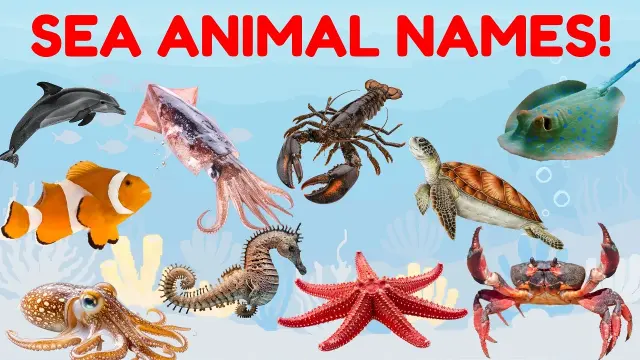 Underwater Sea Animal Vocabulary Lesson for Kids
Get new #Sea Animals ideas by email
Every Thursday: the week's best ideas, with the newest from #Sea Animals.
Related tags
Sea Animals: An Intro to Ocean Life
Sea animals are the creatures that live in the sea and other salty waters. They include everything from tiny drifting organisms to large mammals, and they come in many shapes, sizes, and ways of living. Some spend their whole lives in the ocean, while others only visit it for feeding, breeding, or shelter. Together, they form one of the most varied groups of animals on Earth.
What sea animals are
Sea animals belong to many different animal groups. Some are fish, such as tuna, rays, and seahorses. Others are mammals, like whales, dolphins, and seals, which breathe air but live in or near the water. There are also reptiles, such as sea turtles, and invertebrates, like jellyfish, octopuses, crabs, starfish, and sea urchins.
Because the sea covers such a wide range of habitats, sea animals have adapted in many different ways. Some live near the shore in rock pools or tidal zones. Others stay close to the surface, drift in open water, hide in coral reefs, or live deep on the sea floor.
Read more
Main kinds you may recognise
A simple way to think about sea animals is by where and how they live.
- Fish: animals with gills and fins that live underwater all their lives
- Marine mammals: air-breathing animals that nurse their young and are adapted to life in the sea
- Reptiles: such as sea turtles, which spend much of their lives in water
- Invertebrates: animals without backbones, including shellfish, molluscs, jellyfish, and crustaceans
You may also hear the sea divided into habitats such as the open ocean, coral reefs, sandy seabeds, rocky shores, estuaries, and deep water. Different animals are suited to different places.
How sea animals live
Sea animals use many clever survival strategies. Fish often move in groups for protection. Some animals camouflage themselves by matching the sand, coral, or rocks around them. Others use shells, spines, speed, or stingers to defend themselves. Many sea animals feed on plankton, smaller animals, plants, or seaweed, while larger predators hunt fish and other marine life.
Some sea animals migrate long distances. Others stay in one area if they can find enough food and shelter. Their life cycles can be very different too: some hatch from eggs, some give birth to live young, and some go through dramatic changes as they grow.
What beginners should know
If you are learning about sea animals, start with the basics: their names, body parts, and habitats. It helps to notice which animals are fish, which breathe air, and which have shells or soft bodies. Look at how they move as well: swimming, gliding, crawling, floating, or digging.
A few useful tips:
- Learn sea animals by habitat, not just by name
- Notice whether an animal has fins, flippers, a shell, or tentacles
- Remember that not all sea animals are fish
- Use simple comparisons to help children remember them, such as “star-shaped,” “shell-covered,” or “fast-swimming”
Sea animals are fascinating because they show how life can adapt to many different conditions. Once you begin to notice their differences, the ocean becomes much easier to understand.
Videos come from YouTube and posts from Instagram; titles and summaries are our own. All rights belong to their creators.