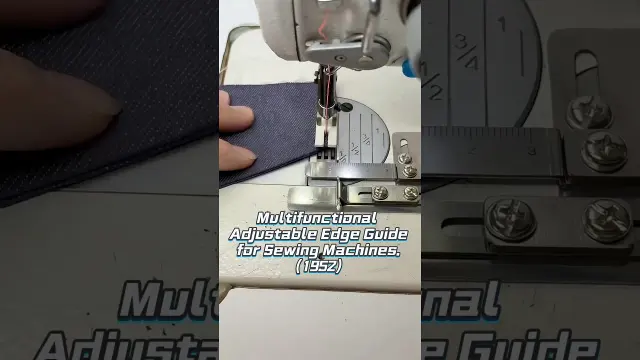
 Multifunctional Adjustable Edge Guide For Sewing Machines
#Sewing Hacks
1 ideas
Multifunctional Adjustable Edge Guide For Sewing Machines
Get new #Sewing Hacks ideas by email
Every Thursday: the week's best ideas, with the newest from #Sewing Hacks.
Related tags
Sewing Hacks: Simple Tricks That Make Sewing Easier
Sewing hacks are the small, practical workarounds that sewers collect over time — shortcuts, clever uses for ordinary household items, and habits that save fabric, thread and patience. They are not a technique in themselves but a way of working: the accumulated folk wisdom of people who sew at kitchen tables and in small studios, passed along by word of mouth long before anyone wrote them down. Most of them exist to solve a handful of recurring problems: something slips, something frays, something puckers, or a marking that was clear in your head has vanished by the time you reach the machine.
What kinds of hacks exist
The tricks tend to cluster around the stages of a project.
- Measuring and marking: using a strip of tape as a repeatable guide, marking fabric with a line of thread that can be pulled out later, folding rather than measuring when a shape needs to be symmetrical.
- Cutting: weighting down a slippery fabric instead of pinning it, keeping a dedicated pair of scissors that only ever touch cloth so the blades stay sharp.
- Machine work: sewing a test seam on a scrap of the same fabric to check tension and stitch length before touching the real thing, using a strip of tape on the machine bed as a seam allowance guide, and placing a piece of paper under the needle when starting on a delicate edge to stop the fabric being pulled down into the machine.
- Finishing: pressing as you go rather than at the end, and pressing seams flat before crossing them so the bulk stays manageable.
Read more
The habits behind them
A few principles explain most of the individual tricks. Fabric behaves better when it is supported, so anything that holds it steady — a weight, a pin placed inside the seam allowance, a scrap underneath — tends to help. Accuracy comes from repetition, so an adjustable guide or a marked reference point beats careful eyeballing. And almost every problem is cheaper to solve on a sample than on the garment, which is why experienced sewers test so relentlessly on scraps.
What beginners should know
Learn the fundamentals first. Hacks make sense once you understand seam allowances, grain lines, tension and pressing; before that they can paper over mistakes instead of preventing them. Try each new trick on scrap fabric before trusting it with a project. Keep your tools simple and well cared for — sharp scissors, a decent iron, good light — since many hacks are really compensations for dull blades or poor visibility.
Organise as you go, too. Winding a bobbin before it runs out, threading several needles at once, and keeping a small box of offcuts for tests will save more time than any single clever trick. Treat the hacks you collect as suggestions rather than rules: keep the ones that suit the way you work, and pass on the ones that do not.
#Sewing Hacks: frequently asked questions
What exactly are sewing hacks?
They are the small practical workarounds sewers pick up over time — shortcuts, unusual uses for ordinary household items, and habits that save fabric, thread and patience. They are not a technique in themselves but a way of working, closer to folk wisdom than to formal instruction. Most of them exist to solve a recurring annoyance: something slips, frays, puckers, or a marking disappears before you reach the machine.
Do I need special tools to use sewing hacks?
Mostly no — tape, weights, paper, spare needles and offcuts do a lot of the work. What matters more is that your basic tools are in good shape, since many tricks are really compensations for dull blades, a weak iron or poor light. Keep a sharp pair of scissors reserved for cloth only, and the hacks you try will behave far more reliably.
Which sewing hacks should a beginner start with?
Learn the fundamentals first — seam allowances, grain lines, tension and pressing — because hacks make sense only once you understand what they are working around. After that, start with the simple ones: a strip of tape as a seam guide, a test seam on scrap before the real thing, and pressing as you go. Try each trick on an offcut before trusting it with a project you care about.
How do I keep slippery fabric from shifting while I cut it?
Weight it down instead of pinning it, so the fabric stays flat without the distortion pins can cause. A scrap of the same fabric under the needle is also worth testing, since it stops a delicate edge from being pulled down into the machine. In general, anything that supports the fabric and holds it steady tends to help.
What is the most common mistake people make with sewing hacks?
Treating them as rules rather than suggestions, and reaching for them before the basics are solid — at that stage they tend to paper over mistakes instead of preventing them. The other frequent slip is skipping the sample, which is exactly where a trick is cheapest to test. Keep the hacks that suit the way you work and let the rest go.
How should I look after the tools these tricks depend on?
Keep it simple and well cared for: sharp scissors, a decent iron and good light will do more for your sewing than any single clever shortcut. Store blades so they are not knocked about, and reserve a pair for fabric alone. Organising as you go — winding a bobbin before it empties, threading needles in advance, keeping a box of offcuts — saves more time than hunting for a trick.
Videos come from YouTube and posts from Instagram; titles and summaries are our own. All rights belong to their creators.