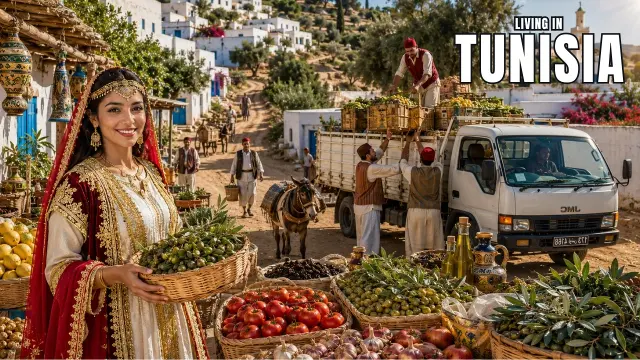
 Journey Through Tunisia From the Mediterranean Coast to the Sahara
#Sidi Bou Said
1 ideas
Journey Through Tunisia From the Mediterranean Coast to the Sahara
Get new #Sidi Bou Said ideas by email
Every Thursday: the week's best ideas, with the newest from #Sidi Bou Said.
Related tags
Sidi Bou Said: Tunisia's Blue and White Cliffside Village
Sidi Bou Said is a small village on a hillside above the Gulf of Tunis, a short distance north-east of the capital and close to the ruins of ancient Carthage. It is famous for one of the most disciplined colour schemes in the Mediterranean: blinding white walls, and doors, window frames and iron grilles painted a deep cobalt blue, with bougainvillea and geraniums spilling over the terraces. Walking its cobbled lanes feels less like sightseeing than like stepping inside a drawing.
Where it comes from
The village takes its name from a Sufi holy man who, by local tradition, lived and was buried on this hill, which made the spot a place of pilgrimage and then of settlement. Its architecture grew out of the wider Andalusian and Ottoman-influenced building traditions of the region, and the white-and-blue palette has been maintained over the years as a point of local pride, protected by rules about how houses may be painted and repaired. One much-repeated explanation for the blue is that it was thought to keep insects away; treat that as folklore rather than fact, and enjoy it as a look rather than a method.
What you actually see
The charm is in the details. Arched doorways set with black iron studs, hand-shaped brass knockers, wooden shutters, and windows covered by finely worked iron grilles that let air in while keeping the street out. Houses turn inward around shaded courtyards, and flat roofs catch the breeze. The main street climbs between workshops and small shops, past cafés with cushioned benches where you can sit over mint tea with pine nuts and look out across the water.
What to do with your time
There is no checklist here, and that is the point. Wander without a route, take the stairs that lead nowhere in particular, and stop whenever a doorway or a view holds you. A restored mansion in the village houses a collection of traditional musical instruments and gives a sense of how these houses were lived in. Down the hill, the archaeological sites of Carthage and the great Roman baths by the sea make an easy half-day. Shops sell pottery, leather, perfume and the woven goods the region is known for.
Read more
Practical notes
Come early in the morning or in the late afternoon, when the light is soft, the day-trippers have thinned and the blue looks deepest. Wear shoes that cope with cobbles and steps. Dress modestly out of respect for a village where people live and pray. Many of the doorways you will want to photograph are somebody's front door, so ask first, and never walk into a courtyard uninvited. A suburban train from the centre of Tunis stops at the foot of the hill, and the climb up is part of the pleasure. In the shops, friendly haggling is normal; in fixed-price stores it is not.
#Sidi Bou Said: frequently asked questions
What is the best time of day to see Sidi Bou Said?
Go early in the morning or in the last hours of daylight, when the sun is low and the white walls pick up a warm glow instead of a glare. The blue reads richest in that softer light, the crowds thin out, and the lanes feel like a village rather than a stop on a tour. Midday works too, but expect harsher contrast and more people in your photos.
How do you get up to the village, and is it hard to walk?
A suburban train from the city stops at the bottom of the hill, and the climb on foot is genuinely part of the experience rather than a chore. Once inside, expect cobbles, uneven steps and lanes that rise and fall without warning, so comfortable flat shoes matter more than anything else you pack. Leave the heels and the smooth soles at home.
What should I wear when visiting?
Choose loose, light clothing that covers shoulders and knees, out of respect for a place where people live and pray rather than because anyone will stop you. A scarf or shawl in your bag is useful for both sun and modesty. Comfortable shoes and a hat will do more for your day than a carefully planned outfit.
What is worth buying in the shops?
The local craft tradition runs to pottery, leatherwork, perfume and woven textiles, all of which travel well and feel tied to the place. In small workshops a bit of friendly back-and-forth over the price is expected and part of the fun. In shops that display fixed prices, pay what is marked and skip the bargaining.
Can I photograph the doors and courtyards?
The blue doors and iron grilles are the village's signature, but most of them are somebody's front door, so ask before you frame a shot and accept a no gracefully. Never step into a courtyard or through an open gate without an invitation. A smile and a gesture toward your camera usually settles it faster than words.
What is the biggest mistake visitors make here?
Treating the village as a checklist to be ticked off in an hour, then leaving without sitting down. The pleasure is in wandering without a route, following stairs that lead nowhere, and stopping for mint tea on a terrace with a view over the water. Build in slack time and let the place slow you down.
Videos come from YouTube and posts from Instagram; titles and summaries are our own. All rights belong to their creators.