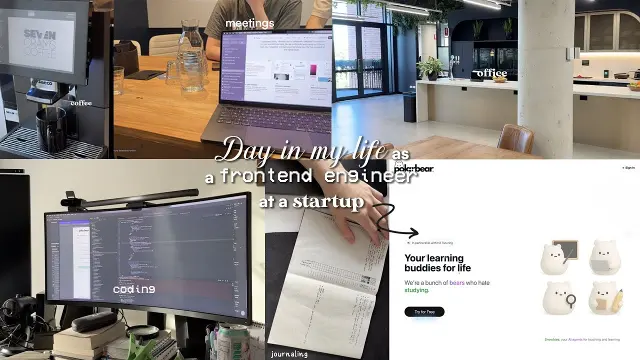
 A Day in the Life of a Frontend Developer at a Startup
#Startup Jobs
1 ideas
A Day in the Life of a Frontend Developer at a Startup
Get new #Startup Jobs ideas by email
Every Thursday: the week's best ideas, with the newest from #Startup Jobs.
Related tags
Startup Jobs: A Guide to Working at an Early-Stage Company
A startup job is a role at a young, growing company that is still searching for a repeatable, sustainable business model. Where an established company runs on proven processes and predictable revenue, a startup is usually organised around a hypothesis: that a particular product or service solves a real problem for enough people to build a business on. Working there means helping to test that hypothesis, often before anyone knows whether it will hold.
Why startups differ
The defining feature is scarcity. Startups rarely have the staff, budget or institutional memory of larger organisations, so work is broad by necessity. A single person may handle customer support in the morning, write product documentation in the afternoon and interview users in the evening. That breadth is the appeal for some and the strain for others. Decisions tend to be made quickly and revised quickly, which suits people who are comfortable with ambiguity and uncomfortable with long approval chains.
The stages
Read more
Startup jobs look different depending on how far the company has travelled. At the earliest stage a handful of founders may be building a first version of something, funded by their own savings or by early backers. Later, once a product has found paying customers, the company hires specialists and begins to formalise. A company that has raised substantial outside investment and is scaling may still call itself a startup, but the work becomes more structured, with managers, targets and defined departments. Understanding which stage a company is at is more useful than the label itself.
Common roles
- Engineering: building and maintaining the product, from frontend interfaces to backend systems and data infrastructure.
- Product and design: deciding what to build, for whom, and how it should look and behave.
- Growth and marketing: finding channels to reach customers and testing which ones work.
- Sales and customer success: bringing in revenue and keeping the people who pay.
- Operations and finance: the unglamorous work that keeps a small company running legally and reliably.
Early hires are often generalists; specialists arrive as the company matures. Many startups also offer internships and part-time roles, which are a reasonable way to learn the environment without a long commitment.
What beginners should know
Ask how the company makes money, or plans to. Ask who the customers are and how many exist. Ask what the last six months have looked like, not just what the next year might bring. Compensation frequently includes equity, a share of the company, and beginners should understand that equity can be worth a great deal or nothing at all depending on whether the business succeeds. It is a long-term bet, not a salary substitute.
Read the job description for what is missing as much as what is listed. Small teams often write roles around the person they hope to find, so a title may understate the scope.
Practical advice
Talk to people who already work there, and to people who have left. Be honest with yourself about how much structure you need; some people flourish without it, others find it draining. When applying, show something concrete you have made or solved, since evidence of initiative usually carries more weight than credentials. And keep your own boundaries: enthusiasm is valued, but sustainable working habits matter more over years than over months.
#Startup Jobs: frequently asked questions
How do I get started looking for a startup job?
Start by deciding which part of the work appeals to you — building the product, talking to customers, or keeping the operations running — because early teams hire around specific needs rather than neat job titles. Then look for young companies whose product you actually understand and can describe in plain words. Rather than waiting for a posted role, reach out to people already working there and show something concrete you have made or solved, since evidence of initiative carries more weight than credentials alone.
What should I ask before accepting a role at a startup?
Ask how the company makes money, or plans to, and who its customers are and how many of them exist. Ask what the recent past has looked like rather than only what the next year might bring, since that tells you how honest and stable the team is. It also helps to ask who you would report to and what decisions you would own, because broad responsibilities are common and being clear about them prevents surprises later.
Should I join an early-stage startup or a more established one?
The label matters less than the stage: a company still searching for a product looks very different from one that has found paying customers and is formalising. Early on you will be a generalist doing many things at once, while later hires specialise and work inside defined departments. Be honest with yourself about how much structure and guidance you need, because some people flourish in ambiguity and others find it draining.
What do startups look for in the people they hire early?
Small teams tend to value breadth and comfort with uncertainty over narrow expertise, because the job often changes shape from week to week. They also look for people who can take a vague problem and make progress on it without a long approval chain. Internships and part-time roles are a reasonable way to test the environment before committing to something longer.
How should I read a startup job description?
Read it for what is missing as much as for what is listed, since small teams often write roles around the person they hope to find. A title may understate the real scope, so ask directly which responsibilities would be yours in a typical week. Talking to people who currently work there, and to people who have left, usually tells you more than the posting does.
What are the most common mistakes people make when applying to startups?
One common mistake is treating a young company like a large one and leading with credentials instead of showing something you have actually built or fixed. Another is failing to ask how the business earns money, which leaves you unable to judge whether the role is a safe bet. Finally, people often accept a broad scope without discussing boundaries, yet sustainable working habits matter more over years than short bursts of enthusiasm.
Videos come from YouTube and posts from Instagram; titles and summaries are our own. All rights belong to their creators.