 Commercial Driver License General Knowledge Permit Test Prep
#Test Prep
31 ideas
Commercial Driver License General Knowledge Permit Test Prep
 ATI TEAS Life Science Priority Practice Questions
 FAA Part 107 Drone Certification Scenario Based Questions
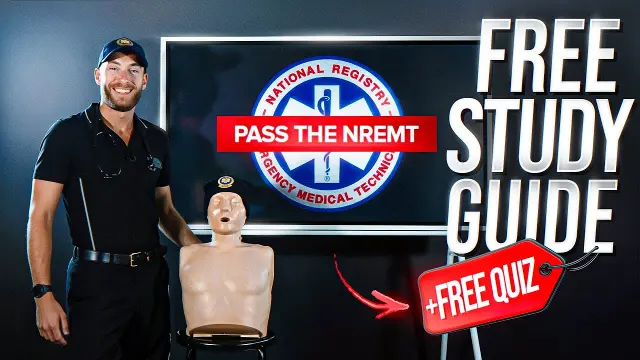 NREMT Exam Patient Assessment Study Guide and Review
 Real Estate License Exam Practice Questions
 GED Social Studies Test Practice Questions and Review
 Digital SAT Subject Predictions and Strategies
Get new #Test Prep ideas by email
Every Thursday: the week's best ideas, with the newest from #Test Prep.
Related tags
Test Prep Essentials and Study Strategies
What test prep means
Test prep is the process of getting ready for an exam by reviewing the material, practising questions, and strengthening the skills the test expects. It can apply to school exams, professional certifications, entrance tests, licensing exams, and many other forms of assessment. Good test preparation is not just about memorising facts. It is also about understanding how questions are phrased, learning how to manage your time, and becoming familiar with the format of the exam.
Different tests ask for different kinds of preparation. Some focus on knowledge recall, while others test problem-solving, reading comprehension, judgement, or practical decision-making. Because of that, the best approach is usually to study both the content and the structure of the test itself.
Common ways to prepare
Read more
A strong study plan usually includes several parts:
- Review the main topics covered by the exam
- Break the material into small, manageable sections
- Use practice questions to check your understanding
- Revisit weaker areas more often
- Take timed practice sessions to build pace
- Leave time for revision rather than trying to learn everything at the last minute
Many people find it helpful to study in short, regular sessions instead of long, exhausting ones. Repeating key ideas over time tends to make them easier to remember. It also helps to mix study methods, such as reading notes, making summaries, drawing diagrams, or explaining the material out loud in your own words.
Understanding the exam format
Before you begin, try to learn as much as you can about how the test works. Ask yourself:
- Is it multiple choice, written, oral, or practical?
- Are there time limits for each section?
- Are some questions worth more than others?
- Is guessing allowed, or is there penalty for wrong answers?
- Does the exam focus more on theory, application, or both?
When you know the format, you can practise in a way that matches the real test. This often makes the exam feel more predictable and less overwhelming.
Study techniques that help
Active recall is one of the most useful study habits. Instead of reading the same notes again and again, close the book and try to remember the information yourself. Practice questions work well for this because they show what you truly know and what needs more attention.
Spaced repetition is another useful approach. Return to important topics after a gap of time, rather than only studying them once. This helps move information into longer-term memory.
You may also want to create simple summary sheets for key formulas, definitions, steps, or rules. Keep them clear and uncluttered. If a topic is difficult, try to link it to examples, patterns, or real situations so it becomes easier to understand.
Practical tips for exam day
In the final days before the test, focus on review and confidence rather than trying to learn everything at once. Get enough rest, eat in a way that keeps you comfortable, and arrive with everything you need. During the exam, read each question carefully and answer the ones you know first if that helps you settle in.
If you feel stuck, move on and come back later. Sometimes a difficult question becomes clearer after you have answered others. If time allows, use the end of the exam to check for mistakes, missed questions, or instructions you may have overlooked.
Building confidence
Test prep works best when it is steady and realistic. Start early if you can, study in a way that suits your learning style, and practise under conditions that resemble the real exam. The more familiar the material and the format feel, the easier it is to stay calm and focused.
Videos come from YouTube and posts from Instagram; titles and summaries are our own. All rights belong to their creators.