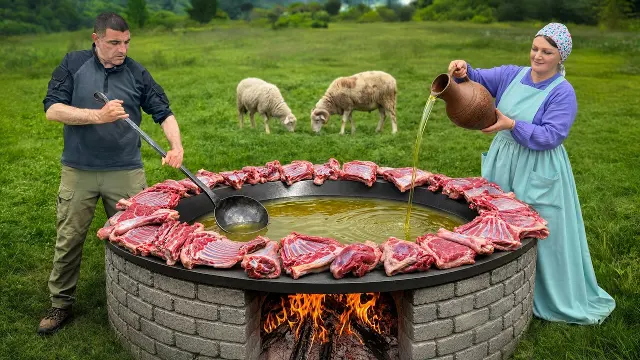
 Cooking massive lamb pilaf in a mountain village
#Village Food
1 ideas
Cooking massive lamb pilaf in a mountain village
Get new #Village Food ideas by email
Every Thursday: the week's best ideas, with the newest from #Village Food.
Related tags
Village Food: Rustic Cooking and Country Flavours
Village food is the kind of cooking that grows out of everyday life in the countryside. It is usually simple, filling, and closely tied to what is available locally: vegetables from the garden, milk from farm animals, grains, herbs, fruit, eggs, and meat or fish when they are part of the local diet. In many places, village food comes from family tradition rather than from written recipes, so it often changes from house to house while keeping the same practical spirit.
What village food is
At its heart, village food is honest home cooking. It is made to feed families, workers, and guests with ingredients that are fresh, seasonal, and used carefully. Dishes are often based on one-pot cooking, baking, boiling, stewing, roasting, or preserving. Because rural life has long depended on making the most of what is on hand, village food often includes recipes that use leftovers, tougher cuts of meat, preserved vegetables, or dried grains.
This kind of food is found in many parts of the world, but the exact dishes differ widely. One village may be known for bread, soups, and dairy foods; another for grain dishes, stuffed vegetables, or slow-cooked meat. The common thread is not a single recipe, but a way of cooking that is local, practical, and full of memory.
Read more
Main styles and kinds
Village food can be broadly grouped by method and purpose:
- Everyday meals: soups, stews, flatbreads, porridges, vegetable dishes, and simple salads
- Festive food: richer dishes made for gatherings, weddings, holidays, or harvest time
- Preserved food: pickles, dried herbs, jams, cured meats, fermented foods, and stored grains
- Bread and baked goods: rustic loaves, pies, pastries, and savoury bakes
- Farm-style dishes: milk-based foods, eggs, cheese, butter, and dishes built around seasonal produce
In many cultures, village food is also linked to sharing. Large platters, communal pots, and bread placed at the center of the table are common signs of hospitality.
Techniques and practical habits
The techniques used in village cooking are usually simple but dependable. Slow simmering gives flavour to soups and stews. Baking in an oven or under embers creates hearty breads and casseroles. Drying, salting, fermenting, and pickling help food last longer through leaner seasons. Chopping vegetables by hand, kneading dough, and cooking over steady heat are all part of the rhythm.
If you want to cook in a village style, start with good basic ingredients and avoid overcomplicating them. Let the food taste like itself. Use herbs, onions, garlic, grains, root vegetables, and seasonal produce to build flavour naturally. If a recipe calls for slow cooking, give it time; many rustic dishes depend on patience more than precision.
What beginners should know
Village food is not about perfection. It is about comfort, usefulness, and care. A dish does not need many ingredients to be satisfying. It helps to think in layers: a base, a main ingredient, something to season, and something to finish the dish. Bread, broth, fresh herbs, yoghurt, or a simple sauce can bring a meal together.
If you are new to this style, begin with a soup, stew, or baked dish. These are forgiving and teach you how ingredients work together. Taste as you cook, and remember that rustic food should feel nourishing rather than delicate. The best village meals often come from ordinary ingredients treated with respect.
#Village Food: frequently asked questions
How do I start cooking village food at home?
Begin with something forgiving, like a soup, a stew, or a baked dish, since these let you learn how ingredients behave together without demanding precision. Keep the ingredient list short and let each thing taste like itself rather than layering on lots of seasoning. Taste as you go and treat the process as everyday cooking rather than a performance.
What ingredients and equipment do I need for village-style cooking?
Nothing specialized: a heavy pot, a baking dish, a board and knife, and a steady heat source cover most of it. On the ingredient side, build around what is fresh and in season — vegetables, grains, herbs, onions and garlic, dairy or eggs, and simple stock. The spirit of this cooking is using well what you already have, so resist buying special items for a single dish.
Which kind of village food should I choose to make?
Think about the occasion first: an everyday meal suits soups, porridges, flatbreads and vegetable dishes, while a gathering calls for something richer and slower. If you want to preserve the harvest, look to pickles, jams, dried herbs and fermented foods instead of cooked dishes. Beyond that, choose the tradition closest to your own family or region, because the recipes carry memory as much as flavour.
How do I store and keep village-style food from spoiling?
Rural cooking has always relied on methods that stretch food through lean seasons — drying, salting, pickling, fermenting and careful storage in a cool dark place. Cooked dishes like stews and soups generally improve after a rest and keep better when cooled quickly and reheated thoroughly. Use your senses and normal kitchen hygiene as the guide for anything you have kept.
What mistakes do beginners make with village food?
The most common one is overcomplicating: too many ingredients competing, or refining a dish until it loses its plain, filling character. Rushing slow dishes is the other big one, since stews and rustic bakes depend far more on patience than on exact measurements. Aim for nourishing rather than delicate, and don't chase perfection.
Any ideas for serving village food at a gathering?
Go communal: a large pot or platter in the middle of the table, bread within reach, and a few simple accompaniments like herbs, yoghurt or a sauce. One generous slow-cooked centrepiece — a grain or vegetable pilaf, a braise, a hearty pie — plus preserved things from your shelf reads as hospitality rather than effort. Richer festive versions of everyday dishes usually land better than an unfamiliar menu.
Videos come from YouTube and posts from Instagram; titles and summaries are our own. All rights belong to their creators.