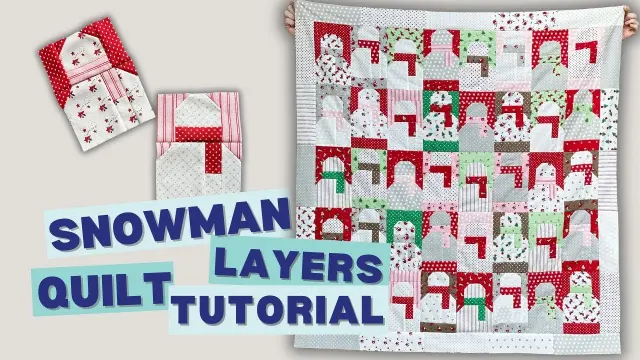
 Snowman Layers Quilt Tutorial with One Layer Cake
#Winter Quilt
1 ideas
Snowman Layers Quilt Tutorial with One Layer Cake
Get new #Winter Quilt ideas by email
Every Thursday: the week's best ideas, with the newest from #Winter Quilt.
Related tags
Winter Quilt: A Warm Guide to Making and Choosing One
A winter quilt is a quilt made with warmth as its first job. Where a summer quilt is often a single layer of cotton pieced together and bound, a winter quilt layers a pieced or appliquéd top, a filling, and a backing, then holds all three together with stitching. That extra middle layer is what changes everything: it traps air, and trapped air is what keeps you warm on a cold night. The idea is old — quilting as a way of holding padding in place goes back centuries across Europe, Asia and North America, and padded quilts were made long before they were decorative. The decorative part came along because if you have to stitch every few inches anyway, you may as well make the stitching lovely.
What makes a winter quilt different
The filling, usually called batting, does most of the work. Cotton batting gives a flat, dense, traditional weight. Wool is warmer for the same thickness and breathes well. Polyester is light, inexpensive and holds a high loft, though it can feel less breathable. Blends try to borrow the best of both. Thickness matters as much as fibre: a thin batting gives a quilt you can layer on a bed year-round, a thick one gives real winter weight.
The top layer matters too. Flannel, brushed cotton and wool give an immediate softness and a little warmth of their own. Quilting cotton is crisp and hard-wearing and lets the pattern do the talking.
Read more
Styles you will see
- Patchwork: the classic pieced top, from simple squares to complex stars. Snowman blocks, pine trees, mittens and snowflakes all suit winter themes.
- Appliqué: shapes cut and stitched onto a background — a whole scene of snowmen, cabins or bare branches.
- Wholecloth: one fabric, no piecing, where the quilting lines themselves create the design.
- Rag quilts: exposed seams that fray softly in the wash, very forgiving of a beginner's uneven sewing.
If you are starting out
Choose a simple shape repeated many times: squares, half-square triangles, or a single large appliqué block. Precuts — bundles of ready-cut squares or strips — save a great deal of measuring, and a layer cake of coordinating prints removes the hardest decision, which is choosing colours.
Match your thread and needle to the batting: thick batting wants a longer stitch and a little more room in the quilt sandwich. Baste generously — spray, pins or big hand stitches — because shifting is the most common cause of a lumpy result. Quilt lines no further apart than the batting's stated maximum, or the filling will migrate and clump.
Living with it
Wash a winter quilt gently and infrequently, in cool water, and dry it flat or on low heat. Store it folded with a sheet of acid-free tissue in the folds rather than in a sealed plastic bag, and air it now and then. A well-kept quilt lasts decades, and the weight of one over your knees on a January evening is a pleasure worth the stitching.
#Winter Quilt: frequently asked questions
What actually makes a quilt a winter quilt rather than a summer one?
A winter quilt has a middle layer of batting sandwiched between the pieced top and the backing, and stitching holds all three together. That trapped layer of air is what does the warming, which is why the filling matters as much as the fabric you see. A summer quilt is usually just a single layer of cotton, bound at the edges.
How do I choose the right batting for a winter quilt?
Think about the kind of warmth you want first: cotton gives a flat, dense, traditional weight, wool is warmer for the same thickness and breathes well, and polyester is light with a lot of loft but less breathable. Then consider thickness, since a thin batting makes a quilt you can layer on a bed all year while a thick one gives real winter heft. Blends are a way of borrowing a bit of both.
Which style is easiest if I have never made a quilt before?
Pick one simple shape and repeat it many times — squares, half-square triangles, or a single large appliqué block. Ready-cut bundles save a great deal of measuring, and a coordinated set of prints takes the hardest decision out of your hands, which is choosing colours. Rag quilts are also very forgiving, because the exposed seams are meant to fray softly in the wash and hide uneven sewing.
What are the most common mistakes people make when assembling one?
Shifting is the big one, and it is what turns a carefully pieced top into a lumpy finished quilt, so baste generously with spray, pins or large hand stitches. Match your thread and needle to the batting, and give thick batting a slightly longer stitch and more room in the sandwich. Keep your quilting lines within the batting's stated maximum spacing, or the filling will migrate and clump.
How should I wash and store a winter quilt so it lasts?
Wash it gently and infrequently in cool water, then dry it flat or on low heat rather than at high temperature. Store it folded with acid-free tissue in the creases instead of sealing it in plastic, and air it now and then. Treated this way a quilt lasts for decades.
What are good winter-themed ideas for a quilt top?
Snowmen, pine trees, mittens and snowflakes all translate well into patchwork blocks, and a layer cake of coordinating prints gives you a whole set of them without hunting for fabrics. If you prefer appliqué, a single scene — snowmen, a cabin, bare branches — can carry the whole quilt. Wholecloth is the quiet option, where the quilting lines themselves become the design.
Videos come from YouTube and posts from Instagram; titles and summaries are our own. All rights belong to their creators.