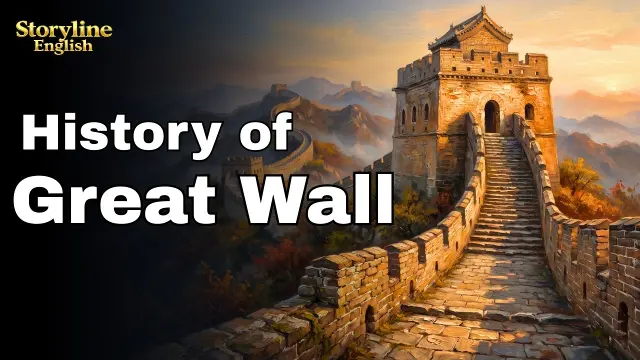
 Who Really Opened the Great Wall of China Listening Practice
#World History
3 ideas
Who Really Opened the Great Wall of China Listening Practice
 Six Incredible Historical Places Around the World to Discover
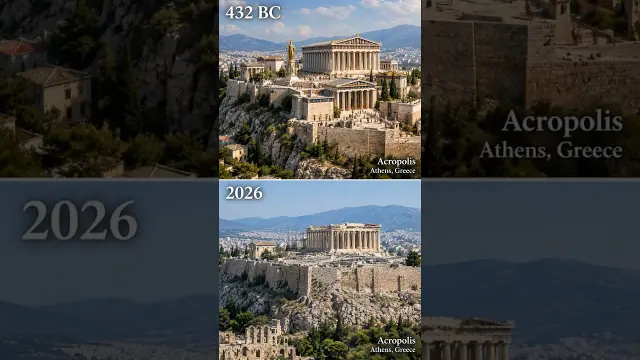 Historical Places Then and Now: Two Thousand Years of Architecture
Get new #World History ideas by email
Every Thursday: the week's best ideas, with the newest from #World History.
Related tags
World History: A Guide to the Past
What world history is
World history is the study of humanity across time and across regions. It looks at how people have lived, built societies, traded, migrated, fought, learned, and created cultures in different parts of the world. Instead of focusing on one country or one era, it connects events and ideas on a larger scale, showing how developments in one place can influence another.
Because it covers such a wide field, world history is less about memorizing every date and more about understanding patterns. You learn how civilizations rise and change, how empires expand and decline, how religions and philosophies spread, and how technology, language, and trade shape daily life.
Where it comes from
Read more
People have always tried to record the past. Early history was often written by rulers, priests, or scholars who wanted to preserve important events, laws, victories, and traditions. Over time, historians began comparing many sources and asking broader questions: How did societies organize themselves? Why did some cultures flourish? What caused conflict or cooperation between regions?
Modern world history brings together many kinds of evidence, including written records, oral traditions, archaeology, art, architecture, and objects from everyday life. This wider view helps you see history not only through famous leaders and wars, but also through ordinary people and long-term cultural change.
Main themes and periods
World history is often explored through a few major themes:
- Ancient civilizations, such as early farming societies, city-states, and river valley cultures
- Classical eras, when major political systems, philosophies, and trade networks developed
- Medieval worlds, when regional kingdoms, religious institutions, and long-distance exchange shaped life
- Early modern expansion, when exploration, empire-building, and global trade linked continents more closely
- Industrial and modern periods, when new machines, political movements, and global conflicts transformed society
These labels are useful, but real history is never perfectly divided. Different parts of the world changed at different speeds, and many traditions continued across several eras.
Why it matters
World history helps you understand the present by showing where ideas, borders, beliefs, and institutions came from. It also encourages empathy. When you study how different people lived, you begin to see that every society has its own logic, strengths, and struggles.
It can also make travel, literature, art, and current affairs more meaningful. A building, a custom, a map, or a family story often becomes richer when you know the history behind it.
How to begin
If you are new to world history, start with broad questions instead of trying to learn everything at once.
- Follow one theme, such as trade, migration, religion, or architecture
- Compare two or three regions across the same period
- Learn a timeline first, then fill in details
- Read sources carefully and remember that every account has a point of view
- Look at images, objects, and maps as well as text
A good habit is to connect facts into stories. Ask who was involved, what changed, and why it mattered. That way, history becomes more than a list of events. It becomes a way of understanding how the world came to be as it is.
Videos come from YouTube and posts from Instagram; titles and summaries are our own. All rights belong to their creators.