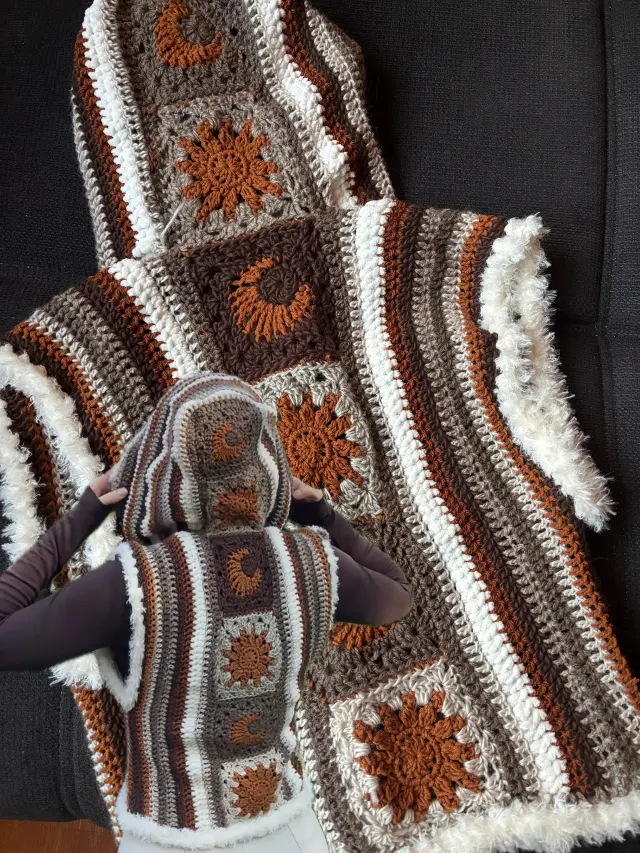
 Sun and Moon crochet vest pattern tested in warm autumn colours
#Yarn Stash
2 ideas
Sun and Moon crochet vest pattern tested in warm autumn colours
 Reflecting on a personal crochet journey and yarn storage
Get new #Yarn Stash ideas by email
Every Thursday: the week's best ideas, with the newest from #Yarn Stash.
Related tags
Yarn Stash: Storing, Sorting and Using What You Have
A yarn stash is simply the yarn a knitter or crocheter owns but has not yet used. Every fibre craft has an equivalent — the fabric shelf, the tin of thread ends — but the yarn stash has a character of its own. It grows quietly through sales, gift skeins, leftover balls from finished projects and the single skeins bought because a colour was too good to leave behind. Most people who work with yarn for long enough end up with one, whether they intended to collect or not.
Why stashes happen
Buying yarn is part of the pleasure of the craft, not a failure of discipline. A dyer's colourway may only appear once, a fibre might be discontinued, and a good price on a useful weight is hard to argue with. Stashes also serve a practical purpose: they let you start a project without a shopping trip, swatch an idea on a whim, or repair a garment years after the yarn was bought. Seen that way, a stash is a working library rather than clutter.
Getting organised
Read more
The first step with any stash is knowing what is in it. Take everything out, group it by weight and fibre, and note how much of each you have — a single ball and a sweater's worth of the same yarn call for very different plans. Keep the ball bands or write the details down, because dye lot, fibre content and yardage matter later and are hard to recover once the label is gone.
Storage should be clean, dry and out of direct sunlight. Clear boxes or open shelving let you see what you have, which is the best defence against buying it twice. Cotton and linen tolerate being packed fairly tightly; wool and other animal fibres prefer room to breathe. Where moths are a concern, sealed containers and regular inspection do more than anything else, and any yarn that smells musty or shows signs of damage should be dealt with before it sits beside the rest.
Making the stash work
A stash is only useful if it gets used. Many makers keep a short list of ideas matched to what they already own — small accessories for single skeins, striped or colour-blocked pieces for partial balls, blankets and household projects for oddments. Weighing leftovers before you begin saves disappointment later. If a yarn no longer suits your taste, passing it on to a friend, a school or a charity sale is a perfectly good ending; fibre you will never use is not a plan, it is just storage.
Buying with the stash in mind
Before adding to a collection, ask what the yarn is for and whether something at home already does the job. Buying enough of one dye lot for a whole garment is easier than improvising later. A stash built with a little intention stays an inspiration rather than an obligation.
#Yarn Stash: frequently asked questions
What exactly is a yarn stash?
It's the yarn you already own but haven't turned into anything yet — bought on impulse, gifted, or left over from finished projects. Almost anyone who knits or crochets for a while ends up with one, often without deciding to start collecting. It's better thought of as a small working library than as clutter.
How do I begin organising a stash I've never sorted?
Empty it all out somewhere with good light and group things by weight and fibre, noting roughly how much of each you have. Keep the ball bands or jot the details down, since fibre content, yardage and dye lot are painful to reconstruct later. From there, choose clean, dry storage away from direct sun where you can actually see what's inside.
What's the best way to store yarn so it stays in good condition?
Clear boxes or open shelves work well because visible yarn is yarn you remember to use, and it stops you buying the same thing twice. Wool and other animal fibres like some breathing room, while cotton and linen cope with being packed more tightly. If moths are a worry, sealed containers plus a regular check of the contents are the most reliable defence.
Should I buy yarn without a project in mind?
Occasionally, yes — a colourway that won't come back or a discontinued fibre is a fair reason to bring something home. But before adding to the pile, it's worth asking what the yarn is for and whether something already on your shelf does the job. A stash built with a bit of intention stays inspiring instead of becoming a to-do list.
How do I actually use up what I already have?
Keep a short running list of ideas matched to what's in your stash: small accessories for a lone skein, striped or colour-blocked designs for partial balls, blankets and household pieces for oddments. Weighing your leftovers before casting on avoids the disappointment of running short. And if a yarn no longer suits your taste, gifting it or donating it is a perfectly good outcome.
What mistakes do people make with their yarn stash?
The common ones are losing the labels, storing everything out of sight, and buying more of something already sitting at home. Another is treating the stash as untouchable — yarn kept for a vague future project is really just storage. Checking what you own before shopping solves most of it.
Videos come from YouTube and posts from Instagram; titles and summaries are our own. All rights belong to their creators.