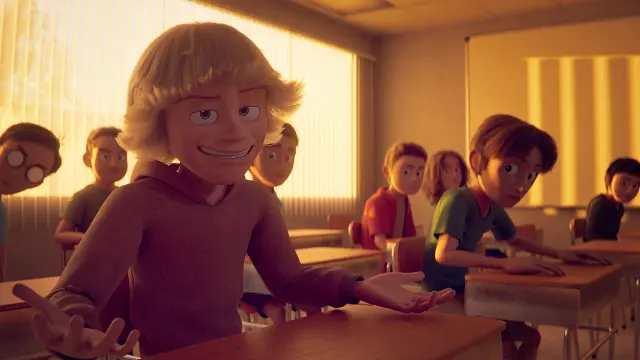
 'Class Clown' — A Blender 3D Animation Short
#Animated Short
2 ideas
'Class Clown' — A Blender 3D Animation Short
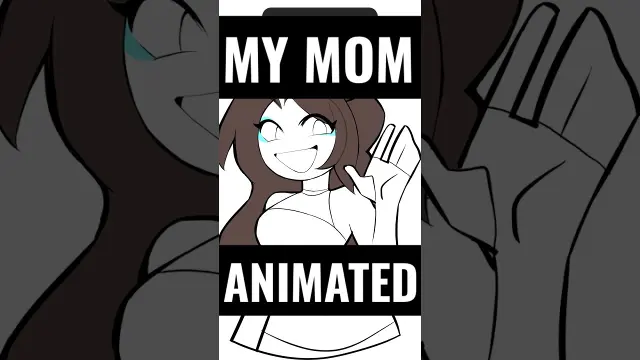 My Mom: A Short 2D Storytime Animation About Family
Get new #Animated Short ideas by email
Every Thursday: the week's best ideas, with the newest from #Animated Short.
Related tags
Animated Short: A Guide to Short-Form Animation
An animated short is a complete film told in miniature. Where a feature runs ninety minutes or more, a short might last anywhere from a few seconds to half an hour, and it still needs a beginning, a turn, and an ending. That constraint is the whole point: the form rewards economy. A single idea, clearly told, can land harder in three minutes than a sprawling story does in two hours.
A form built on constraint
Animation has always had a home in the short format. Early cinema programmes paired live-action reels with drawn cartoons, and studios used shorts as places to experiment, invent characters, and train new artists. Because a short needs fewer resources than a feature, it has long been the natural entry point for students, independent makers, and anyone with a story too small or too strange for a longer film. Festivals, television slots, and online channels have kept the format alive as venues for work that would never survive at feature length.
The main kinds
Read more
Animated shorts divide by technique before they divide by genre. Hand-drawn and digital 2D animation remain the warmest, most expressive route for character work. Stop motion, built frame by frame from puppets, clay, paper, or objects, offers a tangible, slightly imperfect texture that audiences read as handmade. 3D computer animation, produced in software like Blender or Maya, suits depth, camera movement, and worlds that must feel physically solid. Motion graphics and mixed media sit alongside these, often combining drawn elements, photography, and type.
Genre is a separate axis. You will find quiet observational pieces, comic vignettes, music-driven films, documentary animation, and abstract experiments with no characters at all.
How a short gets made
The process mirrors feature production, just compressed. It begins with a premise and a script, then a storyboard, which is where most short films are really decided: if the story works in rough drawings, it will work. From there come an animatic with temporary sound, character and background design, then animation itself, then editing, sound design, and music. Sound is not an afterthought. In a short, where there is little time to explain, a well-chosen sound can carry meaning that would otherwise need dialogue.
Practical advice for beginners
Start smaller than you think. A common mistake is a first project too ambitious to finish, and an unfinished film teaches very little. Choose one setting, one or two characters, and one clear conflict. Write the ending first, so every scene has somewhere to travel.
Limit what you must draw or build. A locked-off camera, a repeated background, or a silhouette can be a stylistic choice rather than a compromise. Finish something short and complete, then make the next one harder.
Finally, watch widely. Study how a strong short establishes character in ten seconds, and how it ends without over-explaining. The form's craft is mostly the craft of leaving things out.
#Animated Short: frequently asked questions
How do I start making an animated short if I've never animated before?
Pick a story you can finish rather than the one you most want to make: one setting, one or two characters, one clear conflict, and a length you can see through to the end. Write the ending first so you know what every scene is moving toward, then build the piece outward from there. A finished one-minute film teaches you more than an ambitious project that stalls halfway.
What do I actually need to make one?
You need a way to draw or build frames, a way to capture or render them, and a way to edit and add sound. That can be paper and a phone camera just as easily as a free 3D program and a borrowed microphone. Tools matter far less than a script and a storyboard, so sort out the story before you spend time learning software.
Which kind of animation should I choose — 2D, stop motion, or 3D?
Choose by what your story needs and what you can sustain over many weeks. Hand-drawn or digital 2D suits expressive character work, stop motion gives a tactile handmade texture but demands patience with physical setups, and 3D rewards camera movement and solid-feeling spaces. Motion graphics and mixed media work well when your idea is more about rhythm, design, or abstraction than character.
Does an animated short need sound and music?
Yes, and it deserves early attention rather than being tacked on at the end. With so little time to explain anything, a single well-chosen sound or a shift in music can carry meaning that dialogue would otherwise have to spell out. Rough temporary sound during the animatic stage also shows you where a scene is confusing before you animate it.
How do I keep a short from becoming too long or unfinished?
Design around repetition instead of avoiding it: a locked-off camera, a recurring background, or silhouetted characters can read as a deliberate style rather than a shortcut. Watch widely and notice how a strong short establishes a character in seconds and then trusts the audience at the end. The craft of the form is mostly knowing what to leave out.
What are the most common beginner mistakes?
The biggest is a first project too large to complete, which leaves you with nothing to learn from or show. Others are skipping the storyboard, treating sound as a last step, and over-explaining an ending the audience has already understood. Finish something small and whole, then make the next one harder.
Videos come from YouTube and posts from Instagram; titles and summaries are our own. All rights belong to their creators.