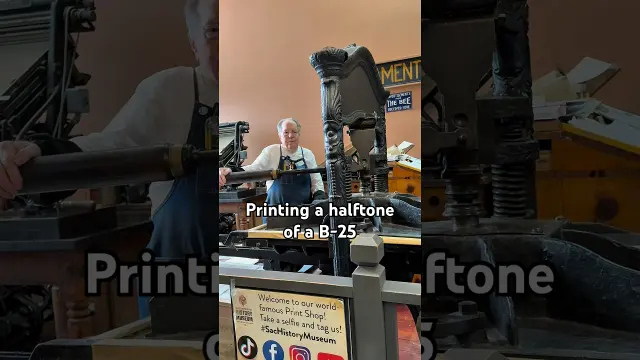
 Letterpress Printing a Donated B-25 Aircraft Halftone
#Aviation History
2 ideas
Letterpress Printing a Donated B-25 Aircraft Halftone
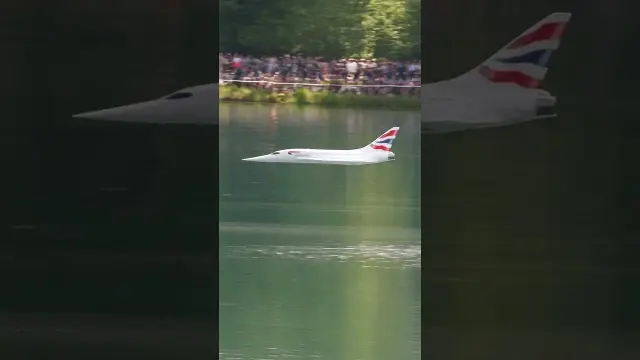 Concorde Supersonic Airliner RC Scale Model Flight
Get new #Aviation History ideas by email
Every Thursday: the week's best ideas, with the newest from #Aviation History.
Related tags
A Beginner's Guide to Aviation History
Aviation history is the story of how human beings moved from watching birds to crossing oceans in a few hours. It is a subject that rewards curiosity rather than expertise: you can follow it through engineering, through the people who flew, through the machines themselves, or through the way flight changed ordinary life.
Where it begins
People experimented with flight long before anyone succeeded at it. Kite flying, ballooning and theoretical studies of lift and drag all came first, and the nineteenth century produced a steady stream of glider experiments and unpowered hops. The breakthrough came in the early twentieth century, when powered, controllable, heavier-than-air flight was finally demonstrated. From that point the pace quickened remarkably: within a single generation, aircraft went from fragile wooden machines to metal monoplanes capable of long-distance travel.
The main eras
Read more
Most enthusiasts organise the subject into broad periods, and this is a useful structure when you are starting out.
- Pioneering years: light, slow, open aircraft built by trial and error, flown at low altitude and short range.
- The interwar decades: reliability improved, airmail and passenger services appeared, and record-setting flights captured public attention.
- Wartime development: rapid advances in engines, structures, navigation and mass production, with consequences that carried into civilian design.
- The jet age: turbine engines transformed speed, range and comfort, making intercontinental travel routine.
- The modern era: digital control systems, composite materials and increasingly automated cockpits.
Different ways into the subject
Some people are drawn to the machines and study type by type, learning to tell a biplane from a monoplane, a radial engine from an inline one. Others follow the human side — the pilots, engineers and mechanics, and the ordinary passengers who made flying a part of daily life. A third path is the preservation world: museums, restoration workshops, airshows and modelling, where historic aircraft are kept flying or recreated in miniature. A fourth is documentary evidence — photographs, timetables, posters, manuals and press coverage, which often reveal more about everyday aviation than the famous record flights do.
What beginners should know
Start with one thread rather than trying to absorb everything. Pick a single period, region or aircraft category and read outward from it. Learn a handful of basic terms — fuselage, wingspan, aileron, propeller, jet engine — and they will make everything else easier to follow. Be sceptical of colourful stories that circulate widely: early aviation attracted a great deal of myth-making, and the reliable accounts are usually the quieter ones. When you visit a museum or an airshow, look closely at how an aircraft is put together and ask how it was maintained, not only how fast it was.
Above all, take your time. Aviation history is generous with detail, and the pleasure lies in noticing how each generation solved a problem the previous one could only describe.
#Aviation History: frequently asked questions
How do I start learning about aviation history without any technical background?
Begin with one narrow thread rather than the whole timeline — a single era, region, or type of aircraft — and let your reading spread outward from there. Pick up a few basic terms like fuselage, wingspan and propeller early on, because they unlock almost everything else you read. Curiosity matters far more than prior expertise here.
Which era of flight should a beginner focus on first?
The pioneering years are the gentlest entry point, since the machines were simple and the stories are easy to follow. Once that feels familiar, the interwar decades make a natural next step because reliability, airmail and passenger travel all arrive together. Choose whichever era genuinely interests you and treat the others as later expansions.
What should I look at when I visit an aviation museum or airshow?
Spend time on construction and upkeep rather than just speed or size — how the aircraft is assembled tells you a lot about the era that built it. Look closely at the engine type, the wing arrangement and any restoration notes on display. Asking how a machine was maintained often teaches more than reading its performance figures.
How can I tell reliable aviation history from popular myths?
Early flight attracted a great deal of colourful storytelling, so treat dramatic anecdotes with some caution. Quieter, better-documented accounts usually hold up best, especially those backed by photographs, timetables, manuals or contemporary press coverage. Cross-checking a claim against ordinary documentary evidence is a good habit.
Is aviation history better approached through the machines or through the people?
Both paths work, and you can choose whichever pulls you in — some people learn aircraft type by type, others follow pilots, engineers, mechanics and everyday passengers. A third option is the preservation world of museums, restoration workshops, airshows and scale modelling. Following documentation like posters and timetables is a fourth route that reveals daily aviation life.
What is the most common mistake people make when getting into aviation history?
Trying to absorb the entire timeline at once tends to overwhelm beginners and blur the details. Starting with one period, region or aircraft category keeps things manageable and makes the connections clearer. Patience pays off, since the pleasure lies in noticing how each generation solved a problem the previous one could only describe.
Videos come from YouTube and posts from Instagram; titles and summaries are our own. All rights belong to their creators.