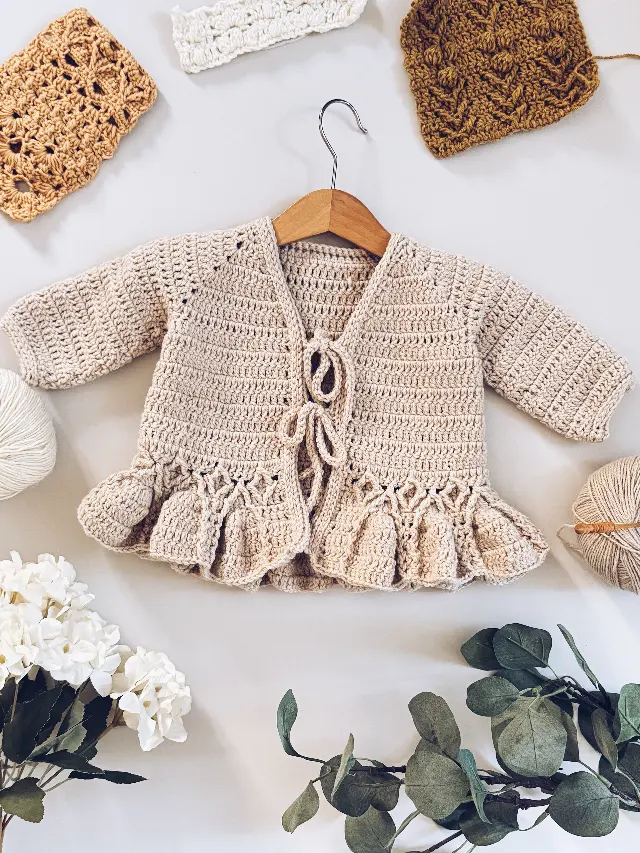
 Adeline Tie Cardigan: seamless top-down baby cardigan pattern
#Baby Cardigan
1 ideas
Adeline Tie Cardigan: seamless top-down baby cardigan pattern
Get new #Baby Cardigan ideas by email
Every Thursday: the week's best ideas, with the newest from #Baby Cardigan.
Related tags
Baby Cardigan: A Guide to Knitting Tiny, Practical Sweaters
A baby cardigan is a small knitted or crocheted jacket, usually fastened down the front, sized for infants and very young children. It is one of the most traditional things people make for a new baby, and for good reason: it slips on and off without pulling anything over a delicate head, it can be opened for a nappy change or a feed, and it adds a warm layer that is easy to remove the moment it is no longer needed. Knitters have made them for generations, and patterns are passed around within families much like recipes.
Why cardigans rather than pullovers
The front opening is the whole point. Small babies dislike having garments dragged over their faces, and parents dealing with a wriggling, possibly sleeping child appreciate being able to lay the cardigan flat and do up a few buttons instead. A cardigan also allows for fine adjustment: closed in the morning, hanging open in a warm room, tucked into a blanket at night.
The main styles
Read more
- Raglan: the sleeves run in diagonal lines from the neckline to the underarm, and the whole garment is often knitted in one piece from the top down. This is a favourite for beginners because there is very little sewing up.
- Yoke: a patterned band of fabric circles the shoulders before the sleeves divide off, giving room for delicate lace or colourwork.
- Set-in sleeves: the sleeve is knitted separately and sewn into a curved armhole, closer to how adult garments are constructed and requiring a little more skill.
- Seamless top-down: knitted from the neck downwards with no side seams, which means the knitter can try the piece on the baby as it grows and lengthen the body and sleeves later if there is enough yarn.
- Side-to-side and kimono shapes: worked in one piece across the body, wrapping and tying at the front, which avoids buttonholes entirely.
Yarn and practical choices
Choose something soft, washable and smooth enough not to irritate skin. Fine yarns worked on small needles give a light, flexible fabric that does not bunch under a baby's chin; thicker yarns work up faster but can feel bulky. Light colours show up small stitch patterns and forgive the occasional uneven row. Because babies grow quickly, a slightly generous size tends to be worn longer than a snug one.
What beginners should know
Start with a plain top-down raglan in a single colour: the shaping is simple and the finishing is minimal. Knit a small swatch first, both to check your tension and to see how the yarn feels after washing. Buttonholes are the part most people find fiddly, so practise them on scrap yarn, and remember that buttons must be sewn on very securely. Babies explore with their mouths, so anything loose is a hazard. Avoid long ties and ribbons for the same reason.
Finishing touches
Blocking the finished cardigan evens out the stitches and settles the edges. Rinse in cool water, press gently without wringing, and dry flat in shape. Wash the cardigan before giving it away, so it arrives soft and ready to wear.
#Baby Cardigan: frequently asked questions
How do I start knitting a baby cardigan if I'm a beginner?
Begin with a plain top-down raglan worked in a single colour, since the shaping is straightforward and there is almost no sewing up at the end. Knit a small swatch first to check your tension and to see how the yarn behaves once it has been washed. Practise buttonholes on scrap yarn before you commit to the real piece.
What do I need to make a baby cardigan?
You need a soft, washable yarn that will not irritate delicate skin, needles that suit its weight, and a pattern you feel comfortable with. Add a few secure buttons, plus a blunt needle for any finishing and a towel for drying the piece flat. Fine yarn on small needles gives a light fabric that sits comfortably under a baby's chin.
Which cardigan style should I choose?
A raglan or seamless top-down style is the easiest place to start and lets you lengthen the body and sleeves later as the baby grows. A yoke design suits anyone wanting to show off lace or colourwork across the shoulders, while set-in sleeves call for more skill because the pieces are sewn together. Kimono and side-to-side shapes wrap and tie at the front, so you can skip buttonholes altogether.
How should I wash and care for a baby cardigan?
Wash it gently in cool water and avoid wringing, then press the water out and dry it flat, shaped as it should be. Blocking the finished piece evens out the stitches and settles the edges, so it is worth doing before the cardigan is worn or given away. A wash before gifting means it arrives soft and ready to use.
What are common mistakes to avoid when making one?
Rushing the buttonholes is the usual stumbling block, so rehearse them on scrap yarn first. Sew buttons on very firmly and skip long ties or ribbons, because babies put everything in their mouths and anything loose is a hazard. Choosing a snug size is another easy error, since a slightly generous cardigan tends to be worn for much longer.
What makes a cardigan a better choice than a pullover for a baby?
The front opening means nothing has to be pulled over a baby's head, and the garment can be laid flat and done up with a few buttons instead. It also opens for a nappy change or a feed and can be left hanging open in a warm room. That adjustability makes it an easy extra layer to add or remove.
Videos come from YouTube and posts from Instagram; titles and summaries are our own. All rights belong to their creators.