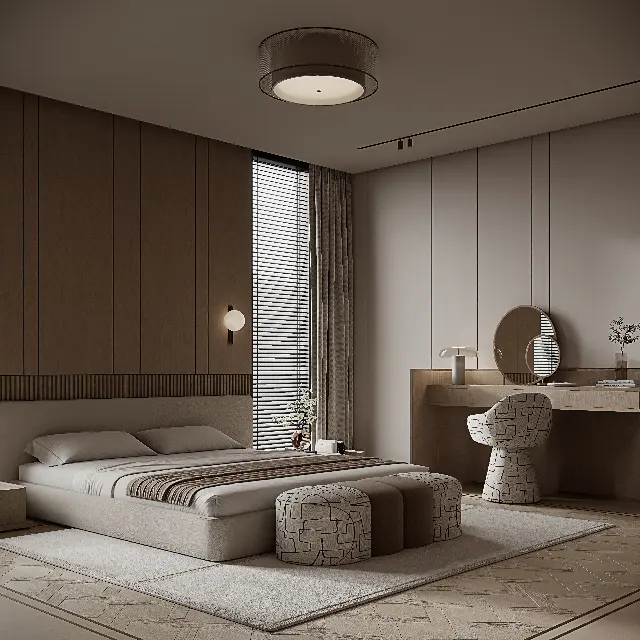
 Minimal bedroom design rendered by nada.saad_1
#Bedroom Design
6 ideas
Minimal bedroom design rendered by nada.saad_1
Get new #Bedroom Design ideas by email
Every Thursday: the week's best ideas, with the newest from #Bedroom Design.
Related tags
Bedroom Design: A Guide to Creating a Restful Room
A bedroom is the one room in a home whose main job is not to impress guests but to serve the person who sleeps in it. Good bedroom design starts from that idea. Before choosing colours or furniture, it helps to think about what the room needs to do: rest, dressing, storage, sometimes work or reading. Everything else follows from that list.
Start with the layout
The bed is the anchor. In most rooms it wants a wall of its own, ideally with space on both sides so it can be made easily and entered from either side. Placing it against the longest uninterrupted wall usually keeps the floor open and the foot of the bed clear. Leave a comfortable walking path between the bed and any wardrobe or doorway, and avoid putting the head of the bed directly under a window if draughts or street noise are an issue.
Small rooms benefit from a few reliable moves: a bed placed in a corner to free up one large open area, furniture raised on legs so floor stays visible, and doors that open outward or slide. In larger rooms, the risk is the opposite — furniture pushed against every wall leaves an empty, unsettled centre. A rug under the bed, a bench at its foot or an armchair in a corner can pull the arrangement together.
Read more
Light in layers
Bedrooms need more than one kind of light. Overhead light is useful for cleaning and finding things, but it is rarely kind at night. Bedside lamps, wall sconces or a floor lamp create the low, warm pool of light that makes a room feel calm. If you read in bed, place the light so it falls on the page rather than into someone else's eyes. Curtains matter as much as lamps: a lining that blocks light helps in summer, and a heavier fabric softens sound.
Storage that disappears
Clutter is what most often makes a bedroom feel unsettled, and the answer is storage that has a place for everything. Under-bed drawers and boxes use space that is otherwise wasted. A wardrobe with internal shelving measured to what you actually own works better than a larger one with a single rail. Bedside tables with a drawer hide the small things that otherwise accumulate on top.
Colour, texture and quiet
Soft, muted colours tend to age well in bedrooms because they recede rather than compete. Texture does the work that pattern often cannot: linen, cotton, wool and wood give a room warmth without demanding attention. Keep the most visually active elements few — one artwork above the bed, one patterned cushion — and let the rest stay quiet.
A note for beginners
Design the room in the order you use it: sleep first, then storage, then decoration. Live in the space for a week before buying anything large, and measure the room and the doorway before ordering furniture. A bedroom does not need to be finished quickly; it needs to be restful, and that is usually a matter of leaving things out rather than adding them.
#Bedroom Design: frequently asked questions
How do I begin planning a bedroom design?
Start by deciding what the room needs to support besides sleep, such as dressing, storage, reading, or occasional work. Once that is clear, arrange the bed first and then build the rest of the room around how you move through it.
What furniture is essential in a well-designed bedroom?
The essentials are usually a comfortable bed, some form of bedside surface, and storage that fits the way you live. If space allows, a chair, bench, or rug can help the room feel complete without making it feel crowded.
How should I choose a bedroom layout for a small room?
In a small bedroom, aim to keep the floor as open as possible by placing the bed where it leaves a clear path to the door and storage. Furniture with slimmer profiles, raised legs, and smart use of corners or under-bed space can make the room feel larger.
What kind of style works best in a bedroom?
A calm bedroom usually works best with soft colours, simple forms, and a limited number of visual focal points. Natural textures like cotton, linen, wool, and wood add warmth without making the room feel busy.
How can I keep a bedroom looking tidy and restful?
Use storage that hides everyday clutter, such as drawers in bedside tables, under-bed boxes, or a wardrobe with shelves suited to what you own. The less visual noise the room has, the more restful it will feel.
What are common mistakes people make in bedroom design?
A common mistake is filling the room with too much furniture or choosing pieces before understanding how the room will be used. Another is relying on only one light source, since bedrooms usually feel better with layered lighting that is softer at night.
Videos come from YouTube and posts from Instagram; titles and summaries are our own. All rights belong to their creators.