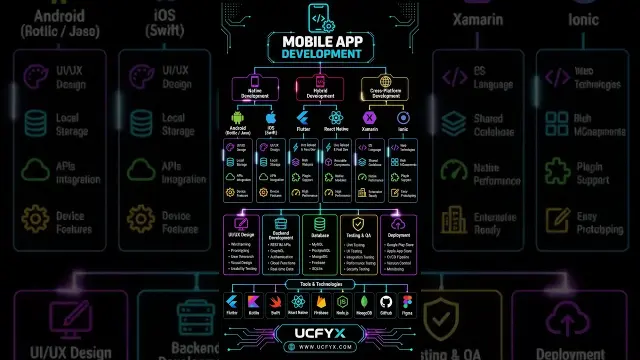
 Mobile App Development Learning Roadmap for 2026
#Career Roadmap
6 ideas
Mobile App Development Learning Roadmap for 2026
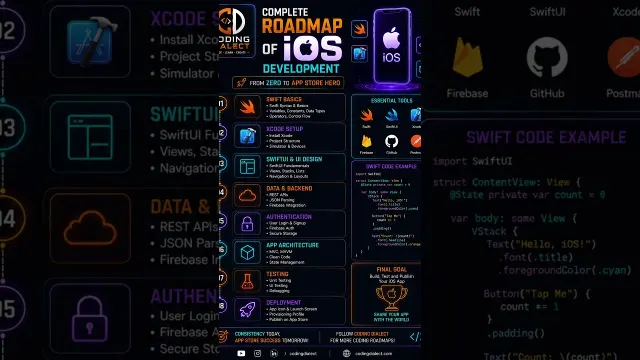 Roadmap for Becoming an iOS App Developer
 AI Engineer Roadmap: Learning AI Week by Week With Free Resources
 A Short Overview of the AI Engineering Learning Path
 A Six-Month AI Engineer Learning Roadmap From Python to Agents
 Java Developer Roadmap: Core Java, Spring and Backend Skills
Get new #Career Roadmap ideas by email
Every Thursday: the week's best ideas, with the newest from #Career Roadmap.
Related tags
Career Roadmap: Planning Your Path Step by Step
A career roadmap is a written plan that breaks a long-term professional goal into stages, each with its own skills, tasks and checkpoints. Instead of asking "where do I want to be in ten years" and stopping there, a roadmap asks what has to be true one year from now, and one month from now, for that future to be reachable. It is less a prediction than a working document — something you draft, follow for a while, and revise as you learn more about the field and about yourself.
Where the idea comes from
The term borrows from product planning, where a roadmap shows which features come when and in what order. Applied to a career, the same logic holds: you sequence work so that each stage builds the foundation for the next. Mentors, vocational counsellors and hiring managers have long used versions of this, and it has become common in fast-moving fields where the required skills shift quickly and self-directed learning is the norm.
What a good roadmap contains
Read more
- A destination described in concrete terms, not a job title alone. What do you want to be doing, with what responsibility, in what kind of environment?
- The skills and knowledge that destination actually requires, gathered from job descriptions and from people already doing the work.
- Milestones with rough timeframes, expressed as outcomes you can verify: a project completed, a portfolio piece, a certification, a conversation with someone in the role.
- The resources each stage depends on: courses, books, communities, practice projects, people to ask.
- A review rhythm, so the plan is checked and adjusted rather than quietly abandoned.
Common kinds of roadmap
Some roadmaps are linear and technical: a sequence of languages, tools or qualifications leading to a defined role. Others are competency-based, mapping breadth rather than depth, useful when you are still deciding which specialism suits you. A third kind is exploratory, deliberately built around short experiments — a side project, a volunteer role, an informational interview — to test a direction before committing years to it. Most real plans mix all three.
What beginners should know
Start from evidence rather than assumption. Read real postings for the job you think you want, and notice which requirements repeat. Talk to people already in the role and ask what they actually do all day, and what they wish they had learned first.
Keep the first stage small enough to start this week. A roadmap whose first step takes three months to begin is a wish list.
Expect the plan to be wrong in places. That is normal and not a failure; the point of writing it down is that you can see what changed and correct course.
Avoid copying someone else's roadmap wholesale. Their starting point, constraints and appetite for risk are not yours. Borrow the structure, then fill it with your own situation.
Leave room for skills that outlast tools. Communication, writing, problem framing and the habit of learning something new tend to stay valuable even when the specific technology around them changes.
#Career Roadmap: frequently asked questions
How do I start making a career roadmap if I’m still unsure about the role I want?
Begin by looking at real job postings and noticing which skills and responsibilities appear again and again. Then talk to people in that field and compare what they do with what you assumed the job would be. This helps you build a roadmap around evidence instead of guesses.
What should a good career roadmap include?
A useful roadmap should describe the destination clearly, along with the skills, milestones, resources, and checkpoints needed to get there. It should also include a review rhythm so you can update the plan as you learn more. Treat it as a working document, not a fixed promise.
Which type of career roadmap should I choose?
Choose the style that matches your stage and goals. A linear roadmap works well when the path is clear, a competency-based roadmap helps when you are exploring options, and an exploratory roadmap is useful when you want to test a direction before committing fully. Many people combine more than one approach.
How do I know if my career roadmap is realistic?
A realistic roadmap starts with a small first step you can begin soon, not a vague plan that stays on paper. Each milestone should be something you can actually verify, like finishing a project, building a portfolio piece, or having a useful conversation with someone in the field. If the first step feels impossible to begin, the plan is probably too broad.
What are common mistakes people make with a career roadmap?
A common mistake is copying someone else’s path without adjusting for your own background and goals. Another is focusing only on job titles instead of the real skills and work involved. It also helps to leave room for adaptable skills like communication, writing, and problem-solving, since those stay useful even when tools change.
Videos come from YouTube and posts from Instagram; titles and summaries are our own. All rights belong to their creators.