 Probability essentials for competitive maths exams in one class
#Competitive Exams
4 ideas
Probability essentials for competitive maths exams in one class
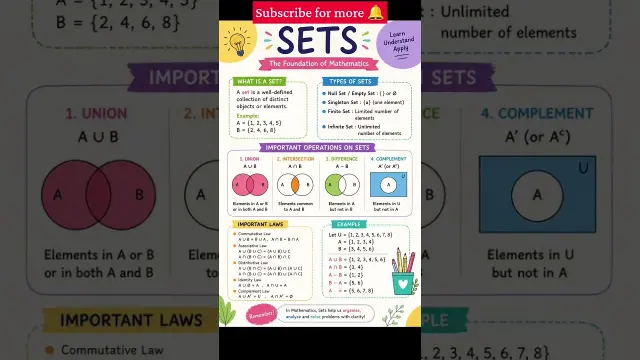 Sets in Mathematics: Basics of Set Theory for Competitive Exams
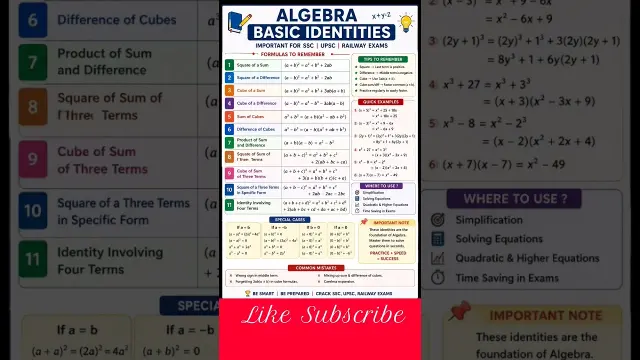 Basic algebra identities for competitive exam revision
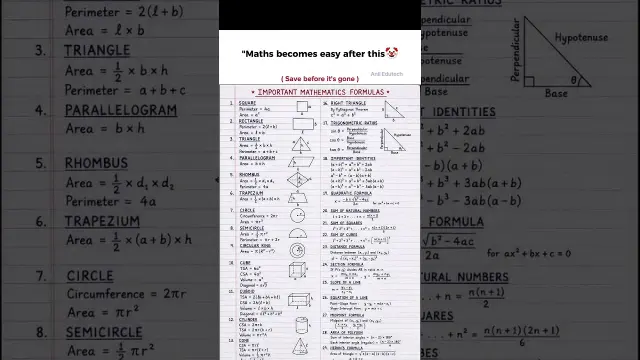 Twenty Five Most Important Math Formulas for Competitive Exams
Get new #Competitive Exams ideas by email
Every Thursday: the week's best ideas, with the newest from #Competitive Exams.
Related tags
Competitive Exams: A Practical Guide to Preparing Well
Competitive exams are tests used to rank candidates against one another for a limited number of places, seats or posts. Unlike a school test, where passing is enough, here the goal is to finish ahead of others. A score that would be excellent in one year can fall short in another, because the cut-off depends on how everyone else performs. Understanding this shapes everything about how you prepare.
Where they come from and what they are used for
Selection by examination has a long history in public administration and education. Systems that once relied on patronage or recommendation gradually gave way to open, written tests, on the reasoning that a common paper is fairer than a personal favour. Today competitive exams gate admission to universities and professional courses, recruitment to public service, and certification in many skilled fields. Because so many people compete for so few openings, the exams tend to reward accuracy, speed and consistency rather than flashes of brilliance.
The usual structure
Read more
Most papers combine a few familiar elements:
- A general awareness or reasoning section, testing logic, comprehension and familiarity with the wider world.
- Subject papers built on a defined syllabus, often drawn from school-level material.
- Numerical ability, where speed with basic arithmetic matters as much as method.
- A descriptive or essay component in some exams, assessing structure and clarity of expression.
- One or more interview or group stages after the written rounds.
Reading the official notification carefully is the first real step: it tells you the syllabus, the pattern, the marking scheme and whether wrong answers are penalised.
What beginners should know
Start with the syllabus, not with a pile of books. Map the syllabus against what you already know, then build a study plan around the gaps. Choose a small number of reliable resources and finish them, rather than collecting many and finishing none. Practise with previous papers early, even imperfectly: they show you how questions are framed, which no amount of reading reveals.
Keep a notebook of your own mistakes. Most improvement in competitive exams comes from not repeating the same errors, and a personal error log is worth more than a shelf of new material.
Practical habits that hold up over months
Preparation that lasts a year or more is a test of routine more than of talent. Fixed study hours, a weekly review, and regular short breaks protect your attention better than long, irregular bursts. Sleep and food matter more than they seem; a tired mind misreads easy questions. Take mock tests under timed conditions, then spend as much time analysing them as writing them.
On the day
Arrive early, read instructions twice, and be willing to leave a question you cannot solve. Attempting everything is rarely wise when marks are deducted for wrong answers. Stay with the paper in front of you rather than worrying about the crowd around it.
Finally, remember that selection ratios are decided by circumstances you do not control. What you control is preparation, and it is worth doing well whether or not a particular result goes your way.
#Competitive Exams: frequently asked questions
How should I start preparing for a competitive exam if I’m a beginner?
Begin with the syllabus and the exam pattern, not with a large stack of books. Compare the topics with what you already know, then make a simple study plan for the gaps and begin practising past papers early.
What kind of study material is best for competitive exams?
A small set of reliable resources is usually better than many scattered ones. Choose material that matches the syllabus closely and focus on understanding the core ideas, formulas, and common question patterns before moving to extra practice.
How do I choose which competitive exam to prepare for?
Pick an exam whose syllabus, style of questions, and final goal match your strengths and interests. If you are stronger in logic, language, or subjects like mathematics, choose the exam where those skills are tested most clearly.
What is the best way to prepare for maths-heavy competitive exams?
Revise the basics first, such as algebra identities, set concepts, probability essentials, and common formulas. Then practise solving problems quickly and accurately, because these exams often reward speed, method, and careful calculation more than long theory notes.
What mistakes do candidates usually make in competitive exams?
A common mistake is studying many resources without finishing any of them, instead of mastering a few good ones. Another is ignoring mock-test analysis or leaving too little time to review errors, which makes the same mistakes return in the real exam.
How should I handle the exam day itself?
Read the instructions carefully and stay calm enough to work through the paper in order of confidence. If wrong answers are penalised, it is often wiser to skip a hard question than to guess blindly.
Videos come from YouTube and posts from Instagram; titles and summaries are our own. All rights belong to their creators.