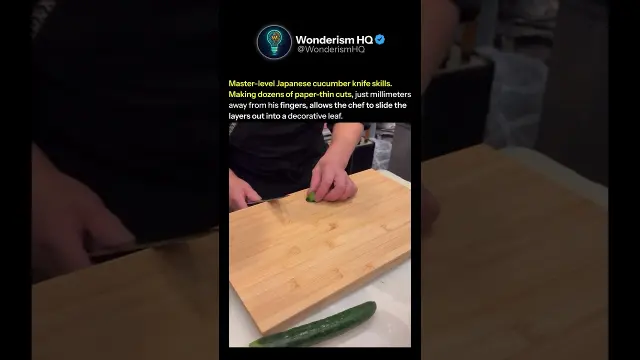
 Single-Bevel Japanese Knives and Precision Vegetable Cuts
#Daikon
1 ideas
Single-Bevel Japanese Knives and Precision Vegetable Cuts
Get new #Daikon ideas by email
Every Thursday: the week's best ideas, with the newest from #Daikon.
Related tags
Daikon: A Guide to Japan's Everyday White Radish
Daikon is a long, thick white radish, mild enough to eat raw and sturdy enough to simmer for hours. Its name means "big root" in Japanese, and the description is accurate: a full-grown daikon can be as long as a forearm and weigh a couple of kilos, though smaller and rounder kinds exist too. It belongs to the same family as cabbage, broccoli and turnip, which is why it carries a faint sweetness and a gentle peppery edge rather than the sharp heat of a small red radish.
The vegetable has been cultivated across East Asia for a very long time and remains one of the most grown and most eaten vegetables in Japan, where it appears at almost every meal in some form. It is not only a Japanese ingredient: Indian, Chinese and Korean kitchens have their own long white radishes, and the names mooli, lo bok and mu all refer to closely related roots.
Kinds and how to choose them
Most daikon are long and cylindrical, but you will also find squat round varieties and slender ones grown for pickling. Generally the top half of the root is sweeter and juicier, while the bottom half is firmer and slightly sharper, which is worth remembering when you cut it.
Read more
Look for a root that feels heavy for its size, with taut, unblemished skin and fresh green leaves still attached if you can get them. Soft spots or a spongy, flexible feel mean it is past its best. Smaller roots are often the more tender choice for eating raw.
Preparations and techniques
The skin can be peeled or left on, depending on the dish. For grating, the finer the better: finely grated daikon releases a watery, faintly pungent juice that is traditionally served alongside grilled fish or fried food. Salting shredded daikon for a short while draws out moisture and makes it crisp and pliable enough to fold into salads.
Simmered daikon is the other great tradition. Cut into thick rounds, it is usually blanched first to remove any bitterness and then cooked slowly in a light broth until it turns translucent and yields to a spoon. Daikon also pickles beautifully, whether in a quick brine or a longer fermented one, fermented into the yellow pickle known as takuan. Leaves are edible too: blanch them, then stir-fry or add to soup.
Practical tips for beginners
- Store the root in the refrigerator, wrapped to keep it from drying out.
- If the leaves are attached, cut them off before storing, or they will pull moisture from the root.
- Use daikon within a week or so; older roots become hollow and fibrous.
- Cook strong-tasting daikon a little longer, or blanch it first, to tame the bite.
- Grated daikon should be used soon after grating, as the flavour fades quickly.
Simple, unfussy and endlessly adaptable, daikon earns its place as a staple rather than a specialty.
#Daikon: frequently asked questions
How do I get started cooking with daikon if I've never used it before?
Start with the simplest treatment: peel it, slice it into thin rounds or matchsticks, and taste a piece raw so you learn its mild sweetness and gentle bite. From there, either grate it finely to spoon over grilled or fried food, or simmer thick rounds in a light broth until they turn translucent. Both routes need almost no special equipment, which makes daikon an easy first vegetable to experiment with.
What should I look for when buying daikon at the market?
Pick one that feels surprisingly heavy in your hand, with skin that is tight, smooth and free of blemishes. If the green tops are still attached and look perky, that is a good sign of freshness; avoid roots that give slightly under pressure or bend rather than snap firm. For eating raw, a smaller root is usually the more tender and pleasant choice.
Which type of daikon should I choose for what I'm making?
The long cylindrical kind is the all-purpose default and works for grating, simmering and pickling alike. Squat round varieties tend to be denser and are handy when you want even slices, while slender types grown for pickling stay crisp in brine. Remember that the upper half of any root is sweeter and juicier, so use it raw and save the firmer lower half for cooking.
How do I store daikon so it keeps well?
Wrap the root and keep it in the refrigerator, and twist off any leaves first, since they keep drawing moisture out of the root once picked. Plan to use it within roughly a week, as older roots turn hollow and stringy inside. Grated daikon is best eaten soon after grating, because its aroma and freshness fade quickly.
What are common mistakes people make when cooking daikon?
The usual ones are undercooking thick pieces so the centre stays hard, and skipping the quick blanching step that softens a sharp or bitter root before simmering. Another is grating it far ahead of serving, which leaves it watery and flat. Salting shredded daikon briefly and draining it also helps if you want it crisp for salads rather than soggy.
Can I use the leaves as well as the root?
Yes, the greens are edible and worth keeping rather than discarding. Blanch them briefly to mellow their flavour, then stir-fry them or drop them into soup. Just cut them off the root before storing so they don't dry it out.
Videos come from YouTube and posts from Instagram; titles and summaries are our own. All rights belong to their creators.