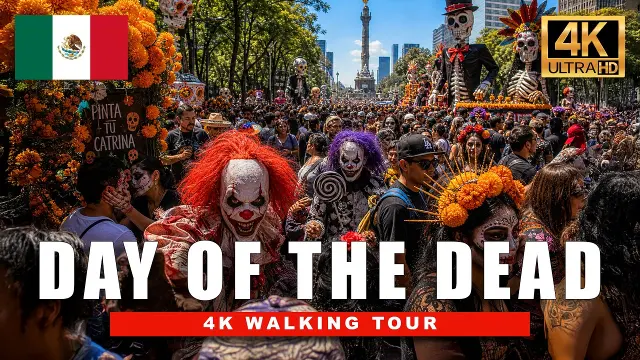
 Immersive Walking Tour of Day of the Dead Celebrations in Mexico City
#Festival
1 ideas
Immersive Walking Tour of Day of the Dead Celebrations in Mexico City
Get new #Festival ideas by email
Every Thursday: the week's best ideas, with the newest from #Festival.
Related tags
Festivals: Meaning, Traditions, and Ways to Join
What a festival is
A festival is a special celebration that brings people together around a shared theme, season, belief, culture, or event. Festivals can be religious, cultural, seasonal, artistic, or simply social. Some are rooted in ancient customs, while others grow from local traditions, community life, or creative expression.
At their heart, festivals mark a moment that feels different from ordinary days. They may honour a harvest, a saint, a historical event, a new year, a family milestone, or a form of art. Many festivals include music, food, dancing, costumes, rituals, parades, performances, and gatherings in public spaces or at home.
Where festivals come from
Read more
Festivals have existed in many societies for centuries. In some places they began as religious observances tied to calendars, seasons, or ceremonies. In others they developed from fairs, markets, civic celebrations, or local customs passed down through families and communities.
Over time, festivals often change while keeping their core meaning. A traditional festival may still include prayer, procession, or ritual, while also becoming a chance to share food, decorate spaces, or welcome visitors. Many modern festivals also celebrate film, books, flowers, crafts, or food, showing how flexible the idea can be.
Common types of festivals
Festivals come in many forms, but a few broad kinds are easy to recognize:
- Religious festivals: linked to faith, worship, and sacred traditions
- Cultural festivals: celebrate heritage, identity, and community customs
- Seasonal festivals: connected to harvests, solstices, or the changing year
- Arts festivals: focused on music, theatre, dance, film, or visual arts
- Food festivals: centered on cooking, tasting, and local specialties
- Community festivals: bring neighbours together through shared activities
Some festivals are formal and ceremonial. Others are playful, colourful, and open-ended. Many combine several kinds at once.
What makes a festival feel special
Festivals usually have a clear atmosphere. They often include decoration, sound, movement, and shared participation. Costumes, banners, lanterns, flowers, candles, masks, and special foods can all help create that feeling.
The experience is often as important as the event itself. People do not just watch a festival; they join it. That is why festivals are powerful social occasions. They help people feel connected to history, place, and one another.
Practical tips if you are attending
If you are new to a festival, it helps to prepare with respect and curiosity.
- Learn the basic meaning and customs beforehand
- Dress appropriately for the setting and weather
- Be mindful of dress codes, sacred spaces, and local etiquette
- Arrive early if the event is crowded or structured
- Carry water, comfortable shoes, and essentials for the day
- Ask before photographing people, rituals, or private moments
Most of all, be open. A festival is often about participation, not just observation.
Why festivals matter
Festivals preserve memory, strengthen community, and give people a way to celebrate what matters to them. They can be joyful, solemn, loud, quiet, traditional, or modern, but they always make ordinary life feel more meaningful for a while.
Videos come from YouTube and posts from Instagram; titles and summaries are our own. All rights belong to their creators.