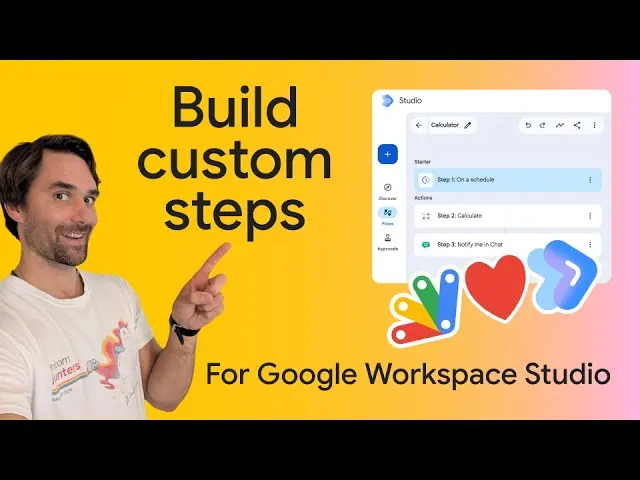
 Building Custom Steps for Workspace Studio Using Add-On Framework
#Framework
1 ideas
Building Custom Steps for Workspace Studio Using Add-On Framework
Get new #Framework ideas by email
Every Thursday: the week's best ideas, with the newest from #Framework.
Related tags
Frameworks in Programming
A framework is a ready-made structure that helps you build something more complex with less effort. In software, a framework gives you a set of rules, tools, and building blocks for creating applications in a more organized way. Instead of starting from a blank page, you begin with a foundation that already solves some common problems.
Frameworks are used in many kinds of programming, from websites and mobile apps to desktop software and backend systems. They often handle repetitive tasks such as routing, data handling, user interface structure, or connecting different parts of an application. That leaves you free to focus on the features that make your project unique.
What a framework does
A framework usually provides a pattern for how your code should be arranged. It may include built-in functions, libraries, templates, or conventions. Some frameworks are broad and flexible, while others are more opinionated and guide you toward a specific way of working.
Read more
The key idea is consistency. When a framework defines how things fit together, it becomes easier to read, maintain, and extend your project. This is especially useful when several people are working on the same codebase.
Common kinds of frameworks
Different frameworks are designed for different purposes:
- Web frameworks help build websites and web applications.
- Front-end frameworks help create the visible parts of a site or app.
- Back-end frameworks support server-side logic, databases, and application services.
- Mobile frameworks assist with apps for phones and tablets.
- Testing frameworks help check that code behaves as expected.
Some frameworks are lightweight and simple. Others are large and include many features. The right choice depends on what you are building and how much structure you want.
How frameworks differ from libraries
People often confuse frameworks and libraries. A library is usually something you call when you need it. A framework is more like the environment your code lives in. In many cases, the framework controls the flow of the application and asks your code to fit into its structure.
That difference matters because it affects how you learn, plan, and organize your work. A framework may offer more guidance, but it can also require you to follow its conventions more closely.
What beginners should know
If you are new to frameworks, start by learning the basics of the language they are built around. A framework is easier to understand when you already know the core programming ideas behind it.
It also helps to:
- Learn the project structure before adding features.
- Follow the framework’s conventions instead of fighting them.
- Build a small example first.
- Read documentation carefully, especially for setup and configuration.
- Keep your code simple and modular.
A framework should make development easier, not more confusing. If it feels overwhelming, step back and focus on one small part at a time.
Practical tips
Choose a framework based on your project’s needs, not just popularity. Look at its learning curve, documentation, community support, and how well it fits your goals. Avoid using a heavy framework for a very small project unless you truly need its features.
Most of all, remember that a framework is a tool. It can speed up your work and improve structure, but it is still your understanding and judgment that make the project successful.
#Framework: frequently asked questions
How do I get started with a framework?
Start by getting comfortable with the programming language the framework is built on, since its conventions will make far more sense once the basics feel familiar. Then set up a small practice project and explore how the framework organizes files and folders before you try adding real features. Following the official documentation step by step is usually the smoothest way in.
What do I need before I can use a framework?
You need a working development environment for the language in question, the framework itself installed, and a basic grasp of how code is structured in that ecosystem. Beyond tools, the most useful preparation is patience with conventions: frameworks assume you will organize things their way rather than inventing your own layout. A small sandbox project is the best way to confirm everything is set up correctly.
How do I choose the right kind of framework?
Match the framework to what you are actually building: web, front-end, back-end, mobile, and testing work all have their own families of tools, and each is optimized for a different job. Weigh how much structure you want, how steep the learning curve feels, and whether the documentation and community will support you when you get stuck. Popularity is a weak signal on its own, and a large framework is often overkill for a tiny project.
How should I maintain a project built on a framework?
Keep your code modular and simple, and stay close to the framework's established conventions so the project remains readable as it grows. Update dependencies thoughtfully rather than all at once, and re-read the documentation when a version changes, since setup and configuration details tend to shift. If several people work on the code, consistent conventions matter more than clever tricks.
What mistakes do beginners make with frameworks?
The most common one is fighting the framework by forcing in patterns from elsewhere instead of learning how it expects things to fit together. Another is trying to build a full application before understanding the project structure, which makes every error harder to trace. Jumping into a heavy framework for a small idea, or skipping the documentation entirely, tends to cause the same kind of frustration.
How is a framework different from a library, and does it matter?
A library is something you call when you need it, while a framework is more like the environment your code lives inside and it typically controls the overall flow. That distinction shapes how you learn and plan, because a framework offers more guidance but also asks you to respect its conventions. Knowing which one you are working with helps you decide where your own code should sit.
Videos come from YouTube and posts from Instagram; titles and summaries are our own. All rights belong to their creators.