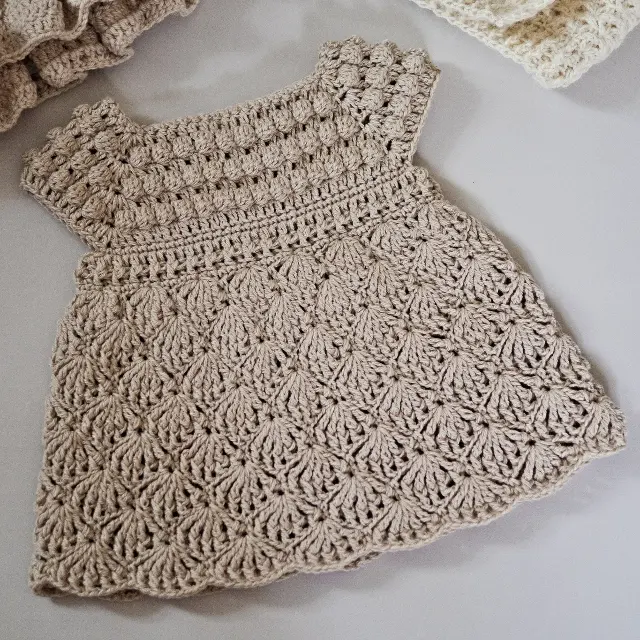
 Crochet Dress Pattern for Girls with Bobble Yoke and Flared Skirt
#Girls Clothing
1 ideas
Crochet Dress Pattern for Girls with Bobble Yoke and Flared Skirt
Get new #Girls Clothing ideas by email
Every Thursday: the week's best ideas, with the newest from #Girls Clothing.
Related tags
Girls Clothing: A Guide to Styles, Sizes and Smart Choices
Girls clothing is a broad and cheerful corner of fashion, spanning everything from the soft cotton first outfits of infancy to the more deliberate choices of older children who have opinions of their own. It sits somewhere between childrenswear proper and adult fashion, borrowing ideas from both while keeping comfort and freedom of movement at the centre.
Where it comes from
Children's clothes as a separate category is a relatively modern idea. For centuries, small children of both sexes wore similar simple garments — loose gowns and tunics — because they were easy to make, easy to wash and easy to let out as the child grew. Distinctive girls' styles emerged gradually, shaped by household textiles, local dress traditions and the practical needs of daily life. Much of what we recognise today descends from hand-sewn family clothing, later adapted by ready-to-wear manufacturing that made a wider range of sizes and designs available to ordinary families.
The main kinds of garments
Read more
A girls' wardrobe usually builds out from a few familiar foundations:
- Dresses and pinafores, often the most decorative items, ranging from simple cotton day dresses to layered occasion wear
- Separates such as leggings, trousers, skirts, shorts and t-shirts, which mix and match easily
- Knitwear, from fine cardigans to chunky sweaters, usually the warmest layer
- Outerwear including jackets, coats and rainwear
- School and uniform pieces, which follow their own practical rules
- Accessories such as tights, socks, hair ties and simple bags
Fabrics and construction
Natural fibres are generally the kindest choice against young skin: cotton for everyday wear, linen for warm weather, wool and wool blends for warmth. Synthetic fibres have their place where stretch, durability or quick drying matter, and blends often balance the two. Look at seams, which should be flat or well finished, and at fastenings — buttons, zips and elastic waists — that a child can manage alone. Adjustable waistbands, generous hems and roomy shoulders all extend how long a garment remains wearable.
Fit and sizing
Children's sizing varies between makers, so measurements matter more than a printed number. Take a current chest, waist and height measurement and compare them with the maker's own chart. Leave a little ease for movement and growth, but not so much that the garment swamps the wearer. Remember that children's proportions change quickly, and a fit that worked last season may need revisiting sooner than expected.
Practical advice for beginners
Start with a small, flexible core of plain pieces in colours that combine easily, then add personality through prints, trims and accessories. Choose clothes the child can put on and take off without help where possible, since independence matters as much as appearance. Wash-and-wear fabrics reduce daily effort, and clothes that survive repeated washing are better value than delicate ones worn twice.
If you sew or crochet for a child, favour simple shapes with room to grow: a flared skirt, a gathered yoke, a generous sleeve. Let the child have a say in colour and detail — clothing is one of the earliest ways a person learns to express who they are.
#Girls Clothing: frequently asked questions
How do I start building a girls' clothing wardrobe without overspending?
Begin with a small core of plain separates — leggings, t-shirts, a skirt or two, and a light cardigan — in colours that mix easily with each other. Add prints, trims and accessories later so the child can express personality without needing a whole new set of outfits. Plain, washable pieces that layer well stretch further than a large pile of single-purpose garments.
What should I look for in the fabric and construction of girls' clothes?
Natural fibres like cotton, linen and wool tend to be kindest against young skin, while synthetics and blends are worth choosing where stretch, durability or quick drying matter. Check the seams for flat, well-finished edges and make sure buttons, zips and waistbands are simple enough for a child to handle alone. Adjustable waists, roomy shoulders and generous hems help a garment stay wearable as the child grows.
How do I choose the right size when sizing differs between makers?
Take a current chest, waist and height measurement rather than trusting the number on the label, then compare it with that maker's own chart. Leave a little ease for movement and growth, but not so much that the clothes swamp the wearer. Children's proportions shift quickly, so re-measure each season instead of assuming last year's fit still works.
How should girls' clothing be cared for so it lasts?
Wash-and-wear fabrics cut down on daily effort and hold up better to repeated laundering than delicate ones. Follow the care label, wash similar colours together, and turn printed or embellished pieces inside out to protect the surface. Storing knitwear folded rather than hung helps it keep its shape.
What kinds of outfits suit a special occasion?
A simple cotton day dress can be dressed up with tights, a cardigan and a hair accessory, while layered occasion wear suits bigger events. Keep the base comfortable and let the details do the work, since a child who can move and play freely will be happier all day. Choosing pieces the child can put on and take off alone also makes the day easier.
What mistakes do beginners make when sewing or choosing clothes for girls?
The most common slip is buying or making to an exact fit with no room to grow, or the opposite — sizing so far up that the garment swallows the child. Complicated fastenings and delicate fabrics that need special washing are another frequent regret. Favour simple shapes like a flared skirt or generous sleeve, and let the child have a say in colour and detail.
Videos come from YouTube and posts from Instagram; titles and summaries are our own. All rights belong to their creators.