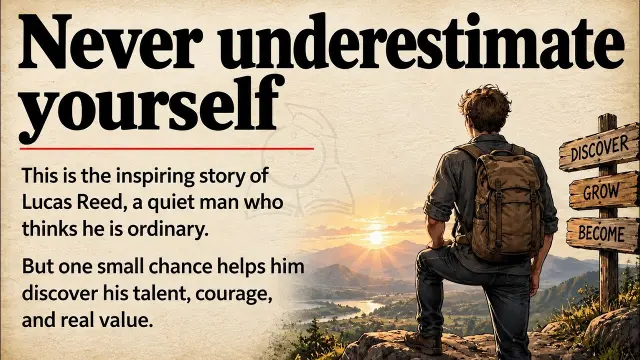
 Don't Underestimate Yourself Level 3 Graded Reader Story
#Graded Reader
13 ideas
Don't Underestimate Yourself Level 3 Graded Reader Story
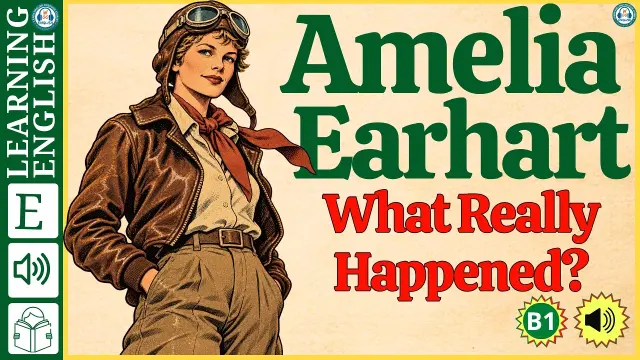 Amelia Earhart What Really Happened B1 Graded Reader Audiobook
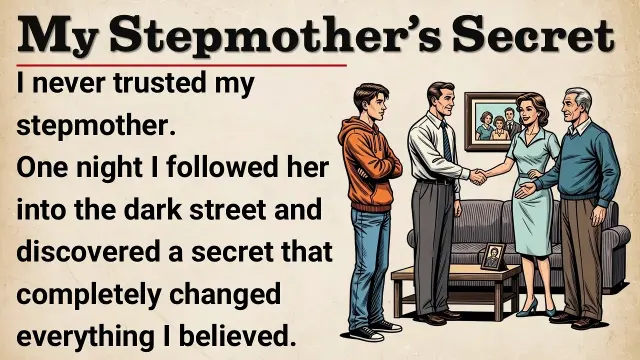 My Stepmother's Secret Level 3 English Graded Reader Story
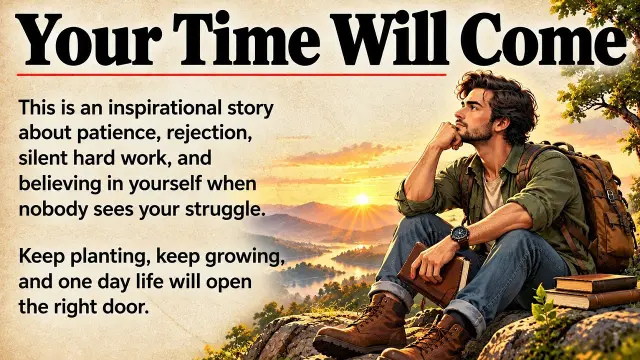 Your Time Will Come Level 3 Graded Reader Story
 The Complete History of Germany Level 3 Graded Reader Story
 The Best Japanese Graded Readers for Beginners
 She Knew Me Level 3 English Graded Reader Audio Podcast Story
 The Power of Practice Graded Reader for English Fluency
 How to Talk in English Using a Graded Reader Story
 Mother Hid the Truth Level 3 English Graded Reader Story
 Elon Musk Biography Intermediate Level English Graded Reader
 Put God First Christian Graded Reader Story for English Learners
 Never Give Up Slow American English Graded Reader Story
Get new #Graded Reader ideas by email
Every Thursday: the week's best ideas, with the newest from #Graded Reader.
Related tags
Graded Readers for Language Learning
What a graded reader is
A graded reader is a book written or adapted for language learners at a controlled level of vocabulary and grammar. The goal is to let you read something complete and enjoyable without being overwhelmed by too many unknown words. Graded readers are used in many languages, but they are especially common in English learning.
These books usually come in levels, from very easy to more advanced. A beginner can start with short sentences and a limited word set, while a stronger reader can move on to more complex language. Some graded readers are original stories written for learners, and others are simplified versions of well-known novels, folktales, or non-fiction topics.
Why they are useful
Read more
Graded readers help you build reading confidence. Because the language is carefully chosen, you can focus on understanding the meaning instead of stopping at every line. This makes reading feel smoother and more natural.
They are also useful for learning vocabulary in context. Instead of memorizing isolated words, you see them in sentences and stories, which can make them easier to remember. For many learners, graded readers are a bridge between textbook exercises and reading ordinary books.
Common types and styles
Graded readers come in many styles, including:
- Short stories
- Classic tales adapted for learners
- Modern fiction
- Non-fiction and factual texts
- Picture-based readers for early stages
- Audio-supported readers with recorded text
Some are designed for children, but many are written for teenagers and adults. The best choice depends on your reading level and your interests. A simple story you enjoy is usually more helpful than a difficult book you feel you should read.
How to choose the right level
A good graded reader should feel manageable. If every page is full of unfamiliar words, the book is probably too difficult. If almost every sentence feels obvious, it may be too easy to stretch your skills.
A useful rule is to choose a book where you can understand most of the text without a dictionary. It is fine to meet a few new words, but you should still be able to follow the story. Beginners often do well with short chapters, clear plot lines, and familiar topics.
Tips for reading well
- Read regularly, even if only for a few minutes a day.
- Try to understand the general meaning first, not every single word.
- Mark or note useful words, but do not stop too often.
- Re-read a book if you enjoyed it; repetition strengthens language memory.
- Use audio if it is available, especially to practice listening and pronunciation.
- Choose topics that genuinely interest you, so reading feels rewarding.
A simple way to begin
Start with a level that feels easy enough to finish. Read one short section at a time, then pause and think about what happened or what you learned. As you grow more comfortable, move gradually to longer books and richer language. The aim is steady progress, not perfection.
Graded readers work best when they become a habit. The more you read, the more familiar patterns, vocabulary, and sentence structures begin to feel natural.
Videos come from YouTube and posts from Instagram; titles and summaries are our own. All rights belong to their creators.