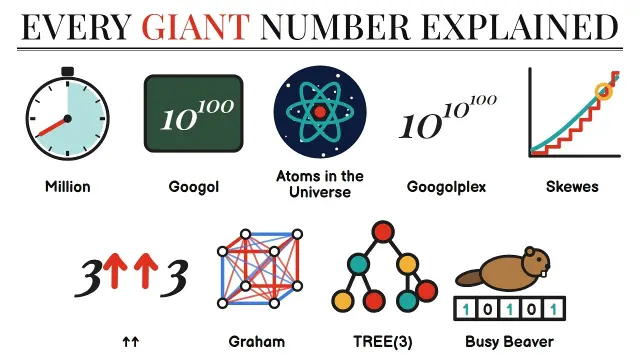
 Explanation of Every Giant Number from Googol to Rayo's Number
#Infinity
8 ideas
Explanation of Every Giant Number from Googol to Rayo's Number
 Zeno's dichotomy paradox and the impossible 1 km walk
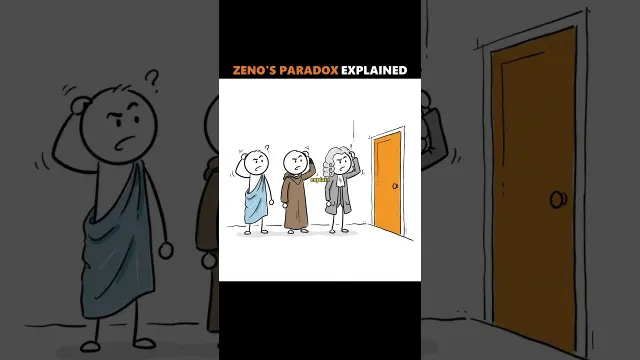 Zeno's paradox and why you can still reach the door
 Banach-Tarski paradox and turning one sphere into two
 The painter's paradox and why physics changes the result
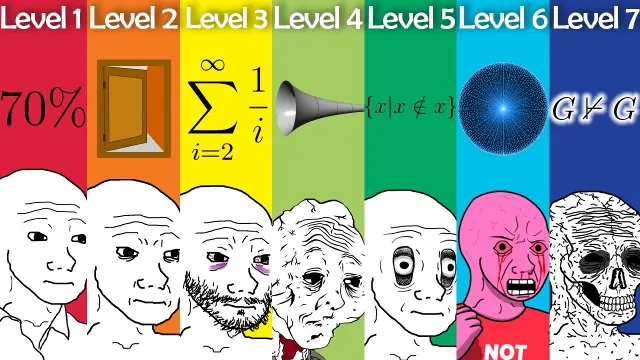 Seven levels of math paradox in one video
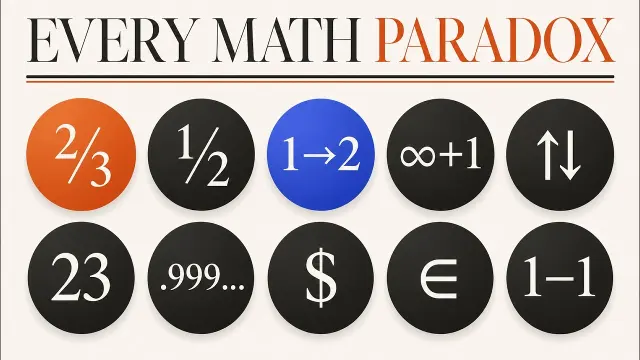 Ten classic mathematical paradoxes explained clearly
 Banach-Tarski paradox and the math of splitting a sphere
Get new #Infinity ideas by email
Every Thursday: the week's best ideas, with the newest from #Infinity.
Related tags
Infinity: an Endless Mathematical Idea
What infinity means
Infinity is the idea of something without an end. It can describe a set that goes on forever, a line that never stops, or a process that can continue indefinitely. In everyday speech, people often use it to mean “a very large amount,” but in mathematics it has a stricter meaning: not just a huge number, but something unlimited.
The word itself comes from the idea of being unbounded. You meet it in many places: counting numbers that never finish, geometric lines that extend forever, and calculations that approach a value without ever quite reaching it. Infinity is not a normal number in the same way that 3 or 100 is a number, and that is part of what makes it so interesting.
Where the idea comes from
Read more
People have thought about infinity for a very long time. Ancient philosophers and mathematicians used it when asking whether space, time, and division could go on forever. Over time, mathematics made the idea more precise, especially in arithmetic, geometry, and calculus.
There are different kinds of infinity. Some are easier to imagine than others. For example, the natural numbers 1, 2, 3, and so on continue without end. A line in geometry is also endless in both directions. At the same time, some infinities seem larger than others in a mathematical sense, which is one reason the topic has fascinated thinkers for centuries.
What infinity is used for
Infinity appears in many branches of mathematics and science. It helps describe limits, sequences, series, and continuous change. In calculus, you often work with values that get closer and closer to something, or with quantities that grow without bound. In geometry, infinity helps describe idealized lines and planes. In set theory, it becomes a way to compare different sizes of infinite collections.
Infinity is also useful as a concept in philosophy. It raises questions about whether the universe has a boundary, whether time has a beginning or an end, and how the human mind handles something that cannot be completed or counted off.
Common ideas and paradoxes
Infinity often appears in paradoxes because our everyday intuition is built for finite things. Some classic examples explore endless division, impossible-sounding motions, or surprising results when infinite steps are involved. These puzzles do not mean mathematics is broken. They usually show that infinite processes need careful definitions.
A good beginner rule is this: do not treat infinity like an ordinary number unless the context allows it. Ask whether you are talking about a limitless process, an endless set, or a quantity that grows beyond all bounds. That small distinction prevents a lot of confusion.
What to keep in mind
- Infinity is not the same as “very big.”
- Different areas of mathematics use it in different ways.
- Some infinite processes can still have clear and finite results.
- Intuition is helpful, but precise definitions matter most.
If you are new to the topic, start with simple examples: counting forever, drawing an endless line, or thinking about what happens when a quantity grows without limit. From there, you can move into limits, series, and the many paradoxes that make infinity such a deep and lasting idea.
Videos come from YouTube and posts from Instagram; titles and summaries are our own. All rights belong to their creators.