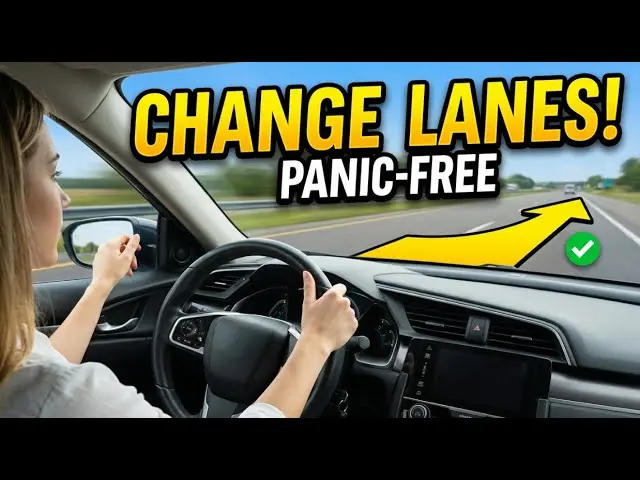
 How to Change Lanes Safely: A Step-by-Step Guide for New Drivers
#Lane Changing
1 ideas
How to Change Lanes Safely: A Step-by-Step Guide for New Drivers
Get new #Lane Changing ideas by email
Every Thursday: the week's best ideas, with the newest from #Lane Changing.
Related tags
Lane Changing: How to Move Across Safely and Smoothly
Changing lanes looks like the easiest thing you do behind the wheel. You check the mirror, drift over, carry on. And most of the time that is exactly what happens. The trouble is that a lane change is also one of the few routine manoeuvres where a single missed glance can put two vehicles in the same piece of road at the same moment. Understanding the sequence properly, rather than copying what other drivers seem to do, is what makes it feel calm instead of risky.
What a lane change actually involves
A lane change is a lateral move from one marked lane to an adjacent one travelling in the same direction. It differs from turning or merging in one important way: nothing about the road forces you to do it. You choose the moment. That choice is the whole skill. You are asking other drivers to make room for you, and the manoeuvre only works when you have confirmed that they either have room to give or already have.
The sequence worth trusting
Read more
Most driving schools teach some version of a fixed order, and it is worth committing to memory because it removes hesitation:
- Mirrors first, both interior and the side mirror on the side you intend to move toward.
- Signal early enough that someone behind you can react, not as you begin to move.
- Shoulder check for the blind spot the mirrors cannot show you. A brief turn of the head, not a long stare.
- Decide, then act: one smooth, deliberate movement, maintaining your speed or adjusting it to fit the gap.
- Cancel the signal once you are established in the new lane.
The order matters more than the speed. Rushing the sequence because traffic feels impatient is how blind spots get missed.
When not to change lanes
Restraint is part of the technique. Hold your lane if the gap you are aiming for is closing, if the vehicle behind you is already moving faster than you expected, if you are approaching a junction or a place where markings forbid it, or if you would have to brake sharply to fit in. A missed exit or a slower lane costs you a few minutes. A collision costs far more.
Habits that make it smoother
Keep your speed steady while changing lanes; sudden acceleration or lifting off the accelerator surprises the people around you. Avoid changing lanes in the middle of an intersection or on a bend where your mirrors show less than they should. Leave generous space ahead so you are not constantly hunting for a faster lane, and remember that weaving between lanes rarely gains you meaningful time.
For learners
Practise on quiet roads first, and say the sequence out loud — mirrors, signal, blind spot, move — until it stops being a checklist and becomes a rhythm. Check the specific rules where you drive, since signage and lane markings vary between countries and regions. Above all, give yourself permission to wait for a gap you are sure about. Patience is not indecision; it is the manoeuvre done properly.
#Lane Changing: frequently asked questions
What order should I follow when changing lanes?
Work through a fixed sequence: check your mirrors on the side you intend to move toward, signal early so people behind you can react, glance over your shoulder for the blind spot, then make one smooth move and cancel the signal once you're settled. Committing the order to memory is what removes hesitation, and the order matters far more than how quickly you get through it. Rushing because traffic feels impatient is exactly how a blind spot gets missed.
Are mirrors enough, or do I really need to turn my head?
Mirrors leave areas beside and slightly behind your car that they simply don't show, so a brief shoulder check is the only way to confirm nothing is sitting there. Keep it short — a quick turn of the head rather than a long stare — so you don't lose sight of what's ahead. It's a small habit that closes the one gap mirrors can't.
How do I judge whether a gap is safe to move into?
Look for a gap that isn't closing and that you can enter without braking sharply or speeding up suddenly to fit. If the vehicle behind you is already moving faster than you expected, that space is not yours yet. Waiting for a gap you're sure about is part of doing the manoeuvre properly, not a sign of indecision.
When is it better to just stay in my lane?
Hold your lane if the space you were aiming for is closing, if you're approaching a junction, if markings don't allow it, or if you'd have to brake hard to slot in. Missing an exit or sitting in a slower lane costs you a few minutes; forcing a bad gap costs far more. Restraint is a technique in its own right.
What mistakes do learners make most often?
The usual ones are signalling as you start to move instead of before, letting speed drift during the manoeuvre, and changing lanes through an intersection or on a bend where your mirrors show less than they should. Sudden acceleration or lifting off the accelerator also catches nearby drivers out, so aim to hold a steady speed. Leaving generous space ahead helps too, since you're then less tempted to keep hunting for a faster lane.
How can I practise without feeling anxious about it?
Start on quiet roads and say the sequence out loud — mirrors, signal, blind spot, move — until it turns into a rhythm rather than a checklist you're reciting. Check the rules where you drive, because signage and lane markings differ between regions. Confidence comes from repetition on easy roads, not from pushing yourself into busy traffic early.
Videos come from YouTube and posts from Instagram; titles and summaries are our own. All rights belong to their creators.