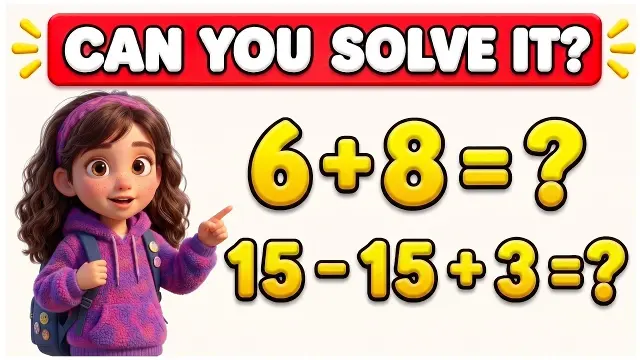
 Easy to Hard Math Quiz with Addition and Subtraction
#Math Challenge
5 ideas
Easy to Hard Math Quiz with Addition and Subtraction
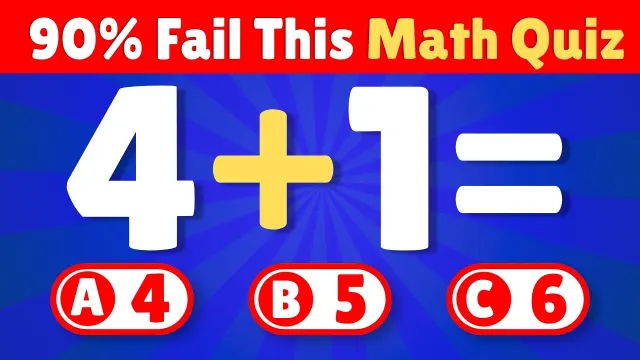 Educational Math Challenge Race Against the Clock for Kids
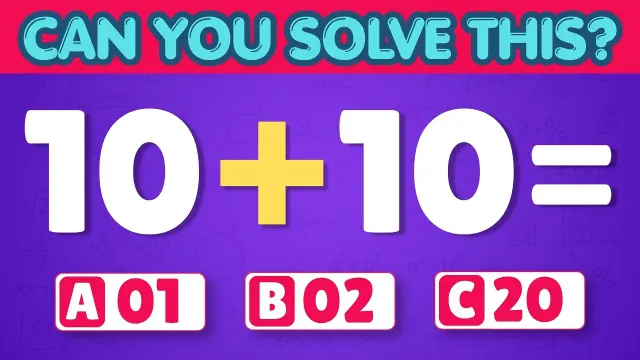 Ultimate Addition Quiz Challenge for First Grade
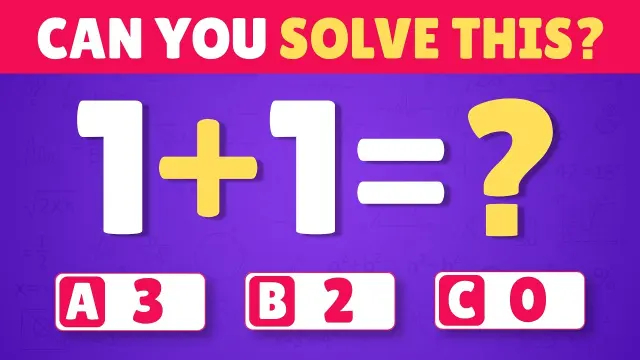 Mixed Math Quiz for Kindergarten Elementary Practice
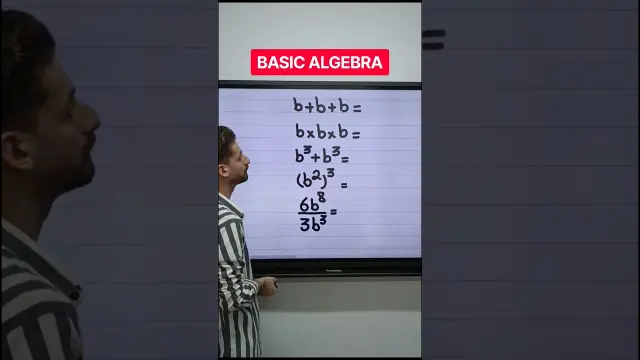 Basic Algebra Practice Challenge to Test Your Skills
Get new #Math Challenge ideas by email
Every Thursday: the week's best ideas, with the newest from #Math Challenge.
Related tags
Math Challenges: Practice, Logic, and Speed
What a math challenge is
A math challenge is any exercise, game, or puzzle that asks you to use numbers, patterns, and logic to solve problems. It can be as simple as quick addition questions or as involved as multi-step algebra, word problems, or reasoning puzzles. People use math challenges to practice skills, test speed and accuracy, and make learning more engaging.
Math challenges have long been part of education because they help turn abstract ideas into active problem-solving. Instead of only reading formulas, you work with them. That makes it easier to notice patterns, remember methods, and build confidence.
Common kinds of math challenges
Read more
Math challenges come in many forms, depending on age and skill level.
- Basic drills: addition, subtraction, multiplication, and division practice
- Mixed operations: questions that combine several types of arithmetic
- Word problems: everyday situations that require you to choose the right calculation
- Logic puzzles: problems that focus on reasoning rather than memorized rules
- Number patterns: exercises that ask you to identify or continue a sequence
- Algebra practice: solving for unknown values and working with expressions
- Timed quizzes: short challenges that encourage quick recall and focus
For beginners, simple problems are usually best. As you become more comfortable, you can add more steps, larger numbers, or less obvious wording.
What beginners should know
If you are new to math challenges, the main goal is not speed alone. Accuracy matters just as much. It is better to solve fewer problems carefully than to rush and repeat mistakes.
A few basics help a lot:
- Read the full question before you start
- Underline important numbers or words if that helps
- Work one step at a time
- Check your answer if time allows
- Learn common signs, such as plus, minus, times, and divide
- Don’t be discouraged by mistakes; they show what to practice next
Many people find that short, regular practice works better than long sessions. Repeating the same type of problem a few times can make the method feel natural.
Useful techniques
Different challenges ask for different approaches, but a few habits are broadly helpful.
- Break larger problems into smaller parts
- Estimate first when the answer should be roughly known
- Look for patterns before calculating
- Use scratch paper to keep your work clear
- Recheck units, signs, and place values
- If a problem feels stuck, try a simpler version first
For word problems, it often helps to ask: What is being asked? What information do I already have? Which operation fits best?
Why math challenges are useful
Math challenges can strengthen memory, concentration, and problem-solving skills. They also help you become more comfortable with numbers in daily life, from budgeting to measuring to planning.
The best approach is steady and patient. Start with a level that feels manageable, then increase the difficulty little by little. Over time, math challenges can become less intimidating and more rewarding, because each solved problem shows you that progress is possible.
Videos come from YouTube and posts from Instagram; titles and summaries are our own. All rights belong to their creators.