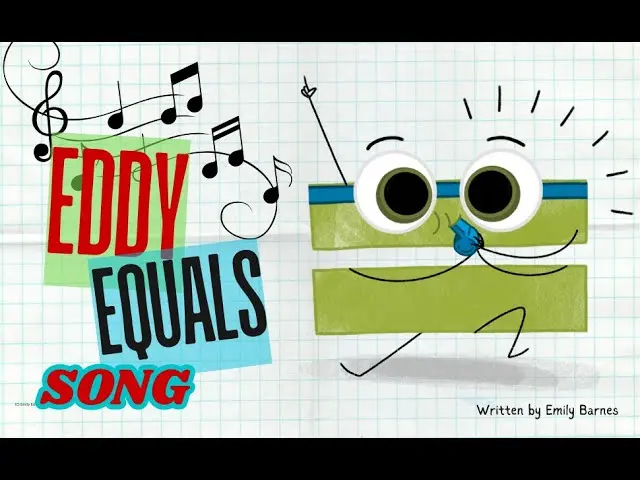
 Addition and Subtraction Math Facts Song with Eddy Equals
#Math Facts
1 ideas
Addition and Subtraction Math Facts Song with Eddy Equals
Get new #Math Facts ideas by email
Every Thursday: the week's best ideas, with the newest from #Math Facts.
Related tags
Math Facts Explained
Math facts are the basic number combinations that you can recall quickly and accurately, such as addition, subtraction, multiplication, and division facts. They are the building blocks of everyday arithmetic and help you work more efficiently with numbers. When you know your math facts well, larger problems often become easier because you do not have to stop and count from the beginning each time.
What math facts are
At the simplest level, math facts are small calculations that become familiar through repeated use. For example, knowing that 3 + 4 = 7 or 8 - 5 = 3 is part of your basic number fluency. In multiplication, facts such as 6 × 7 = 42 are equally important, and division facts are closely connected to them. These facts form a mental foundation for more advanced work in arithmetic, fractions, measurement, and problem-solving.
Why they matter
Read more
Math facts are useful because they save time and reduce mental effort. If you need to count out every answer one by one, even simple tasks can feel slow and frustrating. Strong recall helps with schoolwork, but it also supports everyday life, from handling money to measuring ingredients or estimating quantities. More importantly, confidence with math facts can make numbers feel less intimidating.
Common kinds of math facts
The main groups are addition facts, subtraction facts, multiplication facts, and division facts. Addition and subtraction are often learned first because they introduce number relationships and make sense with objects, pictures, or fingers. Multiplication and division build on that understanding by showing repeated groups and sharing. Many learners also use related fact families, which help them see how one set of numbers can create several linked equations.
How beginners can learn them
A good place to start is with small groups of facts and lots of repetition. It often helps to learn facts that follow patterns, such as doubles, near doubles, or counting by twos, fives, and tens. Using visual tools like counters, number lines, or arrays can make the relationships clearer before moving to memory practice. Saying facts aloud, writing them out, and mixing short review sessions into the day can all help them stick.
Helpful practice tips
Try to focus on understanding as well as memorizing. If you know why 6 + 4 = 10, it is easier to remember related facts later. Practice in short, regular sessions instead of long, tiring ones. Start with a few facts that feel manageable, then add more as they become automatic. It is also useful to revisit older facts often so they stay fresh. If a fact is hard to remember, look for a pattern or connection instead of just repeating it over and over.
A steady approach
Learning math facts takes time, and progress is usually gradual. It is normal to know some facts quickly while others need more practice. With patience, clear methods, and regular review, the basic facts become more familiar and much easier to use.
Videos come from YouTube and posts from Instagram; titles and summaries are our own. All rights belong to their creators.