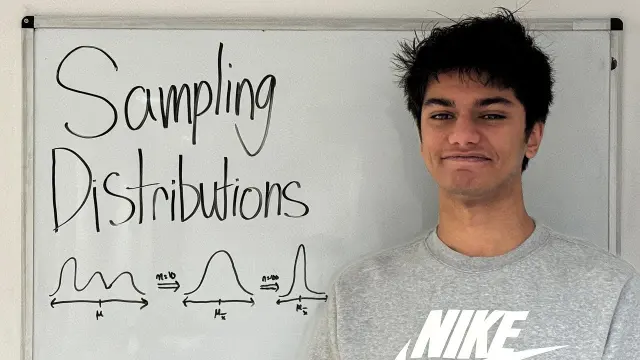
 AP Statistics Unit 5 Review on Sampling Distributions
#Math Review
4 ideas
AP Statistics Unit 5 Review on Sampling Distributions
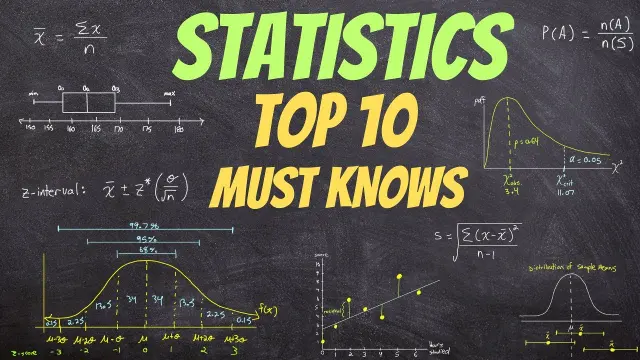 Complete Statistics Study Guide Covering Main Topics in One Hour
 End of School Year Elementary Math Review for Kids
 Complete Review of All SAT Algebra Concepts in Minutes
Get new #Math Review ideas by email
Every Thursday: the week's best ideas, with the newest from #Math Review.
Related tags
Math Review Guide for Learners
Math review is the process of revisiting the core ideas in mathematics so you can remember them, connect them, and use them more easily. It is useful at every level, whether you are helping a child keep skills fresh, preparing for an exam, or simply rebuilding confidence after a long break. Because math is cumulative, reviewing older topics often makes newer ones easier to understand.
What math review usually covers
A good review usually starts with the foundations: number sense, place value, operations, fractions, decimals, percentages, and ratios. From there, it may move into measurement, geometry, algebra, and data handling. At more advanced levels, review can also include functions, equations, graphing, probability, and problem solving.
The exact topics depend on your goal. A student who is preparing for classroom work may need broad revision, while someone getting ready for a test may focus on a narrower set of skills. In either case, the aim is the same: to strengthen understanding, not just memorize steps.
Read more
Common styles of review
Math review can happen in many forms. Some people work through short exercises on paper, while others prefer mixed practice problems that combine several topics. You might also review through flashcards, spoken questions, games, or error correction.
A helpful approach is to mix:
- quick recall of basic facts
- worked examples you study carefully
- practice problems you solve on your own
- short checks of mistakes so you can see where you went wrong
This mix helps you remember procedures and understand why they work.
What beginners should know
If you are starting again after time away from math, begin with the basics and move in small steps. Rushing into advanced topics can make review feel frustrating. It is usually better to master one idea before moving to the next.
Try to notice patterns. For example, many fraction, decimal, and percentage problems are connected, and algebra often depends on the same rules you already use with whole numbers. When you see these links, math becomes less like a list of separate topics and more like one connected system.
Practical tips for effective review
Keep your sessions short and regular rather than long and tiring. A little practice often works better than a lot of practice all at once. Focus on understanding mistakes, not just marking answers right or wrong. If you miss a problem, ask yourself whether the issue was a calculation slip, a forgotten rule, or a misunderstanding of the question.
It also helps to review in layers:
- first, refresh the idea
- then, work a few simple examples
- then, try mixed problems
- finally, check that you can explain the method in your own words
If you are helping a child, make the tone calm and encouraging. If you are reviewing for yourself, be patient. Math confidence usually grows when you give yourself time to revisit old skills and rebuild them steadily.
A thoughtful math review can turn uncertainty into familiarity and turn familiar skills into real confidence.
Videos come from YouTube and posts from Instagram; titles and summaries are our own. All rights belong to their creators.