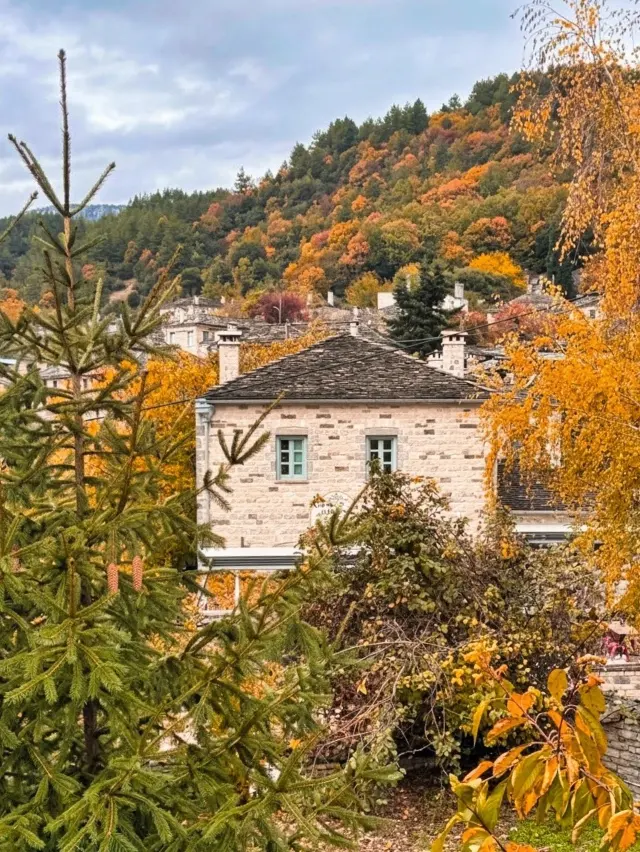
 Autumn in Papigko, the Stone Village of Epirus
#Papigko
1 ideas
Autumn in Papigko, the Stone Village of Epirus
Get new #Papigko ideas by email
Every Thursday: the week's best ideas, with the newest from #Papigko.
Related tags
Papigko: The Stone Village of the Pindus Mountains
Papigko is a small mountain village in the Zagori region of Epirus, in north-western Greece. It sits high on the slopes of Mount Tymfi, in the Pindus range, and it belongs to a group of villages known collectively as the Zagorochoria — settlements that grew up around a shared way of building, herding and trading in a landscape of deep gorges and limestone peaks. If you have seen photographs of grey slate roofs and heavy stone houses stacked against a mountainside, you have probably seen Papigko without knowing its name.
A village built to match its weather
Zagori architecture was shaped by stone, snow and necessity. Houses are built from local slate and limestone, with thick walls, small windows and roofs of flat overlapping slabs, because the winters here are long and harsh and timber was scarce. The same stone paves the lanes and forms the arched bridges and stairways that connect one level of the village to the next. Churches are stone too, with painted interiors that reward a quiet look rather than a hurried one.
What this means for a visitor is simple: wear proper shoes. The lanes are beautiful and uneven, and they turn slippery when wet. In winter and early spring there may be snow and ice underfoot.
Read more
Walking country
Papigko is best known as a starting point for the mountains above it. Paths lead up towards the alpine zone of Tymfi, past shepherd huts and springs, towards the small high lake that hikers know as Drakolimni — a glacial tarn set in bare rock, said in local storytelling to be home to dragons. A mountain refuge above the village serves as a base for those going higher.
The routes are not technical, but they are real mountain walks: the weather changes fast, the altitude gain is considerable, and there is little shelter on the upper slopes. Beginners should start with short walks around the village and lower paths, go out early, carry water and a windproof layer, and turn back rather than push on if cloud comes in. Tell someone where you are going, and do not rely on a phone signal.
Closer to the village, the Vikos gorge and the neighbouring Zagori settlements make good half-day trips by car or on foot.
Slow village life
Papigko is small and mostly quiet. A handful of guesthouses, cafés and tavernas keep the village alive, and many houses are closed for part of the year. Meals tend to be plain and mountain-based: pies, beans, greens, grilled meats, local cheeses and herbs gathered on the slopes. Sheep and goats still graze nearby, and shepherds' dogs take their work seriously — keep your distance and do not approach a flock.
Come expecting stillness, early nights, cool air and long views, and Papigko gives back generously. Treat the village as a place where people live rather than a stage set, and it will feel less like a detour and more like the point of the journey.
#Papigko: frequently asked questions
What is Papigko, and who is it for?
It is a small mountain village in the Zagori region of north-western Greece, one of the Zagorochoria settlements, built of slate and limestone high on the slopes of Mount Tymfi. People come for the stone lanes, the mountain walking above the village and the deep quiet. It rewards travellers who want stillness, cool air and long views more than entertainment.
How do you get to Papigko and how should you plan the trip?
It is reached by road, usually as part of a loop through the surrounding Zagori villages, and the final stretch climbs steeply. Arrive in daylight, because the lanes are narrow and parking is tight, and book a guesthouse ahead if you are travelling in a popular season. Many houses are closed for part of the year, so do not assume you can turn up and find a room or a meal late.
What should you pack for a visit?
Proper shoes with grippy soles are the single most important thing, since the paved lanes are uneven and turn slippery when wet. Add a windproof layer and water even for short outings, because the weather changes quickly and there is little shelter higher up. In winter and early spring expect snow and ice underfoot.
Which walk should a beginner choose?
Start with the paths in and around the village and the lower trails before attempting the climb toward the bare alpine zone. Go out early, tell someone where you are heading, and turn back if cloud comes in rather than pushing on. The routes are not technical, but they gain real altitude and should not be your first mountain outing.
What mistakes do visitors most often make?
The commonest is treating Papigko as a stage set rather than a place where people live — this means quiet hours, early nights and closed doors. Another is approaching grazing flocks, when shepherds' dogs guard them seriously and should be given a wide berth. Relying on a phone signal or on finding food late in the day also catches people out.
Any ideas for a good time or occasion to go?
Autumn is a favourite, when the light softens and the slopes and stone roofs change colour, and summer suits people who want long days on the trails. Pair a stay with short trips to the gorge and neighbouring settlements, and come expecting plain mountain food, cool evenings and no nightlife.
Videos come from YouTube and posts from Instagram; titles and summaries are our own. All rights belong to their creators.