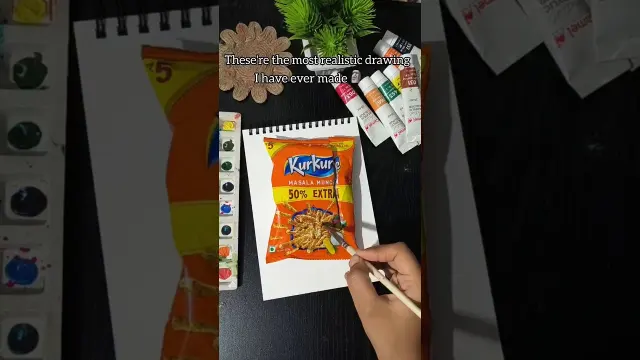
 Hyperrealistic Drawings That Look Just Like Real Objects
#Realistic Drawing
1 ideas
Hyperrealistic Drawings That Look Just Like Real Objects
Get new #Realistic Drawing ideas by email
Every Thursday: the week's best ideas, with the newest from #Realistic Drawing.
Related tags
Realistic Drawing
Realistic drawing is the practice of making a subject look believable and true to life on paper or another surface. It can range from careful observational sketches to highly detailed portraits, still lifes, animals, and scenes. The goal is not just to copy outlines, but to capture form, light, texture, proportion, and depth so that the drawing feels solid and convincing.
This way of drawing has been part of art for centuries. Artists have always studied the visible world closely, using drawing to understand the human body, everyday objects, landscapes, and the effects of light and shadow. Realistic drawing appears in many traditions, from classical study drawings to modern graphite, charcoal, colored pencil, pen, and mixed-media work. While styles vary, the shared foundation is careful observation.
What makes a drawing look realistic
A realistic drawing depends on a few key ideas:
Read more
- Proportion: the sizes of parts need to relate well to each other.
- Value: light and dark shapes help show volume and depth.
- Edges: soft, hard, or lost edges can make forms look more natural.
- Texture: surfaces like skin, fabric, glass, wood, or hair each need a different handling.
- Perspective: objects must sit correctly in space, whether near or far.
- Accuracy of observation: drawing what you truly see, not what you assume you know.
Beginners often think realism means drawing every tiny detail. In practice, it starts with strong structure. If the proportions and shadows are right, even a simple drawing can feel lifelike.
Common subjects and approaches
Realistic drawing is used for many subjects:
- Portraits and figure studies
- Still life arrangements
- Animals and wildlife
- Plants and flowers
- Buildings and interiors
- Everyday objects
Some artists prefer a very smooth finish, while others keep visible pencil marks or a more expressive surface. Realism does not have to mean dull or mechanical. You can still show your own hand in the drawing while keeping the subject believable.
Techniques that help
A few practical habits make a big difference:
- Start with light construction lines before adding detail.
- Compare angles, shapes, and spaces carefully.
- Look for big shadow shapes first, then refine smaller details.
- Use reference material when needed, especially for complex subjects.
- Build layers slowly instead of trying to finish everything at once.
- Step back often to check the overall effect.
It also helps to draw regularly from life. Even short sketch sessions can train your eye to notice proportions, light, and texture more clearly.
Tips for beginners
If you are learning realistic drawing, keep the process simple at first. Choose clear subjects with strong light and basic shapes. A sphere, an apple, a mug, or a hand can teach you a lot. Focus on one skill at a time, such as shading or proportion, rather than trying to master everything in one drawing.
Try not to judge your work only by how detailed it is. A realistic drawing becomes stronger when the structure, values, and edges work together. Patience matters, and so does practice. Over time, your drawings will become more accurate and more confident as you learn to see with greater attention.
#Realistic Drawing: frequently asked questions
How do I start learning realistic drawing if I've never drawn before?
Begin with simple subjects that have clear light and basic shapes, such as a sphere, an apple, or a mug, and practice drawing them from life. Start with light construction lines, then build up shadow shapes before adding finer detail. Working on one skill at a time, like proportion or shading, keeps early progress manageable.
What supplies do I need for realistic drawing?
You only need a few basic things to begin: a pencil or two, paper with a bit of texture, and an eraser you can lift marks with. Graphite, charcoal, colored pencil, and pen all work well for realism, so the medium matters less than regular practice. Drawing from life rather than only from photos helps more than any special tool.
Should I copy photographs or draw from life?
Reference material is genuinely useful, especially for complex subjects like figures or animals, and photographs are perfectly fine to work from. Still, drawing from life trains your eye to notice proportion, light, and texture in a way photos can flatten. Even short sketch sessions from a real object sharpen your observation over time.
Why does my drawing look flat instead of solid, and how can I fix it?
Flatness usually comes from weak values rather than insufficient detail, so look for the big shadow shapes first and let light and dark areas show volume. Check that parts relate well to each other in size, and watch your edges, since softening some and sharpening others makes forms feel rounder. Stepping back often helps you spot these problems before you overwork the drawing.
Do I have to draw every tiny detail to make a drawing look realistic?
No, and beginners often assume the opposite. A drawing feels lifelike mainly because structure, proportion, and values are right, and a simple piece with those working together can convince the eye. Adding texture and fine detail afterwards is the finishing touch, not the foundation.
Can I still keep my own style while drawing realistically?
Definitely. Realism does not have to look smooth or mechanical, and plenty of artists leave visible pencil marks or a more expressive surface while keeping the subject believable. Some prefer a polished finish and others a looser one, and either approach can sit comfortably under the realistic umbrella as long as observation stays at the center.
Videos come from YouTube and posts from Instagram; titles and summaries are our own. All rights belong to their creators.