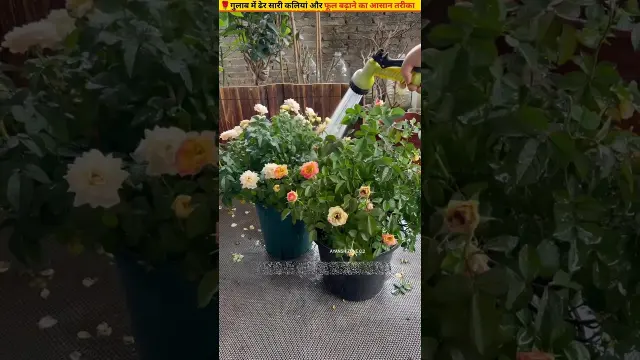
 How to Get a Denser Rose Plant With More Flowers
#Roses
1 ideas
How to Get a Denser Rose Plant With More Flowers
Get new #Roses ideas by email
Every Thursday: the week's best ideas, with the newest from #Roses.
Related tags
Roses: A Beginner's Guide to Growing and Enjoying Them
Roses are woody flowering shrubs of the genus Rosa, grown for their layered blooms, their scent and their remarkable range of forms. They have been cultivated for centuries across Europe, Asia and the Middle East, and have found their way into gardens, poetry, perfumery, celebrations and everyday decoration ever since. A single garden can hold tiny ground-hugging roses and tall scrambling climbers, and still be recognisably a rose garden.
The main kinds
The roses most people picture — a long straight stem with one large bloom — are hybrid teas. Floribundas carry their flowers in clusters instead, which gives a fuller, longer-lasting display. Shrub and English-style roses blend old-fashioned shape and fragrance with repeat flowering, while climbers and ramblers cover walls, arches and pergolas; ramblers tend to flower once, generously, and climbers repeat more modestly. Miniatures suit pots and small spaces, and species roses are the wild, unfussy ancestors, often with simple single flowers and bright autumn hips.
What roses need
Read more
Sun is the first requirement: most roses flower best with several hours of direct light a day. They also want air moving around the leaves, so avoid cramming them against a wall or under overhanging branches. Soil should drain freely — roses dislike standing water at the roots — and benefit from organic matter worked in before planting.
Plant bare-root roses while they are dormant in the cooler months, or potted roses whenever the ground is workable and not frozen. Set the plant at the same depth it grew before, firm the soil, and water well. A layer of mulch keeps moisture in and weeds down, but leave a small gap around the stem.
Water deeply rather than often, aiming at the soil rather than the foliage, and feed through the growing season with a rose or general garden fertiliser following the packet. Pruning is the part that worries beginners most: the aim is simply to remove dead, damaged or crossing stems and to open up the centre of the plant in late winter or early spring. Cut just above an outward-facing bud with clean, sharp tools.
Watch for the usual visitors — aphids, black spot and mildew — and deal with them early by removing affected leaves and improving airflow rather than reaching for the strongest spray first.
Beyond the flowerbed
Roses reward more than the garden. Cut stems last longer if taken in the cool of the morning and conditioned in deep water. Petals are used in jams, syrups and rose water, and hips in teas and preserves — use only flowers you know have not been sprayed. Dried buds scent linen cupboards and drawers. Even a single rose in a small vase will do the work.
Videos come from YouTube and posts from Instagram; titles and summaries are our own. All rights belong to their creators.