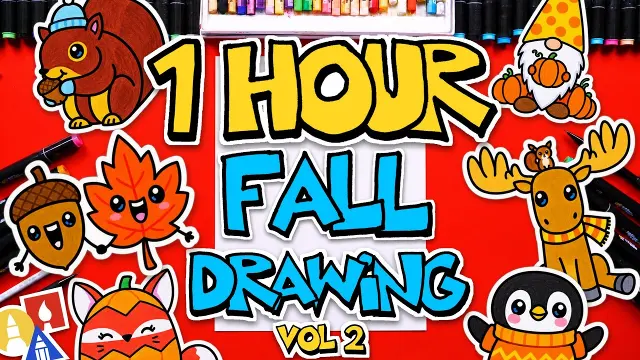
 One hour of fall drawing lessons: squirrel, pumpkin fox and puppy
#Seasonal Art
1 ideas
One hour of fall drawing lessons: squirrel, pumpkin fox and puppy
Get new #Seasonal Art ideas by email
Every Thursday: the week's best ideas, with the newest from #Seasonal Art.
Related tags
Seasonal Art: A Guide to Making Art Through the Year
Seasonal art is simply art made in conversation with the time of year — a drawing of autumn leaves, a winter window painted with frost and candlelight, a spring study of blossom, a summer page of shells and hot afternoons. What sets it apart is not the subject so much as the rhythm: the making is tied to what the world around you is doing right now, so the work changes as the months do.
The idea is old. Farmers' almanacs, village calendars, illuminated books of hours and folk needlework all tracked the year through images of what was happening outside: sowing, harvest, lambs, jam-making, snow, the first swallow. Seasonal art in its modern form borrows from that tradition and from the practice of keeping a nature journal, where you record what you notice rather than what you can invent. It also draws on the decorative arts, where the same motifs come back every year without anyone expecting them to be new.
People come to it for different reasons. Some use it as a way to stay in the habit of making when inspiration runs thin, because the subject for the day has already been chosen by the weather. Others use it to mark time for a family — a folded paper garland, a painted acorn, a page drawn together in the evening. And some use it to look harder at the ordinary, since a seasonal prompt forces you to notice small changes you would otherwise walk past.
There are a few broad approaches you can try:
Read more
- Observational drawings from life: a leaf, a conker, a shell, the look of the sky. Slower, quieter, and a good way to learn.
- Motif-based decorative work: repeating shapes worked into cards, garlands, wreaths, or patterns.
- Natural materials: pressing leaves, leaf-rubbings, printing with halved fruit, painting with earth pigments, working with clay or sticks.
- Mixed media and collage: layering found paper, fabric and dried flowers into a seasonal page.
- Ongoing journals: one small page a week, so the book becomes a record of the year.
If you are starting out, keep the equipment simple. A pencil, a fine black pen, a small watercolour set and a cheap sketchbook will carry you a long way. Choose a subject you can hold still — a stem, a stone, a ribbon — rather than a scene that moves. Work small at first; a five-minute drawing you actually finish teaches more than a large one you abandon. Do not fret about the "right" colours for a season. Look at the real thing rather than the idea of it, and mix what you see.
Gathered materials need a little care: dry leaves and flowers between layers of paper under weight, and work them when they are fully dry to avoid mould. If you sketch outdoors, take a bag for your findings and leave living things growing.
Above all, let the year do some of the work for you. Pick one small thing to draw each time the season turns, keep the pages even when they are rough, and notice what your book starts to look like after twelve months.
#Seasonal Art: frequently asked questions
What is seasonal art, and how is it different from other kinds of drawing?
It is art made in response to whatever the year is doing around you — frost on a window, blossom on a branch, shells on a summer table — rather than to an invented subject. The difference lies less in the subject than in the rhythm: the making follows the months, so the work keeps changing as the world outside does. It borrows from old calendar traditions, nature journals and decorative folk work, where the same motifs returning each year is the whole point.
How do I begin if I have never made seasonal art before?
Start with what you can hold still — a stem, a stone, a ribbon — and keep your kit plain: a pencil, a fine pen, a small watercolour set and an inexpensive sketchbook. Work small and finish quickly rather than attempting something large you will abandon, since a completed little drawing teaches more than an unfinished big one. Choose the subject the weather has already given you, so deciding what to draw is not a hurdle.
Which approach should I choose — drawing from life, decorative motifs, natural materials or a journal?
Observational drawing from life is the quietest and the best teacher, so it suits anyone wanting to learn to look. Motif-based decorative work — repeating shapes made into cards, garlands or wreaths — suits people who like pattern and finishing something usable. Pressing, printing and collage are good if you enjoy handling real material, while an ongoing journal is the gentlest way to keep a habit going across the whole year.
How should I store the leaves, flowers and other things I collect?
Press leaves and flowers flat between layers of paper with weight on top, and leave them until they are completely dry before using them, otherwise they will spoil. Carry a bag on outdoor walks so your findings travel safely, and pick only what has already fallen rather than taking living plants. Sketch what is still growing where it stands.
What mistakes do beginners make most often?
The commonest is chasing the colours a season is supposed to have instead of mixing what is actually in front of you, which makes the work look generic. Another is starting too large and giving up halfway, or waiting for a perfect subject rather than drawing the ordinary thing at hand. Using gathered material before it has dried properly, so it moulds, is a small practical trap worth avoiding.
Can I make seasonal art with children, or as a family activity?
Yes — much of its appeal is that it gives a household a way to mark the turning year together, through a folded garland, a painted acorn or a page drawn side by side in the evening. Choose simple materials and subjects a child can finish in one sitting, such as an animal, a leaf or a pumpkin. Keep the rough pages as well as the neat ones, since the record matters more than the finish.
Videos come from YouTube and posts from Instagram; titles and summaries are our own. All rights belong to their creators.