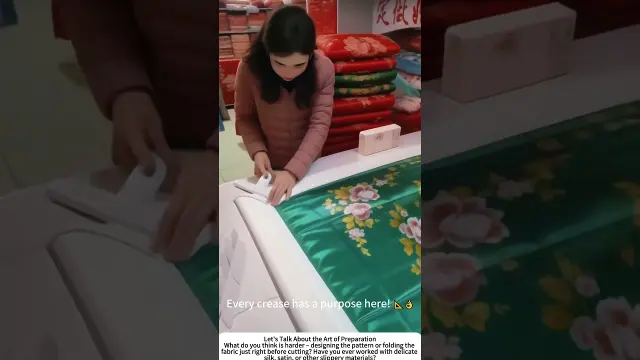
 Folding Patterned Silk Neatly in a Traditional Workshop
#Silk Fabric
1 ideas
Folding Patterned Silk Neatly in a Traditional Workshop
Get new #Silk Fabric ideas by email
Every Thursday: the week's best ideas, with the newest from #Silk Fabric.
Related tags
Silk Fabric: A Guide to Types, Care and Uses
Silk is a natural fibre spun by silkworms, and for thousands of years it has been one of the most prized textiles in the world. Its story begins in China, where the process of reeling silk from cocoons was developed and long kept secret; from there it travelled along the trade routes that carried it westward, and sericulture eventually took root in India, Persia, Byzantium and later in parts of Europe. What made it so valuable is a combination of qualities that few other fibres share: it is strong for its weight, it drapes beautifully, it takes dye deeply and it has a soft, cool handle against the skin.
How silk is made
Silkworms feed on mulberry leaves and spin a cocoon from a single continuous filament, which is then softened in hot water and reeled off. Several filaments are twisted together to make a thread strong enough for weaving. Most silk in the market is cultivated, or "mulberry" silk; wild silks such as tussah are coarser, more textured and often darker in colour.
The main kinds of silk fabric
Read more
- Habotai, also called china silk: light, smooth and inexpensive, used for linings and scarves.
- Charmeuse: glossy on the face and matte on the back, the classic drapey silk for dresses and blouses.
- Crepe de chine: a slightly crinkled, forgiving surface that resists creasing and is easy to sew.
- Dupioni: crisp, with a subtle slub from two cocoons reeled together, popular for structured garments.
- Chiffon and georgette: sheer, airy and delicate, often layered.
- Taffeta and organza: stiff and crisp, holding shape in skirts, sleeves and trims.
- Raw silk, or noil: a nubby, matte cloth with a more casual character.
What beginners should know
Silk is slippery and shifts easily, so cut it on a single layer with the fabric pinned inside the seam allowance, and use fine, sharp needles and light thread. Pre-wash if you plan to wash the finished piece, and test on a scrap first. Silk takes dye well, which makes it a favourite for hand-dyed and painted work.
Wearing and care
Silk insulates in both directions, warm in winter and cool in summer, which is why it suits everything from underwear to evening wear. It is sensitive to perspiration, deodorants and strong sunlight, and it weakens when wet, so handle gently. Most silk can be hand-washed in cool water with a mild soap, rinsed without wringing, rolled in a towel and dried away from direct sun. Iron on the reverse while slightly damp on a low setting. Dry cleaning is safest for structured or richly dyed pieces.
However you use it, silk rewards a little patience with a fabric that ages well and looks better the more care you give it.
#Silk Fabric: frequently asked questions
Which kind of silk fabric should I choose for a first project?
Start with something forgiving rather than the sheerest or stiffest options: crepe de chine has a slightly crinkled surface that hides small stitching irregularities and resists creasing, while habotai is smooth and light and works well for linings and scarves. Save charmeuse and chiffon for later, since their slippery, fluid surfaces make them the hardest to cut and sew accurately. Handle a swatch first to judge how much the cloth moves under the needle.
What do I need to sew with silk successfully?
Fine, sharp needles, light thread and very sharp shears make the biggest difference, because a dull blade or heavy thread drags the fibres and leaves marks. Cut on a single layer with the fabric pinned inside the seam allowance so the pins never pierce a visible area, and test your stitch length and tension on a scrap first. If you intend to wash the finished piece, pre-wash a sample so any change in the cloth happens before you sew.
How should I wash and iron silk at home?
Most silk can be hand-washed in cool water with a mild soap, rinsed without wringing, then rolled in a towel and dried away from direct sun. Iron it on the reverse while it is still slightly damp, using a low setting. Structured or richly dyed pieces are safer taken to a dry cleaner than washed at home.
What is the difference between cultivated silk and wild silk?
Most silk sold is cultivated, often called mulberry silk, reeled from cocoons of worms fed on mulberry leaves; it is smooth, even and takes dye deeply. Wild silks such as tussah come from other species and are coarser, more textured and usually darker in tone. The choice comes down to whether you want a refined, uniform surface or a more rustic character.
What are common mistakes when working with silk?
The usual ones are cutting two layers at once, using too heavy a thread, and skipping a test on scraps before committing to the whole piece. Silk is also sensitive to perspiration, deodorants and strong sunlight, and it weakens when wet, so treat it gently rather than scrubbing or soaking it. Pressing on the right side instead of the reverse is another easy way to leave a shine.
Which silk suits a formal occasion?
Charmeuse is the classic choice for dresses and blouses, glossy on the face and matte on the back, with a drape that moves well in evening wear. Taffeta and organza hold their shape in skirts, sleeves and trims, which makes them useful when you want structure rather than fluidity. For layered or sheer effects, chiffon and georgette give lightness without weight.
Videos come from YouTube and posts from Instagram; titles and summaries are our own. All rights belong to their creators.