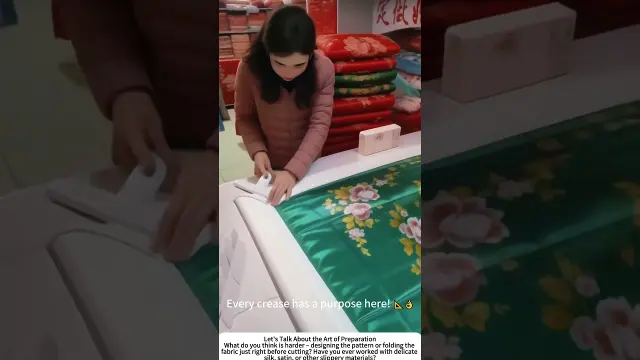
 Folding Patterned Silk Neatly in a Traditional Workshop
#Textile Craft
1 ideas
Folding Patterned Silk Neatly in a Traditional Workshop
Get new #Textile Craft ideas by email
Every Thursday: the week's best ideas, with the newest from #Textile Craft.
Related tags
Textile Craft: A Guide to Making Cloth by Hand
Textile craft is the broad family of hand techniques used to make cloth and to give it pattern, colour and structure. It begins where fibre does — with wool, cotton, linen, silk, or plant fibres such as nettle and hemp — and follows that fibre through spinning, dyeing, and the construction of fabric itself. What holds the field together is not one method but a shared logic: threads are twisted, crossed, looped or stitched by hand, and the maker's choices at each stage stay visible in the finished piece.
The main branches
Three constructions account for most textile work. Weaving crosses two sets of threads at right angles: the warp, held under tension, and the weft, passed over and under it. Plain weave, twill and satin are the classic ground structures, and from these come everything from coarse household cloth to fine drapery. Knitting loops a single continuous yarn into rows, which makes it stretchy and well suited to garments; crochet does something similar with a hooked needle, building fabric one stitch at a time. Felting takes a different route entirely, matting fibres together with moisture, heat and friction rather than spinning them first.
Surface and finishing crafts sit on top of these: embroidery, appliqué, patchwork, quilting, lacemaking, block printing, resist dyeing and natural dyeing. Many traditions combine several at once, and a single heirloom textile might carry hand-spun yarn, a woven ground, and stitched ornament.
Read more
What beginners should know
Start with one technique rather than several. A plain weave on a simple frame loom, a garter-stitch scarf, or a small embroidery sampler teaches more than a complicated first project, because each lets you see how the structure behaves. Choose materials that suit the craft: smooth, firmly spun yarn for warp, softer yarn for weft and knitting, even-weave cloth for counted embroidery. Keep your hands clean and your tension steady — consistency matters far more than speed.
Learn the vocabulary early. Words like warp, weft, selvedge, grain, draft and sett appear in every instruction you will meet, and knowing them turns confusing patterns into readable ones.
Practical habits
Wash and test fibre before you commit to a large piece, since some yarns shrink or bleed. Store finished work folded with acid-free tissue, away from direct light, and roll rather than fold anything with heavy stitching or beadwork. Keep a notebook of what you made, with the yarn and the sett or stitch count; it becomes the most useful reference you own.
Textile craft rewards patience. The rhythms are simple and repetitive, and that is precisely the point: the work teaches your hands while your attention rests.
#Textile Craft: frequently asked questions
How do I get started with textile craft as a complete beginner?
Pick a single technique and give it your full attention before adding another, since learning one structure well teaches you more than a scattered start. A plain weave on a simple frame loom, a basic knitted scarf or a small embroidery sampler are forgiving first projects that let you watch the structure behave. Learn the words that come up in every pattern, like warp, weft, selvedge and sett, and instructions stop feeling like a foreign language.
What materials and tools do I actually need before I begin?
It depends on the branch you choose, but the essentials are the fibre plus one simple tool for holding or working it, such as a frame loom, a pair of needles, a hook or a hoop. Match the material to the job: a smooth, firmly spun yarn holds up as warp, softer yarns suit weft and knitting, and an even-weave cloth is what counted embroidery wants. Keep your hands clean and your tension steady, because consistency shows in the finished piece far more than speed does.
Which kind of textile craft should I choose?
Think about the result you want rather than the technique's reputation. Weaving builds flat cloth with visible structure, knitting and crochet give stretchy fabric suited to garments, felting mats fibres together without spinning, and surface crafts like embroidery or patchwork add pattern to cloth you already have. If you enjoy repetition and rhythm, the looping and crossing crafts tend to feel restful; if you like colour and ornament, start on the surface side.
How should I care for and store finished textile pieces?
Test and wash a fibre before committing it to a large piece, because some yarns shrink or release dye once wet. Store finished work folded with acid-free tissue and out of direct light, and roll anything carrying heavy stitching or beadwork instead of folding it so the surface does not crease. Keeping a notebook of the yarn, sett or stitch count you used becomes the most valuable reference you own when you make something similar again.
What are the most common mistakes beginners make?
The usual one is taking on a complicated first project before understanding how the structure works, which hides the lesson inside too much confusion. Inconsistent tension is the other big one, along with choosing materials that do not suit the craft, such as a softly spun yarn for warp. Skipping the vocabulary and the notebook costs you later, since patterns stay unreadable and you cannot repeat what went right.
Can I combine several textile techniques in one piece?
Yes, and many traditions do exactly that, since the crafts share a common logic of twisting, crossing, looping or stitching thread by hand. An heirloom textile might carry hand-spun yarn, a woven ground and stitched ornament all at once. If you want to combine, build confidence in each technique separately first so the joins between them stay deliberate rather than accidental.
Videos come from YouTube and posts from Instagram; titles and summaries are our own. All rights belong to their creators.