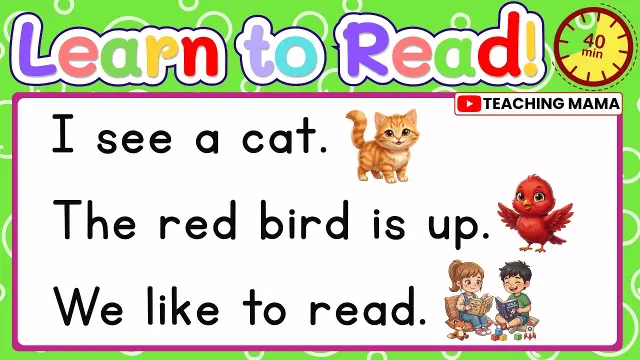
 English Reading Practice with Simple Sentences for Kids
#Simple Sentences
2 ideas
English Reading Practice with Simple Sentences for Kids
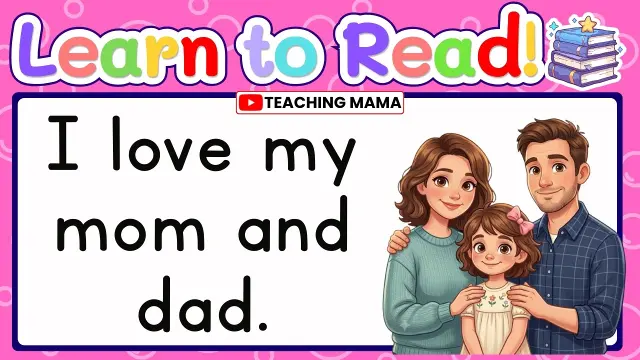 Simple Reading Lesson with Sight Word Sentences for Children
Get new #Simple Sentences ideas by email
Every Thursday: the week's best ideas, with the newest from #Simple Sentences.
Related tags
Simple Sentences: A Clear Guide
What simple sentences are
A simple sentence is a complete sentence with one main idea. It has a subject and a verb, and it expresses a full thought. Despite the name, a simple sentence can be very short or quite long. What makes it simple is not the number of words, but the fact that it contains only one independent clause.
Simple sentences are one of the basic building blocks of English. They are common in everyday speech, children’s reading, instructions, and clear writing. They help ideas feel direct and easy to follow.
How to recognize one
Read more
To identify a simple sentence, look for one subject and one main verb. It may also include describing words or extra details, but it should still say just one complete thing.
Examples:
- The dog slept.
- My sister reads every night.
- We walked to the park after lunch.
Each of these sentences stands alone. None of them needs another clause to make sense.
Why simple sentences matter
Simple sentences are useful because they are clear, readable, and easy to understand. They can help you:
- explain an idea directly
- make instructions easier to follow
- create emphasis
- support early reading and writing
- break up longer passages so they feel more natural
Writers often use simple sentences when they want something to sound strong, calm, or straightforward. They are especially helpful when you want the reader to focus on one key idea at a time.
Common types of simple sentences
Simple sentences can serve different purposes:
- Statements: She likes apples.
- Questions: Are you ready?
- Commands: Close the door.
- Exclamations: What a lovely morning!
These can all be simple sentences as long as they contain one main clause.
Simple sentences and longer sentences
A simple sentence is different from a compound or complex sentence. A compound sentence joins two complete thoughts, often with words like and, but, or so. A complex sentence contains one main clause and at least one dependent clause.
For example:
- Simple: I stayed home.
- Compound: I stayed home, and I read a book.
- Complex: I stayed home because it was raining.
Knowing the difference helps you vary your writing. If every sentence is short and simple, the writing can feel choppy. If every sentence is long, it can feel hard to read. A good mix often works best.
Tips for using simple sentences well
If you are learning to write, start with short complete thoughts. Make sure each sentence has a subject and a verb. Read your sentence aloud to check that it feels complete.
You can also use simple sentences to improve clarity:
- Keep one idea in each sentence.
- Remove unnecessary words.
- Use simple sentences to emphasize an important point.
- Combine them with longer sentences for rhythm and variety.
Simple sentences are not childish or basic. They are a useful part of clear, effective communication. When you use them well, your writing becomes easier to follow and more natural to read.
Videos come from YouTube and posts from Instagram; titles and summaries are our own. All rights belong to their creators.