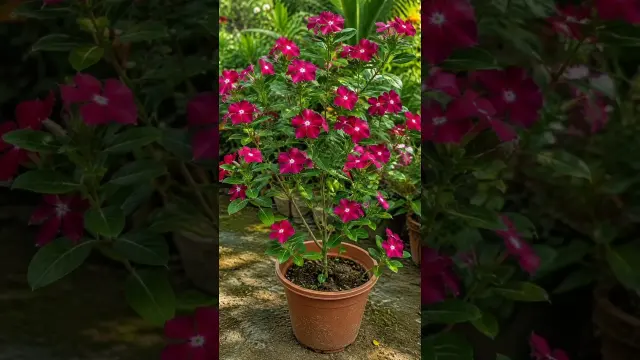
 Madagascar Periwinkle Care: Pruning and Rain Protection
#Vinca
1 ideas
Madagascar Periwinkle Care: Pruning and Rain Protection
Get new #Vinca ideas by email
Every Thursday: the week's best ideas, with the newest from #Vinca.
Related tags
Vinca: Periwinkle Types, Planting and Care Basics
Vinca is the botanical name behind the plants most of us simply call periwinkle. The word covers a small group of low-growing, glossy-leaved plants grown for two different reasons: some are tough evergreen ground covers, and one is a tender summer flower for beds and pots. Learning which kind you have is the first step, because they want quite different conditions.
The main kinds
- Lesser periwinkle (Vinca minor) is the classic ground cover of shady gardens: trailing stems, small dark green leaves and flat blue-violet flowers in spring, with a lighter repeat in autumn.
- Greater periwinkle (Vinca major) looks similar but is larger in every part, faster to spread, and less tolerant of cold.
- Madagascar periwinkle (Catharanthus roseus, long sold as Vinca rosea) is the bedding plant usually meant in garden centres. It grows upright and bushy, flowers all summer in pink, white or red, and is treated as an annual where winters are cold.
Where they come from
Read more
The hardy periwinkles are natives of Europe and the Mediterranean region, which explains their tolerance of dry shade under trees and their evergreen habit. Madagascar periwinkle comes from the island it is named after and needs the opposite: sun, warmth and free-draining soil.
What each one needs
Hardy periwinkles are among the most forgiving plants you can own. They settle in shade or part shade, cope with dry soil once established, and knit together into a weed-suppressing carpet. The catch is their enthusiasm: given rich soil and room, they spread quickly and can smother smaller neighbours, so plant them where a bold carpet is welcome and edge them regularly.
Madagascar periwinkle wants full sun and warmth, and sulks in cold, wet ground. Water it while it establishes, then let the soil dry a little between waterings. Pinching out the growing tips early in the season encourages a fuller, more floriferous plant.
Practical tips for beginners
- Plant in spring or early autumn, when the soil is warm and there is time to root before extremes.
- Space ground-cover plants generously; they fill in fast.
- Trim trailing periwinkle after flowering to keep it tidy and within bounds.
- Grow Madagascar periwinkle in containers if your soil stays heavy or cold.
- Handle all of them with a little care: the plants are not edible and the sap can irritate sensitive skin, so wear gloves when trimming and keep them away from grazing pets and small children.
A note on the flowers
Periwinkle flowers are simple, five-petalled and cheerful rather than showy, which is part of their charm. They ask for little deadheading, though removing spent blooms on the tender kinds keeps new buds coming. Whether you want a green carpet beneath trees or a splash of colour by a sunny wall, there is a vinca suited to the spot.
#Vinca: frequently asked questions
How do I know which kind of vinca I actually have?
Look at how it grows: plants that trail along the ground with glossy evergreen leaves and small flat flowers in spring are the hardy periwinkles, either lesser or greater. If instead it stands upright and bushy and keeps flowering through the warm months in pink, white or red, it is Madagascar periwinkle, the tender bedding kind. The difference matters because one wants shade and the other wants sun.
Where should I plant vinca in my garden?
Hardy periwinkle is at its best in shade or part shade, including the dry ground under trees where little else thrives. Madagascar periwinkle needs the opposite — full sun, warmth and soil that drains freely — and sulks in cold, wet positions. If your ground is heavy or stays cold, growing the tender kind in a container is the easier route.
How do I keep periwinkle ground cover from taking over?
It spreads by trailing stems that root as they touch the soil, so the trick is to give it a boundary rather than to fight it later. Trim the runners back after flowering, edge the patch regularly, and avoid enriching the soil, since rich ground makes it race. Plant it where a bold, weed-suppressing carpet is what you want, not among small delicate neighbours.
How much watering and fuss does Madagascar periwinkle need?
Water it while it is establishing, then let the surface dry a little between waterings rather than keeping it constantly damp. Pinching out the growing tips early in the season gives you a bushier plant with more flowers, and removing spent blooms keeps new buds coming. Otherwise it is a low-effort summer plant as long as it has sun and warmth.
When is the best time to plant vinca?
Spring or early autumn suits both kinds, because the soil is warm and the plant has time to root before heat or cold extremes arrive. Ground-cover types can be spaced generously since they knit together quickly. Tender vinca should only go outside once the weather is reliably warm.
What are the most common mistakes beginners make with vinca?
The usual one is treating all vinca as the same plant and giving a sun-lover shade or a shade-lover baking sun. The second is planting hardy periwinkle in rich soil among small plants, where its vigour becomes a nuisance rather than an asset. Wear gloves when trimming, since the sap can irritate skin, and keep the plants away from pets and small children as they are not edible.
Videos come from YouTube and posts from Instagram; titles and summaries are our own. All rights belong to their creators.