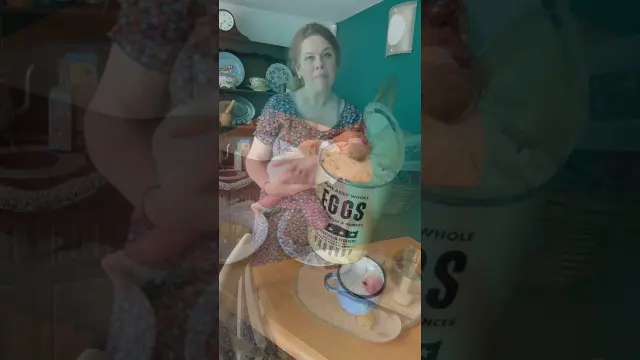
 Making Cheese Dreams With 1940s Food Rationing Guidelines
#Vintage Recipe
1 ideas
Making Cheese Dreams With 1940s Food Rationing Guidelines
Get new #Vintage Recipe ideas by email
Every Thursday: the week's best ideas, with the newest from #Vintage Recipe.
Related tags
Vintage Recipes: A Guide to Cooking from the Past
A vintage recipe is a dish that has been cooked and passed along for decades, often long enough that the instructions assume a kitchen very different from yours. It might come from a handwritten card in a relative's handwriting, a community cookbook assembled by a church or school, a manufacturer's promotional booklet, or a newspaper column clipped and saved. What these sources share is a practical spirit: they were written to feed people well with what was on hand.
Where vintage recipes come from
Most old recipes grew out of constraint rather than nostalgia. Households worked with seasonal produce, a limited pantry, and equipment that demanded patience — a wood stove, a hand-cranked grinder, a single tin oven. Periods of scarcity left their mark too, teaching cooks to stretch a little meat or butter across a whole meal and to meet a short pantry with ingenuity rather than waste. Immigration and trade brought new flavours into home kitchens, and those dishes were gradually adapted to local ingredients, which is why the same cake can exist in a dozen regional versions.
The main kinds you will meet
Read more
- **Thrift dishes.** Stews, puddings, and bakes built from leftovers, stale bread, or inexpensive cuts.
- **Preserves and pickles.** Jams, chutneys, salted and fermented foods made to carry a harvest through winter.
- **Celebration baking.** Layer cakes, biscuits, and holiday breads tied to family occasions.
- **Rationed and wartime cooking.** Recipes designed around shortages, often using clever substitutes.
- **Community cookbooks.** Collections contributed by home cooks, full of personality and shorthand.
What beginners should know
Old recipes speak a different language. Measurements may be given in teacups, gills, or "a knob of butter"; oven temperatures might be described as slow, moderate, or quick rather than in degrees; and instructions assume skills that were once ordinary, like rubbing butter into flour by hand. Read the whole recipe before you begin, and expect to interpret rather than obey.
A few practical habits help. Translate unfamiliar measures before you start, using a reliable conversion chart. Treat liquid amounts in old baking recipes as a starting point and add gradually, because flour and butter behave differently today. Watch your heat the first time you make something, since modern stoves are far more responsive than the ones these recipes were written for. And taste as you go — seasoning and sweetness in older dishes often reflect a different palate.
Most importantly, keep notes. Write in the margins, record what you changed, and note how long it actually took. That is how these recipes survived in the first place, and it is how you become part of the chain.
#Vintage Recipe: frequently asked questions
What actually makes a recipe "vintage" rather than just old?
It is a dish that stayed in use long enough to be handed down — written on a card, printed in a community collection, or clipped from a paper — and that carries the habits of the kitchen it came from. The give-away is that the method assumes equipment and skills no longer standard, so the writer skips steps a modern cook needs spelled out. Age alone is not the test; continued cooking is.
What do I need on hand before I try my first one?
A conversion chart for unfamiliar measures, a notebook, and enough time to read the whole thing twice before touching an ingredient. Beyond that, nothing special — most of these dishes were built for an ordinary pantry, not specialty equipment. The real tool is patience with vague wording.
Which type is the easiest place to start?
Thrift dishes and simple preserves are the most forgiving, because they were designed to absorb whatever you had and rarely fail outright. Celebration baking is the harder end, since cakes and holiday breads depend on precise ratios that old instructions often leave loose. Pick something you already cook well in a modern version and work backwards from there.
How do I deal with measures like "a teacup" or oven directions like "moderate"?
Convert what you can before you start, then treat the rest as a range rather than a rule. Add liquid gradually, since today's flour and butter absorb differently, and judge heat by watching and smelling rather than by trusting a dial setting. Season and sweeten to taste near the end instead of committing up front.
What mistakes do beginners usually make?
The common ones are skimming the method instead of reading it through, following an old quantity exactly when the ingredients have changed, and expecting the dish to match a modern version in texture and sweetness. Another is not writing anything down, which loses the adjustment you just worked out. Note what you changed and how long it took, and the recipe becomes usable.
How should I store and look after an old recipe collection?
Keep handwritten cards and clippings dry, out of direct light, and away from the heat of the stove, since paper and pencil fade fast in a kitchen. Make copies or photographs of anything irreplaceable and cook from those instead. Adding your own notes alongside keeps the collection alive rather than archived.
Videos come from YouTube and posts from Instagram; titles and summaries are our own. All rights belong to their creators.