 Learning Big Numbers with Numberblocks
#Big Numbers
16 ideas
Learning Big Numbers with Numberblocks
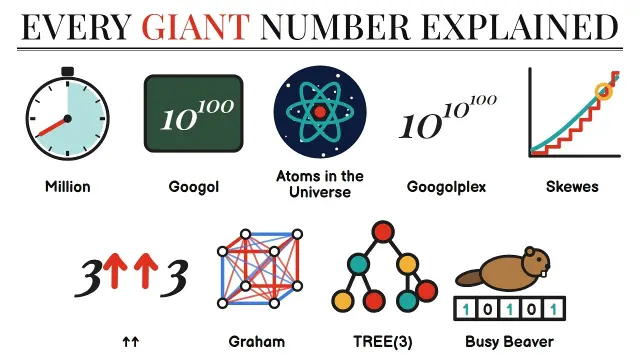 Explanation of Every Giant Number from Googol to Rayo's Number
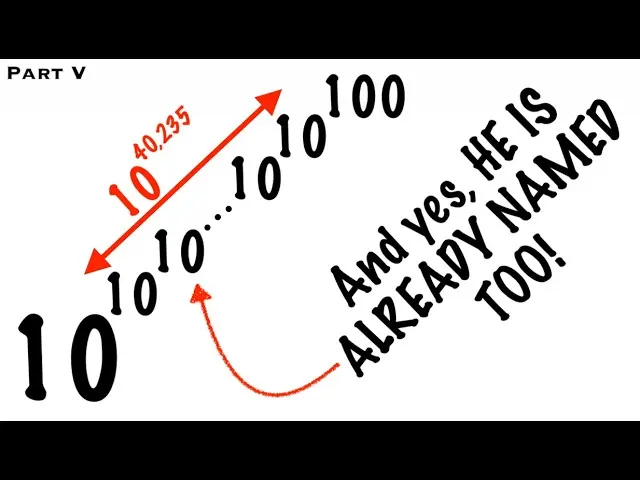 Naming Uselessly Large Numbers Beyond Googolplex
 Counting Big Numbers from 1 Thousand to 10 Billion
 Exploring Large Numbers Around Us for Seventh Grade
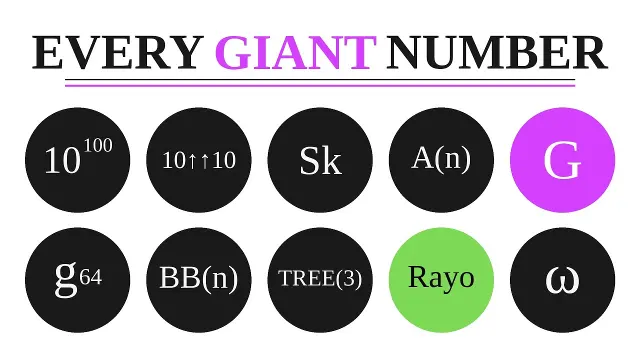 The Biggest Numbers Ever Defined in Mathematics
 The Original Biggest Numbers Discussed by Numberphile
 Rapid Revision of Large Numbers Around Us in Fifteen Minutes
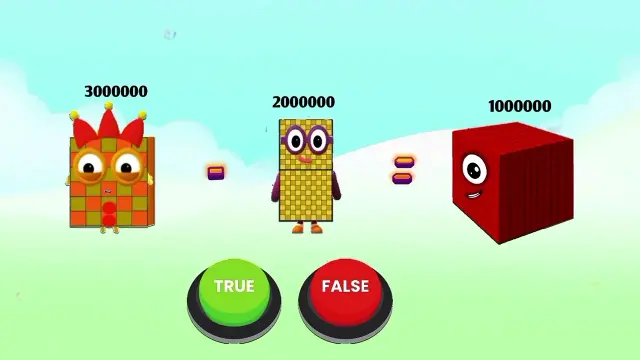 Big Numbers True or False Math Quiz for Kids
 Understanding Class 5 Large Numbers and Place Value
 Exploring Finite Numbers So Large They Push Human Limits
 Ridiculously Big Numbers Generated by Rubik's Cube Combinations
 Numberblocks Addition With Big Numbers and Patterns
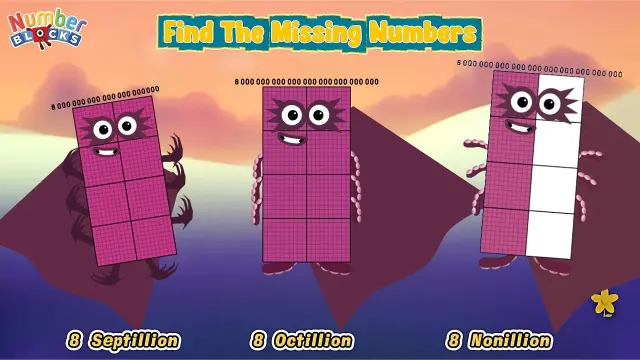 Finding Missing Millions and Billions in Big Numbers for Kids
 Counting Big Numbers from 1 to 100 with Numberblocks
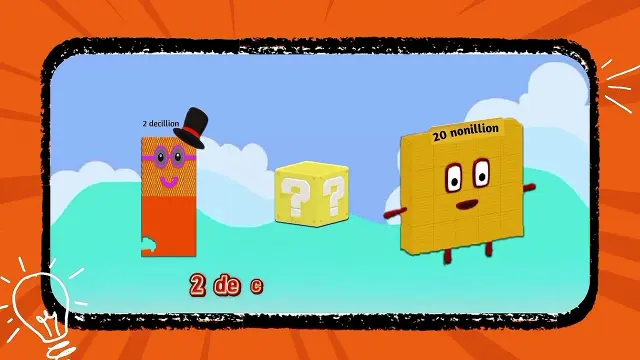 Big Numbers Comparison from Million to Quadrillion
Get new #Big Numbers ideas by email
Every Thursday: the week's best ideas, with the newest from #Big Numbers.
Related tags
Big Numbers: Reading, Writing and Using Large Numbers
Big numbers are numbers with many digits, used whenever something is too large to count easily as single items. You meet them in money, population, distance, measurements, scores, and everyday math. Learning to work with large numbers helps you read information correctly, compare values, and understand how size changes when digits are added.
What big numbers are
A big number is not a special kind of number so much as a number with more digits than the small numbers you usually start with. The meaning of each digit depends on its place. In a number like 4,582, the 4 means thousands, the 5 means hundreds, the 8 means tens, and the 2 means ones. That place value system is what makes large numbers possible to write clearly.
Big numbers can be written in different ways. Most often you see them in standard form, with commas or spaces to separate groups of digits. You may also see them written out in words, which is useful when reading checks, formal documents, or learning number names.
Read more
How to read and write them
The easiest way to read a big number is to break it into groups of three digits from the right. This helps you identify hundreds, thousands, millions, and beyond. For example, 12,345,678 becomes 12 million, 345 thousand, and 678.
When writing big numbers:
- Start from the left and write each place value carefully.
- Use separators consistently so the number is easy to read.
- Check that you have not skipped or repeated a digit.
- Read the number back in parts to make sure it matches the written form.
If you are learning number names, say the value of each group first. This keeps you from getting lost in a long string of digits.
Comparing big numbers
To compare large numbers, look at the number of digits first. A number with more digits is usually larger. If two numbers have the same number of digits, compare them from left to right, one place at a time.
For example, 8,420 is larger than 7,999 because the thousands digit is greater. But 8,420 is also larger than 8,399 because the hundreds digit is greater, even though the thousands digits are the same. This method works for any size number.
Good habits for beginners
If big numbers feel confusing at first, slow down and use simple steps:
- Circle the commas or spacing groups.
- Read each group separately.
- Think about place value, not just the digit itself.
- Use a number line or a place value chart when you need help.
It also helps to estimate before calculating. Estimation gives you a quick sense of whether an answer should be small, medium, or very large. That way, you can spot mistakes more easily.
Everyday uses
Big numbers appear in many parts of life, from counting money and measuring ingredients to reading maps, dates, and distances. Once you understand them, you can handle information more confidently and make better sense of the world around you. The key is practice: read often, write carefully, and always remember that each digit has a job.
Videos come from YouTube and posts from Instagram; titles and summaries are our own. All rights belong to their creators.