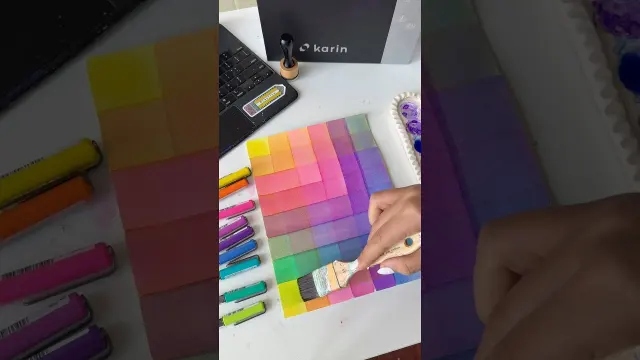
 A quick watercolor mandala for a creative reset
#Creative Practice
1 ideas
A quick watercolor mandala for a creative reset
Get new #Creative Practice ideas by email
Every Thursday: the week's best ideas, with the newest from #Creative Practice.
Related tags
Creative Practice: Building a Habit That Lasts
Creative practice is the simple idea that making things improves with repetition. It names the regular, unhurried time you set aside to draw, write, stitch, cook, compose, build or arrange — not to finish a masterpiece, but to keep the muscles of attention, curiosity and craft in use. The phrase borrows from the way musicians and athletes talk about practice: something done often, imperfectly, and on purpose.
Why practice rather than projects
A project has an end, and endings invite long pauses. A practice has no finish line, so it survives the weeks when nothing turns out well. That is its quiet value. When making is a habit rather than an ambition, the pressure to be good at it loosens, and you are more willing to experiment, make mistakes and notice what genuinely interests you. Skill tends to follow, but slowly and from the side.
What a practice can look like
Read more
There is no single correct form. Some people keep a daily sketchbook, filling pages without editing. Others work in longer sessions once a week — a Sunday afternoon at the sewing machine, an evening of bread. Some follow a fixed subject: a hundred studies of the same tree, the same chair, the same face. Others let the material lead and see what happens.
Common threads are worth borrowing. A fixed time and place helps, because decisions cost energy and you want to spend yours on the work. A small, forgiving format helps too: a pocket notebook, a single sheet, a short recording. Many people find it useful to separate the making from the judging, letting the session produce whatever it produces and looking at it later with kinder eyes.
Starting when you feel unready
Beginners often wait for the right materials, the right space or a clearer idea. None of these arrive first. Start with what is already within reach and keep the first sessions short enough that you would not talk yourself out of them. Ten minutes done repeatedly teaches more than a whole free weekend that never comes around again.
It can also help to lower the stakes deliberately. Work on scrap paper, in a cheap notebook, on the back of an envelope. Choose a subject so ordinary that it cannot be intimidating: a mug, a doorway, the view from one window. Repetition will make it interesting.
Keeping it alive
Practices falter not from laziness but from expectations that are too large. If a session is missed, the practice has not ended; it continues at the next opportunity. Keep a few low-effort entry points ready for tired days — a single line, one photograph, five minutes of stitching. And every so often, look back at what you have made. The accumulation itself is the reward, and it will tell you honestly where you have been and what you might try next.
#Creative Practice: frequently asked questions
How do I start a creative practice when I don't feel ready?
Start with whatever is already within reach and keep the first sessions short enough that you would not talk yourself out of them. Waiting for the ideal materials, space or idea usually means waiting indefinitely, since none of those arrive before you begin. Low stakes help: scrap paper, an ordinary subject, no expectation of a result.
How is a creative practice different from working on a project?
A project has an ending, and endings invite long pauses; a practice has no finish line, so it survives the weeks when nothing turns out well. Because there is no deadline or standard to meet, the pressure to be good loosens and you are more willing to experiment and make mistakes. Skill tends to follow, but slowly and from the side.
What should I make, and does the subject matter?
There is no single correct form — some people keep a daily sketchbook, others work in longer weekly sessions, and still others return to one fixed subject again and again. Choosing something ordinary, like a mug, a doorway or the view from one window, removes the intimidation and lets repetition make it interesting. You can also let the material lead and see what happens.
Do I need a dedicated space or special materials?
Neither is required, though a fixed time and place genuinely helps because decisions cost energy you would rather spend on the work. A small, forgiving format — a pocket notebook, a single sheet, a short recording — is often more useful than elaborate supplies. Work on scrap paper or the back of an envelope if that makes starting easier.
How do I keep a practice going when I miss sessions or lose motivation?
Practices usually falter from expectations that are too large rather than from laziness, so keep the sessions modest and the goals forgiving. If a session is missed, the practice has not ended; it simply continues at the next opportunity, with a few low-effort entry points ready for tired days. Every so often, look back at what you have made — the accumulation itself is the reward and shows you what to try next.
Can a small exercise, like painting a quick watercolor mandala, count as practice?
Yes — a short, contained exercise is exactly the kind of thing a practice is built from, because it is repeatable and does not demand a finished result. Something like a mandala gives you a fixed, forgiving shape to work inside, which keeps the session from stalling on decisions. Try to separate the making from the judging, and look at the results later with kinder eyes.
Videos come from YouTube and posts from Instagram; titles and summaries are our own. All rights belong to their creators.