 Real Time Drawing Process for a Commissioned Character
#Drawing Process
3 ideas
Real Time Drawing Process for a Commissioned Character
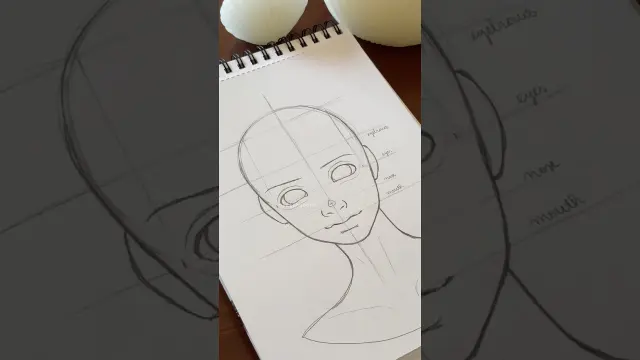 Pen and paper head drawing process tutorial
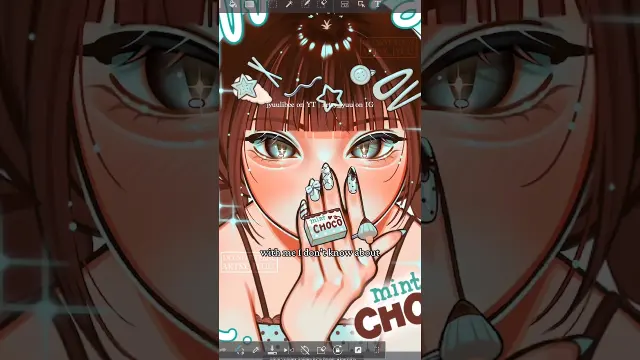 Original Character Digital Drawing and Painting Process
Get new #Drawing Process ideas by email
Every Thursday: the week's best ideas, with the newest from #Drawing Process.
Related tags
Drawing Process: How a Drawing Comes Together
Drawing looks like a single act — pencil meets paper and something appears — but it is really a series of small decisions. Understanding those stages makes the work calmer and the results better, whether you draw with graphite, ink, charcoal or a tablet.
From the first marks to a finished drawing
Most drawings move through a few broad phases. You start with an idea or a reference, then find the drawing's structure, then refine it, and finally finish it. Beginners often try to skip straight to the last phase, drawing careful outlines and details before the proportions are right. Working in order is slower at first and much faster later, because a mistake caught at the sketch stage costs nothing to fix.
The common stages
Read more
- Thumbnails and rough sketches: small, loose drawings where you test the composition and where things sit, before committing to size.
- Construction or lay-in: reducing the subject to simple shapes — boxes, cylinders, spheres — and checking proportions and placement.
- Refinement: defining shapes and edges, correcting what the lay-in revealed, and placing the larger forms before small ones.
- Values and shading: establishing light and shadow, usually from the biggest areas down to the smallest, so the drawing reads clearly even before detail arrives.
- Detail and finishing: texture, small features, accents and final clean-up, added last because they depend on everything underneath.
Constructive and observational approaches
Two broad habits sit behind most drawing. One is observational: you draw what is in front of you, comparing angles, lengths and negative spaces, and correcting by eye. The other is constructive: you build from an imagined structure, useful for characters, invention and drawing from memory. Most good practice mixes them, using construction to place things and observation to check them.
Working digitally and on paper
Digital drawing follows the same process, with layers standing in for stages: a rough layer, a construction layer, a line layer, a colour or value layer. The advantage is that earlier stages stay recoverable. Paper rewards the same discipline differently: lighter pressure for early marks, and a soft eraser or a lightbox so the final drawing can be brought onto a fresh sheet.
Practical habits
- Draw the whole subject before perfecting any part of it; a beautiful eye in a misplaced face still reads wrong.
- Step back often. Distance reveals proportion errors that close attention hides.
- Keep warm-up sketches short and frequent; fluency comes from repetition, not from one long effort.
- Save your rough stages. Comparing an early sketch to the finished piece shows exactly what you changed and why.
- Accept that a drawing often looks wrong in the middle. That stage is normal, not a sign of failure.
The process is not a rulebook. With practice it becomes a rhythm you can shorten, skip around in, or invent your own version of — the point is to know where you are and what comes next.
#Drawing Process: frequently asked questions
How do I start a drawing process without getting overwhelmed?
Begin with a very loose idea sketch or a quick reference check, then block in the main shapes before worrying about details. Starting this way helps you find the composition and proportions early, so later stages become easier instead of more stressful.
What tools do I need for a drawing process?
You can use graphite, ink, charcoal, or a tablet, because the same basic process works across all of them. On paper, a light touch and a soft eraser are helpful; digitally, layers can stand in for rough sketching, construction, and finishing.
Should I choose an observational or constructive drawing process?
It depends on what you are drawing, but most artists benefit from using both. Observational drawing helps you compare what you see, while constructive drawing is useful for characters, imagination, and building a form from simple shapes.
What is the most common mistake in the drawing process?
A common mistake is jumping into details too soon, before the proportions and overall structure are correct. Another frequent issue is perfecting one small area while the rest of the drawing is still unresolved, which can make the whole piece feel off.
How do I keep my drawing process clean when working on paper or digitally?
On paper, use light early marks and save the stronger lines or final sheet for later. Digitally, separate the work into layers so you can adjust the sketch, structure, and final details without losing earlier decisions.
What should I do if my drawing looks wrong halfway through?
That middle stage often looks messy because the structure is still being worked out, so it is usually normal. Step back, check the big shapes, and compare distances, angles, and placement before adding more detail.
Videos come from YouTube and posts from Instagram; titles and summaries are our own. All rights belong to their creators.