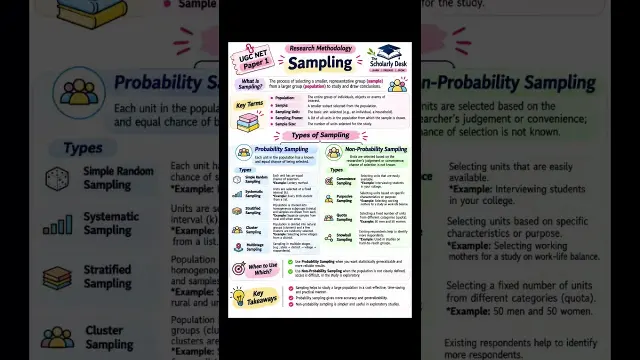
 Probability vs Non-Probability Sampling for UGC NET Paper 1
#Exam Revision
4 ideas
Probability vs Non-Probability Sampling for UGC NET Paper 1
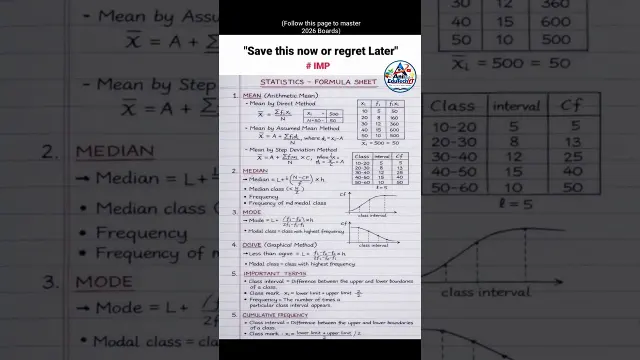 Class 10 Statistics Formula Sheet for Quick Exam Revision
 Probability revision for GATE: formulas, distributions, past questions
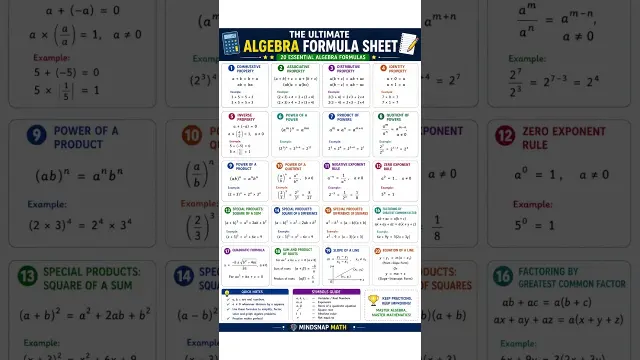 Twenty essential algebra formulas for quick exam revision
Get new #Exam Revision ideas by email
Every Thursday: the week's best ideas, with the newest from #Exam Revision.
Related tags
Exam Revision: How to Prepare Well and Stay Calm
Revision is the work of going back over what you have learned so that it stays with you and can be used when it matters. The word comes from the Latin *revidere*, "to see again" — and that is really the heart of it. Reading something once rarely fixes it in memory; coming back to it, in different ways and at different intervals, is what makes knowledge durable. Exams are the most familiar occasion for revision, but the same habits serve anyone preparing for a driving test, a language certificate or a professional qualification.
Start with a plan, not with a book
Before you open anything, work out what you actually need to cover. List your subjects or topics, note which ones feel weakest, and decide roughly how much time you can give each. A written plan on paper or in a calendar is far more useful than an intention in your head. Break large topics into small, finishable pieces — "one chapter" is vague, "the three causes of X and an example of each" is something you can complete. Build in short breaks and leave a little slack, because plans that assume perfect days tend to collapse on the first imperfect one.
Active revision beats re-reading
Read more
The most common mistake is passive study: reading notes, highlighting, watching a video again. These feel productive because the material looks familiar, but familiarity is not recall. Better methods force you to retrieve information:
- Close the book and write down everything you remember about a topic, then check what you missed.
- Turn headings into questions and answer them aloud.
- Make flashcards for facts, formulas and vocabulary, and test yourself regularly rather than reading both sides.
- Explain a topic to someone else, or to an empty room, as if teaching it.
- Work through past papers or practice questions under timed conditions where you can get them.
Spacing matters as much as method. Short sessions spread across several days beat one long session the night before, because each return to the material strengthens the memory a little more.
Look after the basics
Revision is mental work, and it runs on sleep, food and movement. Regular sleep, ordinary meals and some fresh air and exercise will do more for your concentration than an extra hour of late-night cramming. Notice when you are simply staring at a page without taking anything in — that is a signal to stop, move, and come back.
On the day
Read the instructions carefully, plan how long to spend on each section, and start with the questions you can answer confidently. If your mind goes blank, write down what you do remember and let it lead you back. And keep the pressure in proportion: an exam measures a slice of your knowledge on one day, not your worth or your whole ability.
#Exam Revision: frequently asked questions
How should I begin revising if I feel overwhelmed by everything I need to cover?
Start by listing the topics you need to learn and marking the ones that feel weakest. Then break each topic into small, finishable tasks and put them into a simple plan with room for breaks and catch-up time.
What is the best way to revise for an exam instead of just rereading notes?
Active recall works much better than passive reading. Try covering your notes and writing what you remember, turning headings into questions, using flashcards, or explaining the topic out loud as if teaching it.
Which kind of revision should I choose for subjects with formulas or calculations?
For formula-heavy subjects, make a clean formula sheet and test yourself on using the formulas, not just recognizing them. Past questions are especially useful because they show how formulas, patterns, and common methods are applied in real exam-style problems.
How can I make revision stick for longer instead of forgetting it quickly?
Return to the same material in short sessions spread across several days rather than trying to do everything in one go. Each time you retrieve the information, you strengthen your memory and make it easier to recall under pressure.
What are common mistakes people make when revising for an exam?
A common mistake is confusing familiarity with real understanding, such as highlighting notes or watching the same explanation again and again. Another is leaving everything to the last minute, which makes the work feel harder and reduces how much you can truly remember.
Videos come from YouTube and posts from Instagram; titles and summaries are our own. All rights belong to their creators.