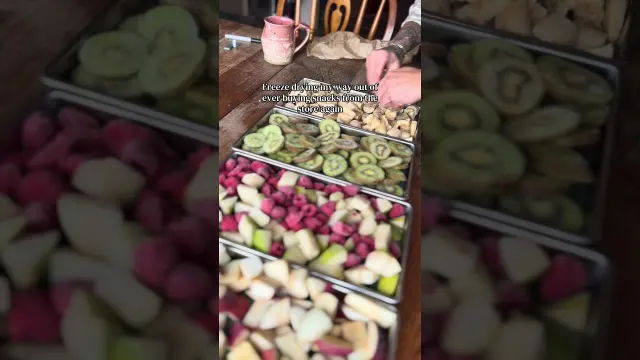
 Freeze-Dried Fruit Straight From a Home Freeze Dryer
#Food Preservation
2 ideas
Freeze-Dried Fruit Straight From a Home Freeze Dryer
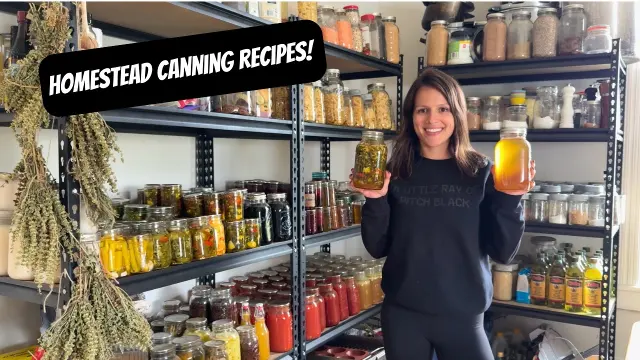 Canning the Last of the Garden Harvest for Winter
Get new #Food Preservation ideas by email
Every Thursday: the week's best ideas, with the newest from #Food Preservation.
Related tags
Food Preservation: A Guide to Keeping the Harvest
Food preservation is the practice of treating food so that it keeps longer than it otherwise would. It is older than writing: people have dried, salted, smoked and buried food to carry themselves through winter for as long as they have grown more than they could eat in a week. What has changed is the equipment, not the idea. Every method works on the same handful of principles — removing water, adding acid or salt, cutting off air, or holding food at a temperature where spoiling organisms cannot multiply.
The main methods
Drying is the simplest. Sun, air, a warm oven or a dehydrator all pull moisture out of fruit, vegetables, herbs and meat, leaving something light and shelf-stable. The results are concentrates: a dried tomato tastes far more intense than a fresh one.
Canning seals food in jars and heats it so that what is inside stays safe. The crucial distinction is acidity. High-acid foods — fruit, pickles, chutneys, tomatoes with added lemon juice — can be processed in a water bath. Low-acid foods such as beans, meat, stock and plain vegetables need a pressure canner, because only pressure reaches the temperatures that make them safe. This is the one rule worth memorising before you start.
Read more
Freezing is the least demanding method and the one most kitchens already use. Its weakness is texture: water expands into ice crystals and breaks cell walls, so thawed berries go soft. Blanching vegetables first, and freezing in portions you will actually use, makes a real difference.
Fermenting and pickling use salt, acid or both to encourage friendly microorganisms and hold others back. Sauerkraut, kimchi, sour pickles and yoghurt belong here. Curing and smoking — salt, time and sometimes smoke — have traditionally preserved meat and fish.
What beginners should know
Start with one method and one ingredient. A single batch of jam, a tray of dried apple rings or a jar of salt-preserved lemons teaches you more than a shelf of equipment.
Work clean. Wash jars, hands, boards and cloths, and keep raw and finished food apart. Follow tested recipes rather than improvising, especially with canning, where the balance of acid, salt and processing time is what keeps the result safe. Do not reduce sugar or vinegar in a preserving recipe on a whim; they are structural, not just flavouring.
Label everything with contents and date, and store jars and dried goods somewhere cool and dark. Check seals before eating anything you put up months ago, and discard jars that are leaking, bulging, mouldy or smell wrong — never taste to test.
Finally, preserve what you genuinely like to eat. A cupboard full of something nobody enjoys is not thrift, it is just a longer goodbye.
#Food Preservation: frequently asked questions
How do I start preserving food if I've never done it before?
Pick a single method and a single ingredient rather than trying to learn everything at once — one batch of jam, a tray of dried apple slices or a jar of salt-preserved lemons will teach you more than a cupboard of gadgets. Learn the technique properly on that one thing before adding another, and keep notes on what worked so you can repeat it.
What equipment do I actually need to begin?
Most methods ask for little beyond what a normal kitchen already holds: clean jars with good lids, a large pot, a sharp knife, and somewhere cool and dark to store the results. Drying needs only warmth and air movement, and freezing needs only space. A pressure canner is the one piece of specialist gear worth buying before you attempt low-acid foods.
Which preserving method should I choose?
Choose by what you want the food to be like later, not by what looks impressive. Freezing is the easiest and suits almost anything if you accept softer textures, drying concentrates flavour and saves space, and fermenting or pickling gives tang and crunch. Canning is best when you want shelf-stable jars of fruit, pickles or chutney without relying on freezer room.
How should I store and check what I've preserved?
Keep jars, dried goods and cured items somewhere cool, dark and dry, and label everything with what it is and when you made it. Before using anything you put up a while ago, check the seal and look for leaks, bulging lids, mould or an off smell. If anything seems wrong, throw it out rather than tasting it to find out.
What mistakes do beginners make most often?
The big one is improvising — changing the sugar, vinegar or salt in a preserving recipe, which alters the balance that keeps the food safe rather than simply changing the flavour. Others are working with dirty jars and hands, mixing raw and finished food, and making enormous batches of something nobody in the house actually likes. Follow a tested recipe, work clean, and preserve only what you will genuinely eat.
Can I adapt preserving recipes to use less sugar or salt?
In preserving, sugar, salt and vinegar are structural rather than just seasoning — they are part of what holds spoilage back, so cutting them freely can undermine the whole batch. If you want a lighter result, look for a recipe that was written that way from the start instead of adjusting one yourself.
Videos come from YouTube and posts from Instagram; titles and summaries are our own. All rights belong to their creators.